

A drain that clogs again shortly after being cleaned usually means the real problem wasn't fully resolved, not that the cleaning failed. Common causes include buildup left further down the pipe, a partial blockage that wasn't completely cleared, grease or scale re-coating the pipe walls, or a deeper issue like a damaged, offset, or root-intruded sewer line. If your drains keep backing up no matter how often you clean them, it may point to a larger issue that calls for professional sewer repair in Granada Hills rather than another round of surface-level cleaning.
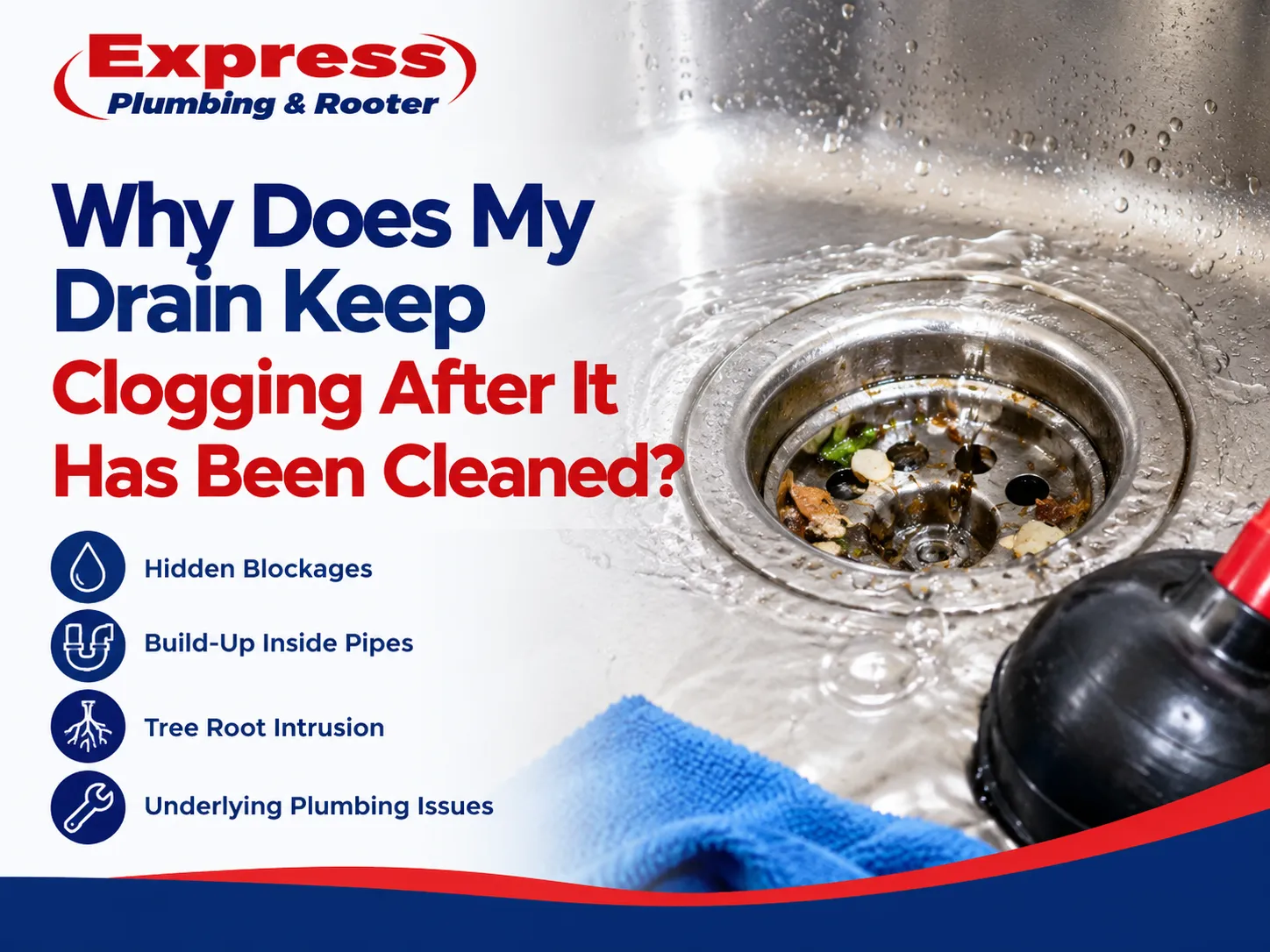
It's a frustrating cycle: you clear the clog, things flow fine for a few days or weeks, and then the same slow drain or backup returns. Below, we'll walk through the most common reasons this happens and how to tell whether you're dealing with a simple fix or a sign of a larger sewer line problem.
A Clogged Drain After Professional Cleaning Isn't Always a Failed Cleaning
When a drain clogs again soon after a professional cleaning, it's easy to assume the job wasn't done right. In many cases, though, the cleaning worked exactly as intended; it cleared what was blocking the pipe at that moment. The clog returns because something else is still contributing to the problem, whether that's ongoing buildup, daily habits, or an issue with the pipe itself that a standard cleaning doesn't address.
Understanding the difference between a one-time clog and a recurring one is the first step to solving it for good.
Common Causes of Recurring Drain Clogs
There are several reasons drains clog repeatedly even after they've been cleared. The most frequent causes include:
- Grease and soap buildup. Grease, oils, and soap scum coat pipe walls over time. Even after a clog is cleared, residue left behind can attract debris again quickly.
- Hair and fibrous debris. In bathroom drains, hair combines with soap and other residue to form clogs that rebuild fast if the pipe isn't fully cleared.
- Mineral scale buildup. Hard water can leave mineral deposits inside pipes, gradually narrowing the space water has to flow through.
- Tree root intrusion. Roots can grow into small cracks or joints in underground pipes, catching debris and causing repeated blockages further down the line.
- Pipe damage or misalignment. Cracked, collapsed, bellied, or offset pipes create low spots or gaps where debris collects no matter how often the line is cleaned.
- Incomplete cleaning. A basic drain snake or store-bought tool may clear a visible clog without fully cleaning the pipe, leaving buildup that leads to another blockage soon after.
Signs Your Drain Problem Goes Beyond a Simple Clog
Persistent drain clogs are often a signal, not just an inconvenience. Watch for these signs that the issue may be more serious than a typical blockage:
- The same drain clogs again within days or weeks of being cleared
- Multiple drains in the house are slow or backing up at the same time
- Gurgling sounds coming from toilets, tubs, or floor drains
- Water backing up into a different fixture when you run another one
- Foul odors coming from drains even after cleaning
- Slow drainage that never fully improves after cleaning
If you're noticing several of these signs together, it's worth having a professional take a closer look rather than repeating the same cleaning process.
Sewer Line Problems That Cause Repeated Clogs
When clogs keep coming back throughout the house rather than in just one fixture, the issue is often located in the main sewer line rather than an individual drain. Sewer line problems that commonly lead to repeated blockages include:
- Root intrusion at pipe joints or cracks
- Pipe bellies, where a section of pipe has sunk and creates a low point that traps waste and water
- Collapsed or partially collapsed sections of pipe
- Buildup of grease, scale, or debris that has accumulated over years
- Misaligned or separated pipe joints, often due to ground shifting or age
These issues won't be resolved by snaking or cleaning alone, since the blockage will simply reform at the same point in the line. A professional inspection is the most reliable way to confirm what's happening underground.
How a Camera Inspection Helps Identify the Real Cause
A camera inspection allows a plumber to see directly inside the pipe rather than guessing based on symptoms. A small camera is fed through the line, showing exactly where a blockage, crack, root intrusion, or misalignment is located. This step is especially useful when a drain has already been cleaned but the clog returns, since it removes the guesswork and shows whether the fix needs to be closer to the surface or further down the sewer line.
If you've already noticed reasons your drains keep clogging that match ongoing backups rather than a single incident, a camera inspection is usually the next logical step before more cleaning is attempted.
When Cleaning Isn't Enough: Considering Repair Options
If an inspection reveals a structural issue, such as a crack, root intrusion, or a damaged section of pipe, cleaning alone won't solve the problem long-term. Depending on what's found, a plumber may recommend a more targeted repair to address the actual source of the blockage rather than continuing to treat the symptoms. This is typically the point where repeated clogs shift from being a cleaning issue to being a repair issue.
Preventing Drains From Clogging Again
While some causes of recurring clogs, like root intrusion or aging pipes, require professional attention, there are habits that can reduce how often clogs form in the first place:
- Avoid pouring grease or oil down drains. Let it cool and dispose of it in the trash instead.
- Use drain covers or strainers. These catch hair and debris before they enter the pipe.
- Run hot water after washing dishes. This helps move grease through the line instead of letting it settle.
- Schedule routine drain maintenance. Periodic professional cleaning can help prevent buildup from accumulating to the point of a full blockage.
- Watch for early warning signs. Slow drainage or gurgling sounds are often early indicators worth addressing before they turn into a full clog.
Summary
A drain that clogs again after being cleaned usually points to something beyond the surface, whether that's leftover buildup, grease and scale re-coating the pipe, or a deeper sewer line issue like root intrusion or pipe damage. Paying attention to patterns, such as multiple drains backing up together or clogs returning within days, can help you tell the difference between a minor issue and one that needs a closer look. A camera inspection is often the clearest way to identify the actual cause and determine whether cleaning, repair, or both is the right next step.
Schedule a Drain and Sewer Inspection in Granada Hills
If your drains keep clogging no matter how many times they've been cleaned, it may be time to look deeper than the surface. The team at Express Plumbing and Rooter can inspect your pipes, identify what's really causing the repeated blockages, and recommend the right solution for your home. Contact Express Plumbing and Rooter today to schedule an inspection or request a quote, and put an end to the clog-and-clear cycle for good.
Frequently Asked Questions
How soon should a drain clog again if the cleaning worked?
A properly cleaned drain should stay clear for weeks or months, depending on household use. If a clog returns within days, that's a strong sign the underlying cause wasn't fully addressed and further inspection is needed.
Can tree roots really get into a sewer pipe?
Yes. Tree roots are drawn to the moisture inside sewer lines and can grow into small cracks or loose joints over time. Once inside, they catch debris and waste, leading to repeated blockages until the root intrusion is addressed.
Is a camera inspection necessary, or can a plumber just guess?
A camera inspection removes the guesswork. Without one, a plumber can only treat visible symptoms, which is why clogs often return. Seeing the actual condition of the pipe makes it possible to target the real cause.
Will cleaning my drains regularly prevent clogs from coming back?
Routine cleaning can reduce buildup and lower the chances of a clog forming, but it won't fix structural issues like cracked pipes or root intrusion. If clogs keep recurring despite regular cleaning, it's worth having the line inspected.
How do I know if the problem is in one drain or the main sewer line?
If only one fixture is affected, the issue is usually local to that drain. If multiple drains back up together, or a toilet backs up when you run the washing machine or shower, that usually points to a problem in the main sewer line.

























Sign in to leave a comment.