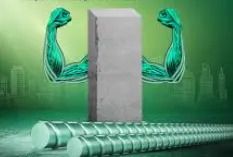

There is a moment in almost any structural review when the conversation moves away from numbers and toward something harder to put on a chart.
An engineer stops asking only how much load a building can carry and starts asking how it will behave when something unplanned arrives - a tremor, an uneven settlement, a stress the original drawing never accounted for.
That shift in question, from capacity to behaviour, says a great deal about how construction thinking has matured over the past two decades.
The quiet shift from strength to behaviour
For a long time, reinforcement was judged almost entirely on strength. A stronger bar was simply a better bar. That logic still holds, but it is no longer the whole picture.
Structural engineers have grown far more interested in how a building responds to dynamic, irregular forces - the kind that do not appear neatly in a load calculation. A column that is strong but brittle can carry enormous weight and still fail without warning.
A column reinforced with steel that can stretch, flex, and absorb energy behaves very differently. It bends before it breaks, and that behaviour is often what separates a structure that needs repair from one that does not come through the event at all.
What ductility actually buys a structure
This is where ductility enters the discussion. Ductility is the ability of steel to deform without fracturing - to absorb energy rather than pass it straight into the concrete.
In seismic terms, the property is quietly decisive. When the ground moves, that energy has to go somewhere; reinforcement with good elongation gives it a path, dissipating it through controlled deformation instead of an abrupt, uncontrolled release.
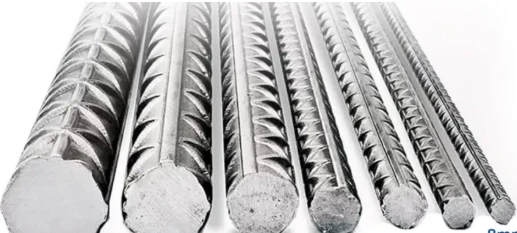
Thermo-mechanically treated bars are engineered precisely for this balance - a hard, strong outer layer wrapped around a softer, more ductile core.
It is this combination of strength and flexibility that defines earthquake resistant TMT bars, and it explains why they have moved from a specialist preference to a mainstream specification.
Flexibility is not the same as weakness
There is an instinct, especially among first-time builders, to equate rigidity with safety. A structure that feels solid feels dependable. But seismic engineering tells a more nuanced story. A perfectly rigid structure has nowhere to send the energy of an earthquake; it resists until it cannot, and then it fails.
A structure with controlled flexibility - built with reinforcement that can move within designed limits - endures by giving a little. Understanding this is part of why engineers and informed buyers increasingly look past headline strength figures alone when they choose the best TMT bars for a project.
The question is no longer only how strong the steel is, but how it will behave under conditions no one can fully predict.
Resilience as a standard, not a precaution
Seismic awareness was once treated as something relevant only to high-risk zones. That framing has faded.
A large share of the country sits in moderate-to-active seismic regions, urban density has raised the consequences of poor structural performance, and India's design codes have steadily made resilience a default expectation rather than a regional exception. Specifying earthquake-resistant reinforcement is now part of routine good practice - closer to basic structural literacy than to emergency planning.
The most thoughtful builders treat it the way they treat waterproofing or sound foundation work: not as an extra, but as part of building properly.
A more considered way of choosing reinforcement
This evolving mind set is changing how reinforcement is selected. Buyers now read certifications, ask about grade and elongation, and weigh consistency alongside raw strength.
They have begun to understand that a building is a multi-decade asset, and the steel inside it is a multi-decade decision. The market for the best TMT bars is slowly being reshaped by that awareness - rewarding manufacturers whose bars deliver predictable behaviour, batch after batch, rather than those who simply advertise a higher number.
The growing relevance of earthquake resistant TMT bars is not really a story about earthquakes. It is a story about a construction culture that has learned to think in terms of behaviour, resilience, and the long life of a building - structures designed not only to stand, but to absorb what they were never warned about, and keep standing afterwards.
Captain Steel India Limited is a TMT bar manufacturer headquartered in Eastern India, with roots going back to 2007. The company is associated with manufacturing consistency, disciplined production systems, and dependable structural performance in reinforcement steel.























Sign in to leave a comment.