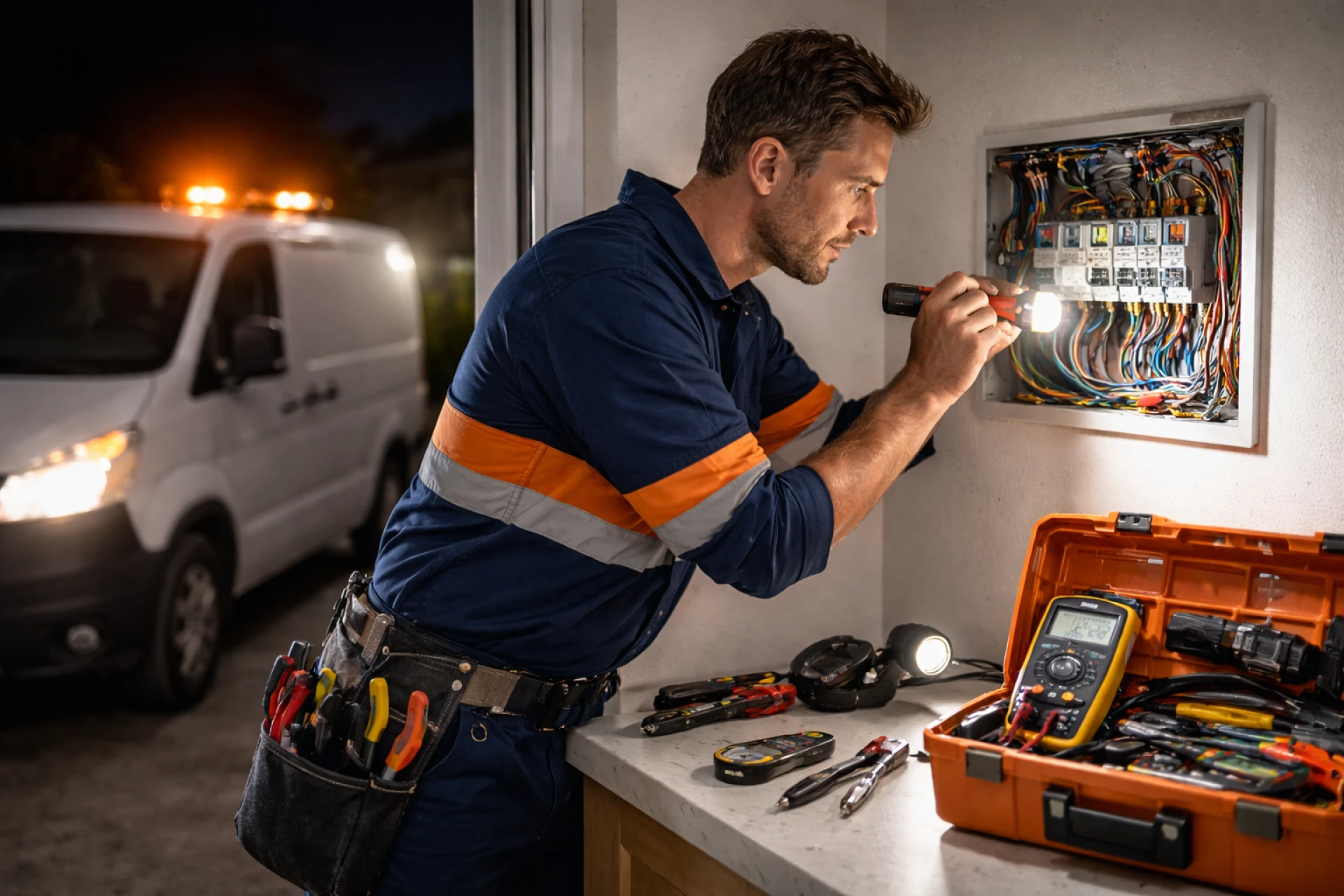

When the lights flicker without warning or a burning smell drifts from a switchboard, most people hope it’s “nothing serious”. Yet electrical faults rarely fix themselves. In many cases, quick action can mean the difference between a minor inconvenience and significant property damage.
So, can emergency electrical repairs actually save your home? In short — yes. Prompt intervention can prevent fires, protect appliances, reduce safety risks and minimise structural damage. For homeowners in coastal suburbs like Frankston, where storms, salt air and ageing infrastructure can all play a role, understanding the importance of urgent electrical attention is critical.
Why Electrical Emergencies Escalate Quickly
Electricity moves fast — and so do electrical faults. A loose wire, overloaded circuit or damaged switchboard can generate heat within seconds. That heat can ignite insulation, timber framing or nearby materials before visible flames appear.
Common causes of urgent electrical issues include:
- Overloaded power boards
- Faulty wiring in older homes
- Storm or lightning damage
- Water intrusion into electrical systems
- Rodent damage to cables
- Deteriorating switchboards
In areas like Frankston, seasonal storms and coastal moisture increase the risk of electrical complications. When these issues arise, emergency electrical repairs are often necessary to prevent the fault from spreading.
The Fire Risk Factor
According to Australian fire safety data, electrical faults remain one of the leading causes of residential fires. A damaged circuit or overloaded system may spark behind walls where it cannot be seen, allowing heat to build up unnoticed.
Warning signs may include:
- Frequent circuit breaker trips
- Buzzing sounds from outlets
- Warm or discoloured power points
- A persistent burning odour
- Sudden power loss in part of the home
Ignoring these signals significantly increases the likelihood of fire. Timely emergency electrical repairs can isolate the fault, replace damaged components and restore safe operation before ignition occurs.
For broader fire prevention guidance and practical home electrical fire safety advice, the Victorian Government provides detailed resources through the Country Fire Authority, helping households understand how to reduce electrical fire risks and improve overall safety preparedness.
Protecting Your Appliances and Electronics
Modern homes rely heavily on electronics — refrigerators, computers, security systems, air conditioning and more. Electrical surges caused by faults or storms can permanently damage these devices.
Power surges often occur when:
- Wiring insulation breaks down
- Neutral connections fail
- Lightning strikes nearby infrastructure
- Circuit breakers malfunction
In many cases, the cost of replacing appliances exceeds the cost of urgent electrical intervention. Addressing faults through emergency electrical repairs can prevent cascading damage across connected devices.
Structural Damage from Electrical Faults
Electrical issues do not only affect wires. Heat from faulty circuits can damage wall cavities, ceiling insulation and timber beams. In severe cases, smouldering faults may burn slowly for hours before detection.
Water-related electrical emergencies are especially dangerous. In flood-prone or storm-affected parts of Frankston, moisture entering wiring systems can cause:
- Corrosion of terminals
- Short circuits
- Electric shock hazards
- Damage to internal wall linings
Swift emergency electrical repairs help assess whether systems are safe to energise again and prevent long-term structural deterioration.
The Hidden Dangers in Older Homes
Many Australian homes built before the 1990s were not designed for today’s energy demands. Air fryers, induction cooktops, multiple televisions and home offices place far more load on circuits than older systems anticipated.
Outdated features may include:
- Ceramic fuses instead of circuit breakers
- Limited safety switches (RCDs)
- Ageing rubber or cloth-insulated wiring
- Undersized switchboards
When these systems fail under modern loads, urgent attention is required. In such cases, emergency electrical repairs can stabilise the immediate risk while highlighting the need for broader upgrades.
Storms and Coastal Conditions in Frankston
Frankston’s coastal climate presents unique electrical challenges. Salt in the air accelerates corrosion of external fittings and switchboard components. Meanwhile, strong winds and lightning can damage overhead lines and cause sudden voltage fluctuations.
After a severe storm, homeowners should watch for:
- Partial power loss
- Flickering lights
- Tripped safety switches that won’t reset
- Water pooling near electrical fittings
These signs often indicate the need for emergency electrical repairs to ensure the property is safe before normal power usage resumes.
Can Quick Repairs Reduce Insurance Complications?
Insurance policies typically require homeowners to take reasonable steps to prevent further damage once a problem is identified. Delaying action after noticing electrical faults may complicate claims.
Prompt emergency electrical repairs demonstrate that you acted responsibly to limit risk. While every policy differs, responding quickly can help avoid disputes related to preventable damage.
Safety Beyond the Property
Electrical emergencies also pose direct risks to occupants. Electric shock, burns and smoke inhalation can occur if faults are ignored. Children and pets are especially vulnerable around exposed wiring or damaged outlets.
If you notice sparks, smoke or active electrical fire:
- Do not touch the source.
- Turn off power at the main switchboard if safe.
- Evacuate the premises.
- Contact emergency services.
In non-fire but urgent situations, arranging emergency electrical repairs quickly reduces the chance of injury.
For electrical safety guidance in Victoria, Energy Safe Victoria provides regulatory information.
Preventative Steps That Reduce Emergency Situations
While emergencies cannot always be avoided, preventative maintenance lowers the risk significantly.
Consider:
- Annual switchboard inspections
- Testing safety switches every three months
- Avoiding overloaded power boards
- Replacing damaged cords immediately
- Installing surge protection
However, if something feels wrong — unusual smells, sounds or power behaviour — it is best treated as urgent. Emergency electrical repairs exist precisely because faults can escalate faster than expected.
The Bigger Question: Can They Truly Save Your Home?
In many real-world scenarios, the answer is yes.
A minor wiring fault caught early may prevent a house fire.
A damaged neutral fixed promptly may protect thousands of dollars’ worth of electronics.
A water-affected circuit isolated quickly may prevent electrocution.
Electrical systems are interconnected. When one component fails, stress shifts elsewhere. Timely emergency electrical repairs break that chain reaction before damage spreads.
For homeowners in Frankston and across Victoria, understanding the seriousness of electrical warning signs is not alarmist — it is practical risk management.
Final Thoughts
Electrical emergencies rarely announce themselves clearly. They begin as subtle changes: a flicker, a smell, a repeated breaker trip. Ignoring these signals increases risk to property, finances and personal safety.
Responding quickly with appropriate emergency electrical repairs can:
- Prevent residential fires
- Protect appliances
- Reduce structural damage
- Limit insurance complications
- Safeguard occupants
In that sense, urgent electrical intervention is not simply about restoring power — it is about protecting the place you call home.
Frequently Asked Questions
1. What counts as an electrical emergency in a home?
An electrical emergency includes burning smells, sparking outlets, repeated breaker trips, exposed wiring or power loss affecting critical systems. These situations often require immediate attention.
2. How quickly should electrical faults be addressed?
Electrical faults should be assessed as soon as they are noticed. Delays increase the risk of fire, shock or appliance damage, particularly in older homes.
3. Are storm-related electrical issues common in Frankston?
Yes. Coastal storms and lightning can damage wiring, cause surges and trip safety switches. Post-storm inspections help ensure systems remain safe.
4. Can electrical problems damage appliances permanently?
Power surges and unstable voltage can destroy internal circuits in appliances and electronics. Prompt repairs reduce the likelihood of widespread damage.
5. Is a repeatedly tripping safety switch serious?
Yes. Frequent tripping often signals an underlying fault such as overloaded circuits, moisture or damaged wiring that requires investigation.
6. Do older homes face higher electrical risks?
Older properties may have outdated wiring or insufficient safety devices. Modern energy demands can strain these systems, increasing the chance of urgent faults.
























Sign in to leave a comment.