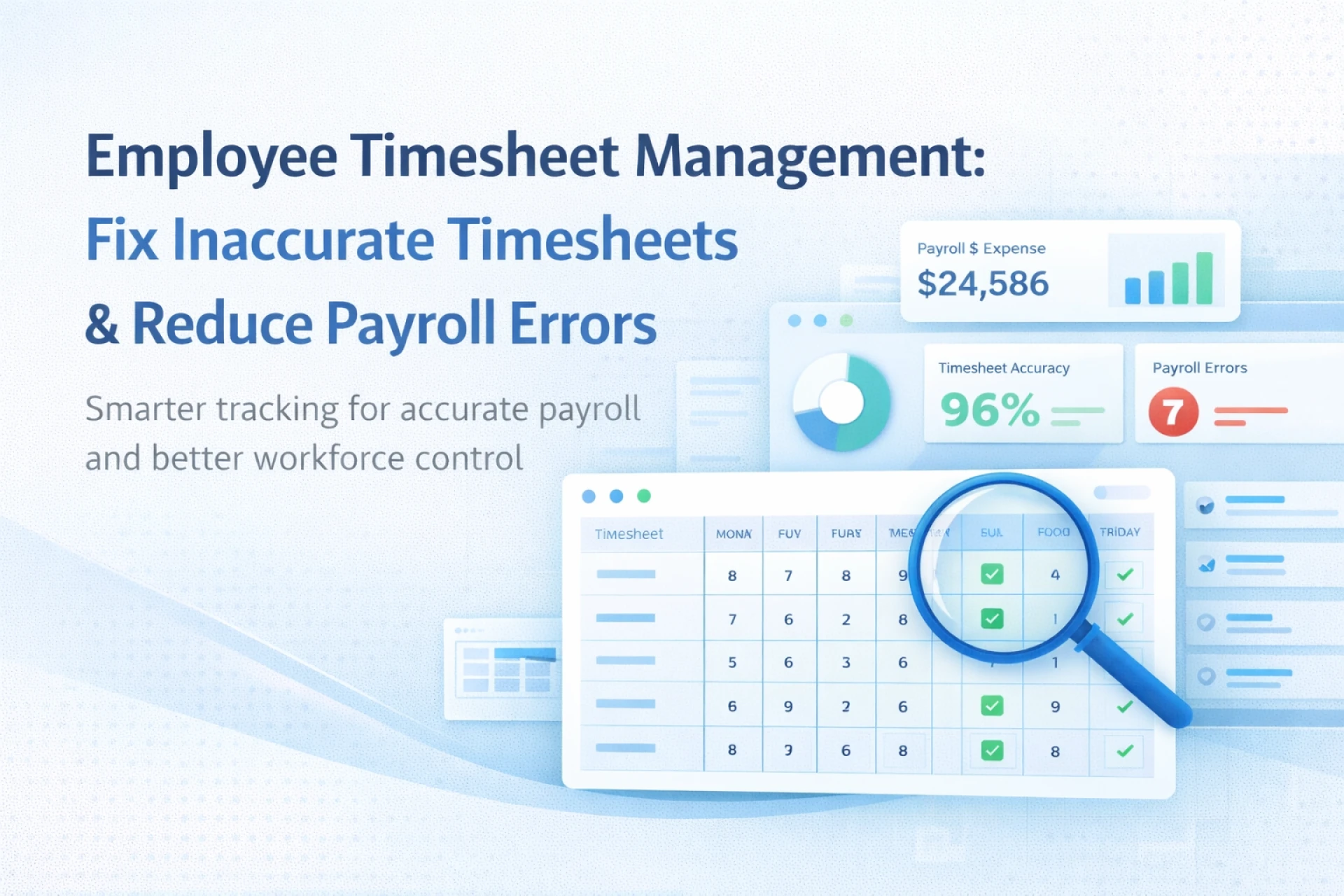

Timesheets are one of the most fundamental parts of workforce operations — yet many organizations still struggle to get them right. Inaccurate time entries, incomplete records, and manual data entry are not just administrative nuisances; they directly impact payroll accuracy, compliance, employee morale, and profitability.
Whether you’re a small team or a large enterprise, effective employee timesheet management is essential for accurate payroll, productive workflows, and confident decision-making. Unfortunately, many organizations continue to rely on outdated processes like spreadsheets or manual entry, which inevitably lead to errors and inefficiencies.
This blog explores common timesheet challenges, why they happen, and how modern tools can help you fix inaccurate timesheets, improve efficiency, and reduce payroll errors — ultimately empowering your HR and finance teams with clarity and control.
The Hidden Cost of Inaccurate Timesheets
When timesheets are inaccurate, the consequences multiply rapidly:
Financial Leakage
Errors in time tracking directly affect payroll calculations. Even a small miscount of hours can mean underpaying or overpaying employees — both of which have financial and legal implications.
Reduced Trust
When employees feel their time isn’t recorded properly, trust erodes. Misreported times can lead to disputes, frustration, and disengagement.
Compliance Risks
Many industries are subject to strict labor laws and regulations. Inaccurate time records can expose organizations to compliance violations and penalties.
Operational Blind Spots
Without reliable time data, leaders lack insight into workload distribution, productivity trends, or billing accuracy — making strategic planning harder.
Rather than seeing timesheets as a necessary evil, modern organizations are discovering they are a source of intelligence that can improve decision-making — if they’re managed well.
Why Traditional Timesheet Methods Fail
The most common timesheet systems — spreadsheets, emails, or basic timer logs — may seem convenient at first, but they quickly break down as teams grow or work becomes more complex. Here are the pitfalls:
Manual Entry Errors
People forget to log hours or enter estimates from memory, leading to guesswork and inaccuracy.
Delayed Reporting
Without real-time entry, timesheets are often completed days or weeks after the work was done, increasing the risk of forgotten tasks or misreporting.
Unclear Task Associations
When hours are not linked to specific tasks, projects, or clients, it becomes difficult to understand what work was actually done — which frustrates both managers and employees.
Lack of Integration
Traditional systems rarely integrate with payroll or performance tools, forcing teams to reconcile data manually — a prime source of mistakes.
These shortcomings explain why so many organizations struggle to get consistent and reliable timesheet data.
How to Fix Inaccurate Timesheets
Addressing timesheet inaccuracies starts with understanding the root causes. Some practical approaches include:
1. Encourage Real-Time Entry
The longer the delay between work being done and time being logged, the more opportunity for memory errors. Encourage teams to record work as it happens.
2. Provide Context
Timesheet entries should be associated with specific tasks, projects, or deliverables. This not only improves accuracy but makes time data more useful for billing and planning.
3. Automate Where Possible
Manual entry is both error-prone and inefficient. Automating time tracking removes guesswork and reduces administrative burden.
4. Standardize Processes
Establish clear policies for how time should be recorded and reviewed. Consistency improves data quality and ease of auditing.
These principles set the stage for tools that do much of the heavy lifting for you.
The Role of Modern Payroll Management Software
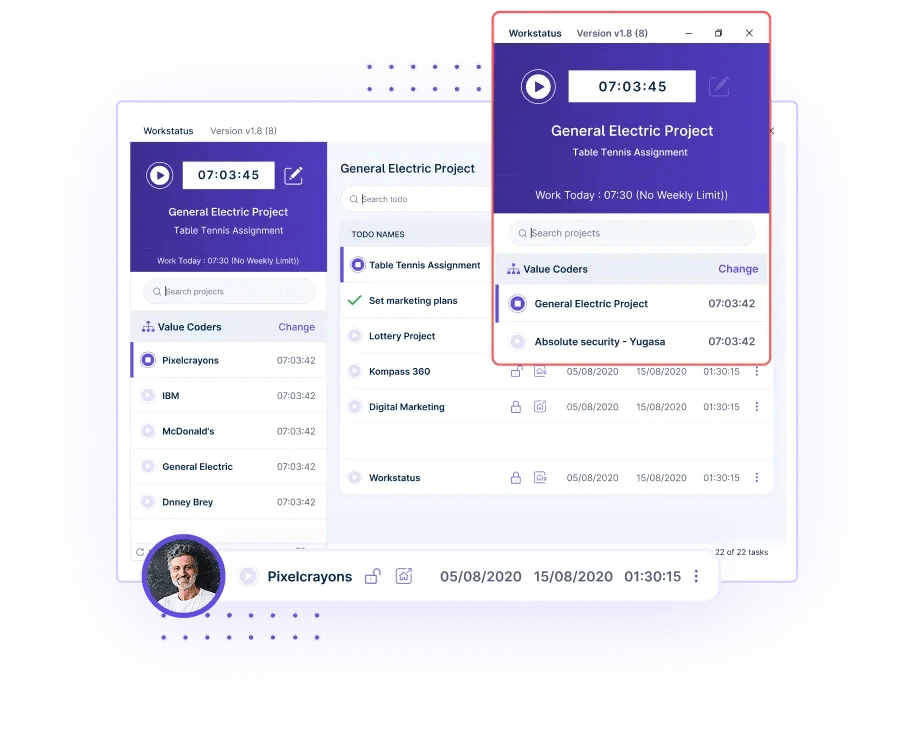
Traditional payroll systems often accept timesheet data at face value without validation or context — unless someone manually checks entries. Modern payroll management software changes that by integrating time tracking directly into payroll workflows.
With the right software, you can:
- Automate time capture from employee devices or tools
- Validate time entries before payroll processing
- Integrate timesheets with payroll rules
- Generate real-time payroll insights
- Sync with HR and accounting systems
This reduces the need for error-prone manual reconciliation and helps reduce payroll errors at scale.
Benefits of Integrated Employee Timesheet Management
Switching to a modern, integrated timesheet and payroll system brings significant benefits:
Improved Financial Accuracy
Accurate timesheets help ensure payroll calculations reflect actual work, reducing costly corrections or disputes.
Better Project Visibility
When time is linked to specific tasks or projects, teams gain insight into resource allocation and productivity.
Faster Payroll Cycles
Automation speeds up the payroll process, reducing administrative effort and freeing HR teams to focus on strategy.
Enhanced Compliance
Timesheet systems that capture granular data help organizations meet labor law requirements and audit standards.
Higher Employee Satisfaction
When employees trust that their work is recorded and compensated correctly, morale and engagement improve.
Combined, these benefits turn time tracking from a chore into a business advantage.
Why Companies Are Moving to Smart Timesheet Tools
The shift toward digital workforce tools reflects a broader trend in workforce intelligence: capturing data accurately and using it to improve performance.
Organizations that adopt modern employee timesheet management tools gain:
- Automated logging and verification
- Real-time dashboards and reports
- Contextual tracking (task, client, project)
- Seamless integration with payroll and HR systems
These systems deliver consistent results while reducing overhead — a win for both finance teams and employees.
Investing in Accuracy for Better Business Outcomes
Accuracy in timesheets isn’t just about getting hours right — it’s about enabling better decisions. With reliable time data, leaders can:
- Identify workload bottlenecks
- Optimize staffing and scheduling
- Forecast project costs with confidence
- Align performance incentives with real effort
Accurate time records support healthier workflows, smarter planning, and stronger financial control.
Final Thoughts
Effective employee timesheet management is foundational to running a productive, compliant, and efficient organization. When timesheet systems are inaccurate or disconnected from core processes, mistakes multiply — impacting payroll accuracy, team trust, and operational clarity.
By adopting modern tools that automate time capture, contextualize work entries, and integrate with payroll management systems, organizations can fix inaccurate timesheets, reduce payroll errors, and unlock better visibility into how work gets done.
Timesheets aren’t just an administrative task — they are a source of insight that can deliver real business value when managed well.






























Sign in to leave a comment.