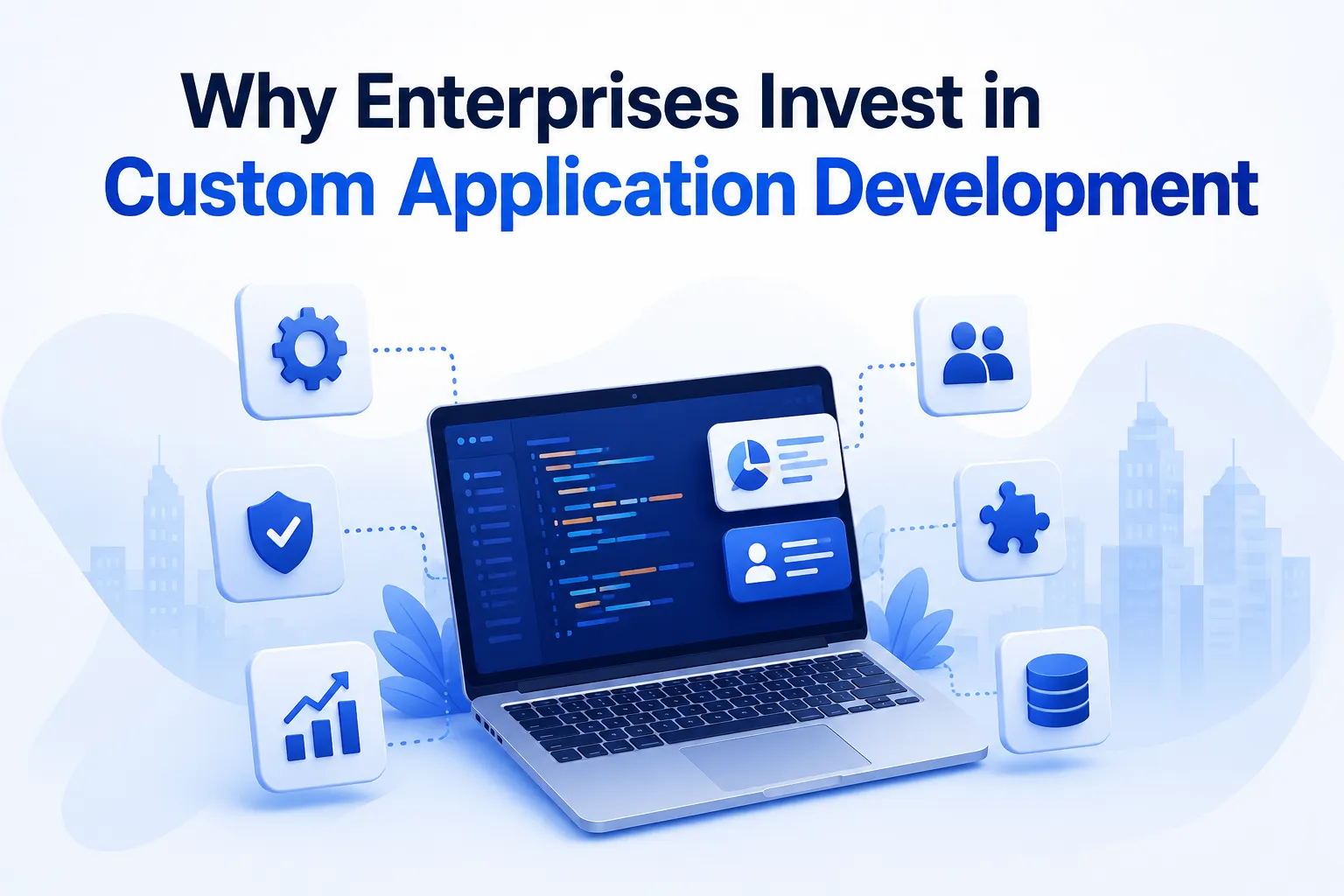

Enterprise software is no longer just a support system; it has become a strategic asset. As organizations expand across markets, departments, and digital channels, generic software often struggles to keep pace with evolving business requirements.
Custom application development enables enterprises to build solutions tailored to their workflows, customers, security requirements, and long-term growth plans. Instead of adapting business processes to software limitations, many organizations partner with a trusted custom app development company to create applications that align with their unique operational goals and future growth.
According to Deloitte State of AI in the Enterprise 2026 report, 66% of organizations report productivity and efficiency gains from AI, while 53% report better decision-making. This demonstrates why enterprises are investing in purpose-built digital solutions instead of generic software. This article explains why enterprises continue investing in custom application development, the business benefits it delivers, when it makes sense to invest, and how organizations can maximize long-term returns.
What Is Custom Application Development?
Custom application development is the process of designing and building software specifically for an organization's unique business needs. Unlike off-the-shelf software, custom applications are developed with tailored features, integrations, workflows, and security controls. Custom app development boosts business by enabling organizations to build solutions that align with their operational goals instead of adapting to the limitations of generic software.
These applications can support internal operations, customer-facing services, supply chain management, enterprise resource planning, analytics, or other specialized business functions. Because they are purpose-built, enterprises have complete control over functionality, scalability, and future enhancements.
Why More Enterprises Are Choosing Custom Applications
As enterprises face evolving customer expectations and increasingly complex operations, custom applications provide the flexibility, scalability, and competitive advantage needed to support long-term business growth.
Built Around Business Processes
Every enterprise has unique workflows and operational requirements. Custom applications are designed to align with existing business processes rather than forcing teams to adapt to generic software, improving productivity, reducing manual effort, and increasing operational efficiency.
Better Scalability
As businesses grow, their software must support more users, features, data, and integrations. Custom applications are built with scalability in mind, enabling organizations to expand seamlessly without the limitations or costly replacements often associated with off-the-shelf solutions.
Stronger Security
Enterprises handle sensitive customer, financial, and operational data that requires robust protection. Custom-built applications enable organizations to implement tailored security frameworks, role-based access controls, encryption, and compliance measures that meet industry and regulatory requirements.
IBM found that 70% of CIOs say business teams are deploying technology faster than IT can track, highlighting governance and security challenges that custom enterprise platforms can address.
Easier Integration
Modern enterprises rely on multiple business systems, including ERP, CRM, HR, accounting, and cloud platforms. Custom applications seamlessly integrate these systems to enable secure data sharing, streamline workflows, eliminate information silos, and improve overall business visibility.
Better Customer Experience
Customer expectations continue to evolve, making seamless digital experiences a competitive necessity. Custom applications enable businesses to deliver personalized interactions, faster services, intuitive user journeys, and features tailored to customer needs, resulting in higher satisfaction, stronger engagement, and improved customer retention.
Top Business Benefits of Custom Application Development
Custom application development enables enterprises to optimize operations, improve scalability, strengthen security, and deliver superior customer experiences. By building software tailored to specific business needs, organizations gain greater efficiency, long-term cost savings, and the flexibility to innovate as market demands evolve.
Higher Operational Efficiency
Custom applications automate repetitive tasks, minimize manual errors, and streamline business workflows. By eliminating inefficient manual processes, employees can spend more time on strategic initiatives, improving productivity and overall operational performance.
Lower Long-Term Costs
Although custom application development requires a higher upfront investment than off-the-shelf software, it reduces long-term expenses by eliminating unnecessary licensing fees, minimizing costly workarounds, and replacing multiple disconnected tools with a unified solution.
Competitive Advantage
Custom applications enable enterprises to build business capabilities that competitors cannot easily replicate. They support unique customer experiences, optimized internal processes, and faster adaptation to changing market demands, creating a sustainable competitive edge.
Improved Decision Making
By centralizing business data and integrating reporting across systems, custom applications provide leaders with accurate, real-time insights. Interactive dashboards and analytics empower teams to make faster, data-driven operational and strategic decisions.
Faster Innovation
Custom applications offer the flexibility to adopt emerging technologies such as AI, automation, cloud-native architectures, and advanced analytics. This adaptability enables enterprises to launch new features faster, respond quickly to evolving customer needs, and continuously innovate without being constrained by legacy software.
Deloitte's 2026 Software Industry Outlook notes that AI could improve software development lifecycle productivity by 30–35% when integrated across engineering workflows.
Industries Benefiting from Custom Applications
Custom applications deliver value across industries, including:
- Healthcare: Secure patient portals, appointment systems, and clinical workflow management.
- Financial Services: Fraud detection, digital banking, and compliance management.
- Retail and E-commerce: Personalized shopping experiences, inventory optimization, and customer loyalty platforms.
- Manufacturing: Production monitoring, predictive maintenance, and supply chain visibility.
- Logistics: Fleet management, route optimization, and shipment tracking.
Each industry benefits from software tailored to its operational requirements rather than relying on one-size-fits-all solutions.
How to Maximize ROI from Custom Application Development
Enterprises achieve the best results by aligning software development with business objectives from the start. Gartner reports that only 35% of software engineering leaders currently achieve significant ROI from AI, reinforcing the need to define business goals, prioritize high-value features, and measure outcomes
Key practices include:
- Define measurable business goals before development begins.
- Prioritize features that solve high-impact business problems.
- Build scalable architecture to support future growth.
- Integrate with existing enterprise systems.
- Continuously monitor performance and enhance the application based on user feedback and changing business needs.
Following these practices helps organizations increase adoption, improve operational efficiency, and maximize the return on their technology investment.
Conclusion
Custom application development is more than a technology investment; it's a strategic approach to building long-term business capabilities. By delivering tailored functionality, robust security, seamless integrations, and scalable architecture, custom applications enable enterprises to improve operational efficiency, accelerate innovation, and adapt confidently to evolving market demands.
As digital transformation continues to reshape industries, organizations that invest in software aligned with their unique business goals are better positioned to achieve sustainable growth and maintain a competitive advantage. Partnering with an experienced provider like RipenApps for reliable enterprise application development services can help businesses build future-ready solutions that support both current operational needs and long-term strategic objectives.
Frequently Asked Questions
1. What is custom application development?
Custom application development is the process of creating software specifically designed to meet an organization's unique business requirements, workflows, and operational goals.
2. Why do enterprises prefer custom software over off-the-shelf software?
Custom software offers greater flexibility, scalability, security, and integration capabilities. It is designed around business processes instead of requiring businesses to adapt to predefined software features.
3. Is custom application development expensive?
The initial investment is typically higher than purchasing packaged software. However, custom applications often deliver better long-term value through improved efficiency, lower maintenance costs, and reduced dependency on multiple software subscriptions.
4. Which industries benefit most from custom applications?
Healthcare, finance, retail, manufacturing, logistics, education, and enterprise services commonly invest in custom applications to improve operations, enhance customer experiences, and support regulatory compliance.
5. How long does enterprise custom application development take?
Development timelines vary depending on project complexity, required features, integrations, and testing. Most enterprise applications are delivered in phases, allowing organizations to release core functionality while continuing future enhancements.



























Sign in to leave a comment.