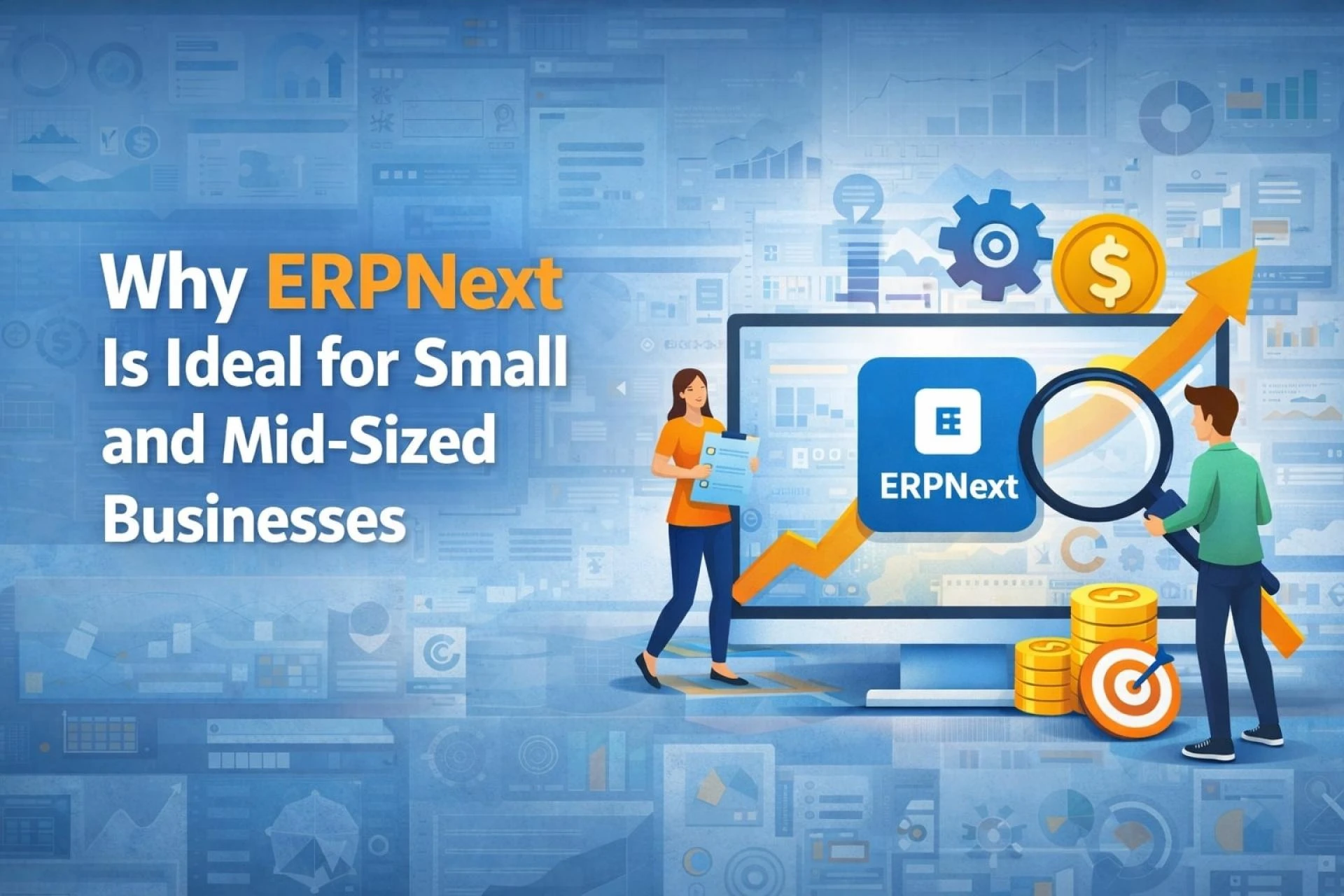

Small and mid-sized businesses often reach a point where spreadsheets, disconnected tools, and manual processes start holding them back. Growth brings complexity-more customers, more transactions, more compliance needs-and suddenly, operational visibility becomes a challenge. This is where ERP systems come into the picture, but many traditional ERPs feel too expensive or rigid for growing companies.
This is exactly why ERPNext for small and mid-sized businesses has gained so much attention. Designed with flexibility and scalability in mind, ERPNext offers enterprise-level capabilities without the overhead typically associated with legacy ERP platforms. With the right ERPNext Service Provider, businesses can implement ERPNext in a way that aligns with real operational needs rather than forcing processes into a predefined mold.
Understanding the ERP Needs of SMEs
Small and mid-sized enterprises (SMEs) operate under different constraints than large enterprises. Budgets are tighter, teams are leaner, and systems need to deliver value quickly. At the same time, SMEs still require core ERP functions such as accounting, inventory management, CRM, HR, and reporting.
Traditional ERP systems often demand heavy upfront investments and long implementation cycles. ERPNext, on the other hand, is designed to be modular, adaptable, and cost-conscious-making it particularly well-suited for SMEs that want control without complexity.
Built Specifically for Growing Businesses
One of the strongest reasons ERPNext for SMEs stands out is its ability to grow alongside the business. Companies don’t need to implement everything at once. They can start with core modules like accounting or inventory and add others as needs evolve.
For example, a small manufacturing firm might initially deploy inventory and sales modules. As operations scale, they can introduce production planning, quality management, or payroll-without migrating to a new system. This phased approach reduces risk and ensures ERP adoption feels like a support system rather than a disruption.
Cost-Effective Without Compromising Capability
Cost is often the deciding factor when SMEs evaluate ERP solutions. ERPNext’s open-source foundation significantly lowers licensing costs compared to proprietary ERP systems. This allows businesses to invest more in implementation quality, customization, and user training.
Beyond licensing, ERPNext also reduces long-term operational expenses. Its unified platform minimizes the need for multiple third-party tools, lowering integration and maintenance costs. These financial advantages are a major reason ERPNext for small businesses continues to gain traction.
Flexible Customization for Real-World Processes
SMEs rarely operate exactly the same way as textbook examples. ERPNext accommodates this reality through flexible customization options that allow businesses to adapt workflows without extensive redevelopment.
Whether it’s modifying approval flows, creating custom reports, or adjusting data models, ERPNext supports business-specific logic while maintaining system stability. This balance between structure and flexibility is one of the most practical ERPNext benefits for organizations that need systems to fit how they work-not the other way around.
Faster Implementation and Easier Adoption
Lengthy ERP implementations can be risky for SMEs. Extended timelines increase costs and delay ROI. ERPNext implementations are typically faster because the system is modular and designed with usability in mind.
A retail company, for instance, might go live with sales, inventory, and accounting within weeks rather than months. Because ERPNext’s interface is intuitive, user adoption tends to be smoother, reducing the learning curve and minimizing resistance from teams.
This speed-to-value is a critical factor in explaining why ERPNext is ideal for small and mid-sized businesses.
Strong Functional Coverage Across Industries
ERPNext is not limited to one industry. It supports manufacturing, retail, distribution, services, education, and healthcare, making it versatile for a wide range of SMEs.
A services firm might focus on project management, billing, and timesheets, while a distribution company prioritizes inventory tracking and order fulfillment. ERPNext’s broad functional coverage ensures SMEs don’t need separate systems for different departments, improving data consistency and decision-making.
Transparency and Control Over Data
For SMEs, data transparency is just as important as cost control. ERPNext provides real-time access to financials, inventory levels, sales pipelines, and operational metrics from a single platform.
This unified view enables better forecasting and faster decisions. Business owners and managers can identify bottlenecks early, track profitability accurately, and respond to market changes with confidence. These operational insights are among the key ERPNext advantages for SMBs competing in dynamic markets.
Community-Driven Innovation and Continuous Improvement
ERPNext benefits from an active global community that continuously improves the platform. Regular updates introduce new features, performance enhancements, and security improvements without forcing costly upgrades.
For SMEs, this means access to modern ERP capabilities without vendor lock-in. Businesses can adopt new features when they’re ready, ensuring the system stays relevant as requirements evolve.
ERPNext vs Traditional ERP: A Practical Comparison
Traditional ERP systems often come with rigid licensing models, heavy customization costs, and long-term dependencies on vendors. ERPNext offers a more transparent and flexible alternative.
SMEs choosing ERPNext gain ownership of their system, greater control over costs, and the freedom to scale functionality gradually. This practical balance of power and affordability is a core reason ERPNext continues to replace traditional ERP solutions in the SME space.
Conclusion: A Smart ERP Choice for Growing Businesses
Choosing the right ERP is a strategic decision that shapes how a business operates and grows. ERPNext combines flexibility, affordability, and robust functionality in a way that aligns perfectly with the needs of SMEs.
By supporting phased adoption, industry-specific workflows, and real-time visibility, ERPNext for small and mid-sized businesses delivers enterprise-grade capabilities without enterprise-level complexity. With the support of reliable ERPNext Services, businesses can implement, customize, and scale ERPNext to match their unique goals-turning ERP into a growth enabler rather than an operational burden.

























Sign in to leave a comment.