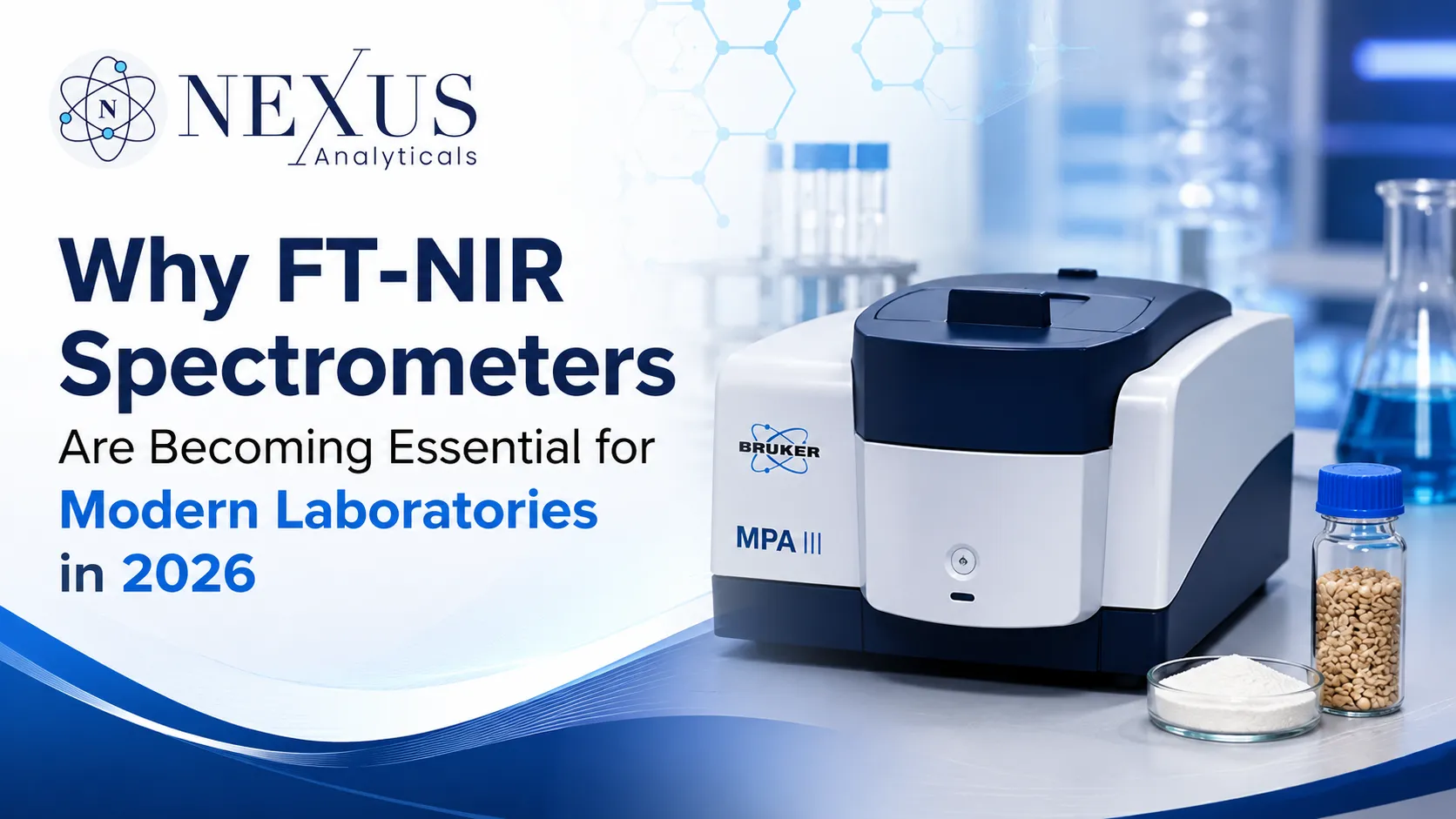

In today's fast-paced laboratory environment, accuracy, speed, and efficiency are more important than ever. Industries such as pharmaceuticals, food processing, agriculture, chemicals, and research laboratories are constantly looking for analytical technologies that deliver reliable results while reducing testing time. This is where the FT-NIR Spectrometer has emerged as one of the most valuable analytical tools available in 2026.
Unlike traditional analytical methods that often require extensive sample preparation, an FT-NIR system allows rapid and non-destructive analysis of a wide range of materials. Modern laboratories are increasingly adopting Near Infrared technology to improve productivity, maintain quality standards, and support data-driven decision-making.
Organizations looking for advanced analytical instruments can explore the latest solutions offered by Nexus Analyticals.
What Is an FT-NIR Spectrometer?
An FT-NIR Spectrometer (Fourier Transform Near Infrared Spectrometer) is an analytical instrument that uses near-infrared light to determine the chemical composition and physical properties of a sample. By measuring how a material absorbs near-infrared wavelengths, laboratories can quickly identify components, moisture levels, protein content, and other critical characteristics.
A modern NIR Spectrometer can analyze powders, tablets, liquids, grains, polymers, and many other materials without destroying the sample. This capability makes it highly attractive for laboratories that require fast and repeatable results.
Why Laboratories Prefer FT-NIR Technology
The demand for faster analytical workflows continues to grow across industries. Traditional testing methods often require lengthy preparation, reagents, and complex procedures. In contrast, an FT-NIR Analyzer provides rapid results with minimal operator involvement.
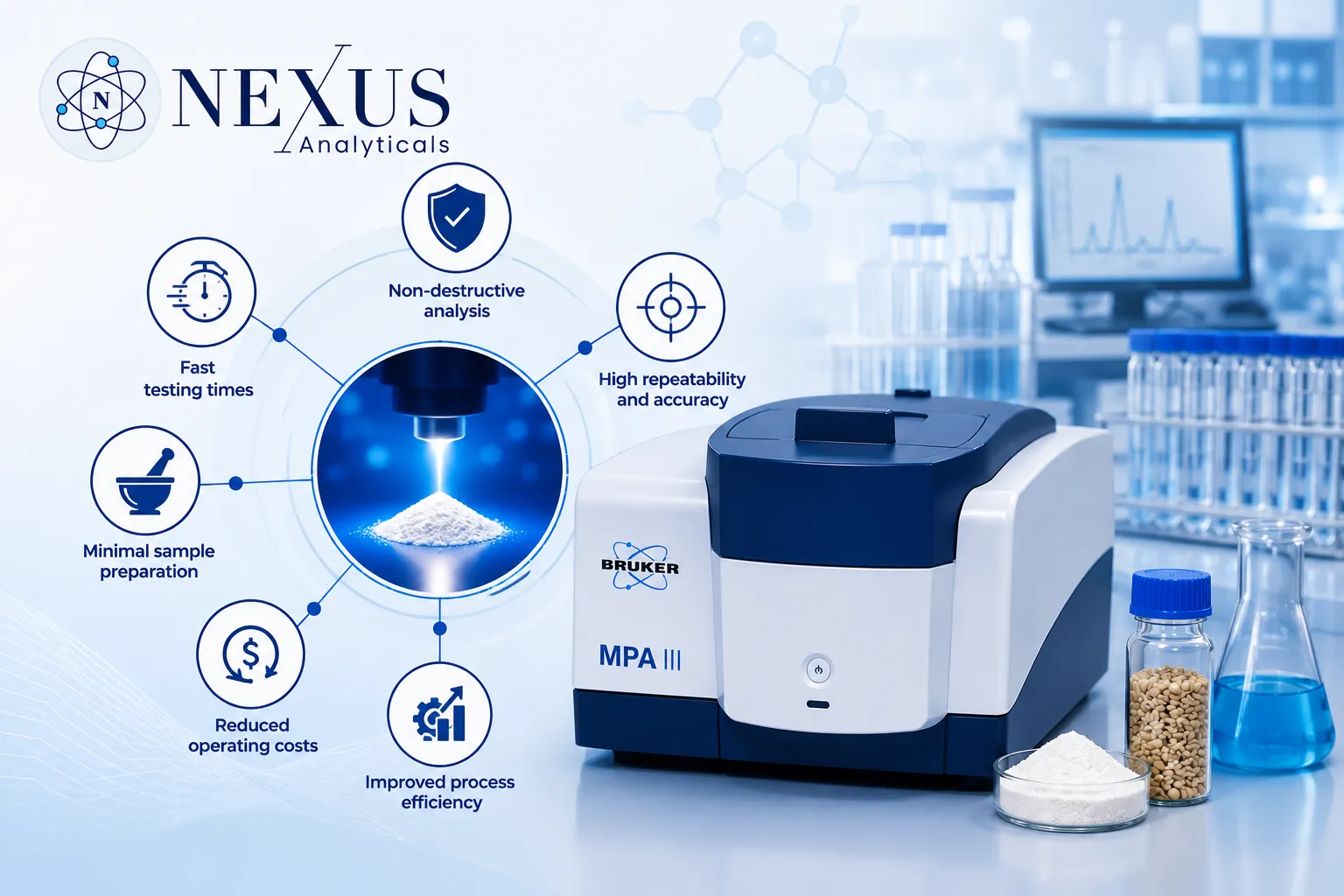
Key advantages include:
- Non-destructive analysis
- Fast testing times
- Minimal sample preparation
- Reduced operating costs
- Improved process efficiency
- High repeatability and accuracy
These benefits make FT-NIR technology suitable for both routine quality control and advanced research applications.
How an FT-NIR Spectrometer Works
The operating principle of an FT-NIR Spectroscopy System is based on measuring the interaction between near-infrared light and the molecular structure of a sample.
The instrument directs near-infrared radiation toward the sample. Different chemical bonds absorb specific wavelengths of light, creating a unique spectral fingerprint. Sophisticated software then analyzes the spectrum and compares it against calibration models or reference libraries.
This process allows laboratories to obtain valuable information within seconds, making FT-NIR one of the most efficient analytical techniques available today.
Applications of FT-NIR Spectrometers
Pharmaceutical Industry
Pharmaceutical companies use FT-NIR instruments for:
- Raw material verification
- Blend uniformity testing
- Tablet analysis
- Process monitoring
- Quality control
Food and Beverage Industry
Food manufacturers rely on Near Infrared analysis to measure:
- Moisture content
- Protein levels
- Fat composition
- Product consistency
Agricultural Testing
Agricultural laboratories use NIR technology to evaluate grains, seeds, animal feed, and crop quality.
Research and Development
Scientists utilize advanced FT-NIR systems to study materials, develop formulations, and improve manufacturing processes.
Why the Bruker MPA III Is a Preferred Choice
Among modern FT-NIR solutions, the Bruker MPA III stands out for its flexibility, accuracy, and advanced analytical capabilities.
The system supports multiple sampling techniques and delivers reliable performance across pharmaceutical, food, chemical, and research applications. Laboratories seeking high-quality Near Infrared analysis often choose the Bruker platform because of its proven performance and long-term reliability.
Learn more about the FT-NIR Spectrometer solution.
Factors to Consider Before Purchasing an FT-NIR Spectrometer
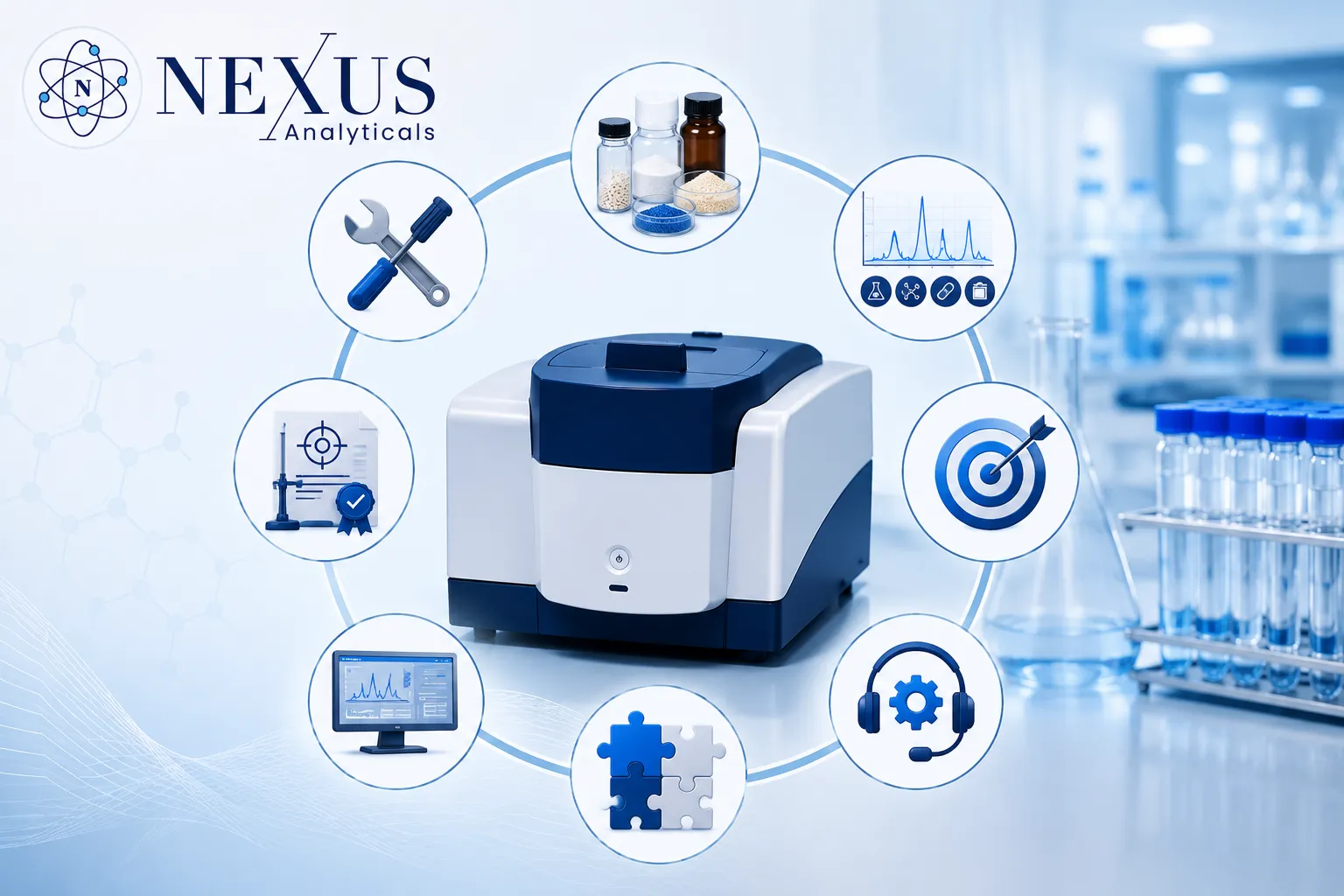
Before investing in a system, laboratories should evaluate:
- Sample types and applications
- Required analytical parameters
- Instrument accuracy
- Calibration support
- Software capabilities
- Service and maintenance support
- Future scalability
Selecting the right instrument ensures long-term value and optimal analytical performance.
Related Resources
To learn more about spectroscopy technologies, explore:
- FT-NIR Spectrometer
- What Is FTIR Spectroscopy and How Does It Work?
- How Does a Bruker FTIR Spectrometer Support Quality Control and Research Labs?
- Benefits of Handheld Raman Spectrometers for On-Site Analysis
- Nexus Analyticals Homepage
Why FT-NIR Spectrometers Are Essential for Modern Laboratories
The FT-NIR Spectrometer has become an indispensable tool for modern laboratories seeking rapid, accurate, and non-destructive analysis. Whether used for pharmaceutical quality control, food testing, agricultural analysis, or scientific research, FT-NIR technology helps organizations improve efficiency while maintaining high analytical standards.
With advanced systems such as the Bruker MPA III, laboratories can achieve reliable results, streamline workflows, and stay prepared for evolving analytical requirements in 2026 and beyond.
FAQ
1. What is an FT-NIR Spectrometer used for?
An FT-NIR Spectrometer is used for rapid and non-destructive analysis of materials in pharmaceutical, food, agricultural, chemical, and research laboratories. It helps determine composition, moisture content, and other quality parameters quickly.
2. How does an NIR Spectrometer differ from traditional laboratory testing methods?
A NIR Spectrometer provides faster results with minimal sample preparation and does not require chemical reagents. This makes it a cost-effective and efficient alternative to many conventional testing methods.
3. What industries commonly use FT-NIR Analyzers?
FT-NIR Analyzers are widely used in pharmaceuticals, food and beverage production, agriculture, animal feed testing, chemicals, polymers, and academic research laboratories.
4. Why is the Bruker MPA III popular among laboratories?
The Bruker MPA III offers high analytical accuracy, flexible sampling options, advanced software capabilities, and reliable performance, making it suitable for both quality control and research applications.
5. What should I consider before purchasing an FT-NIR Spectroscopy System?
Before purchasing an FT-NIR Spectroscopy System, evaluate your application requirements, sample types, calibration needs, software features, service support, and future scalability to ensure the instrument meets your laboratory's long-term needs.
























Sign in to leave a comment.