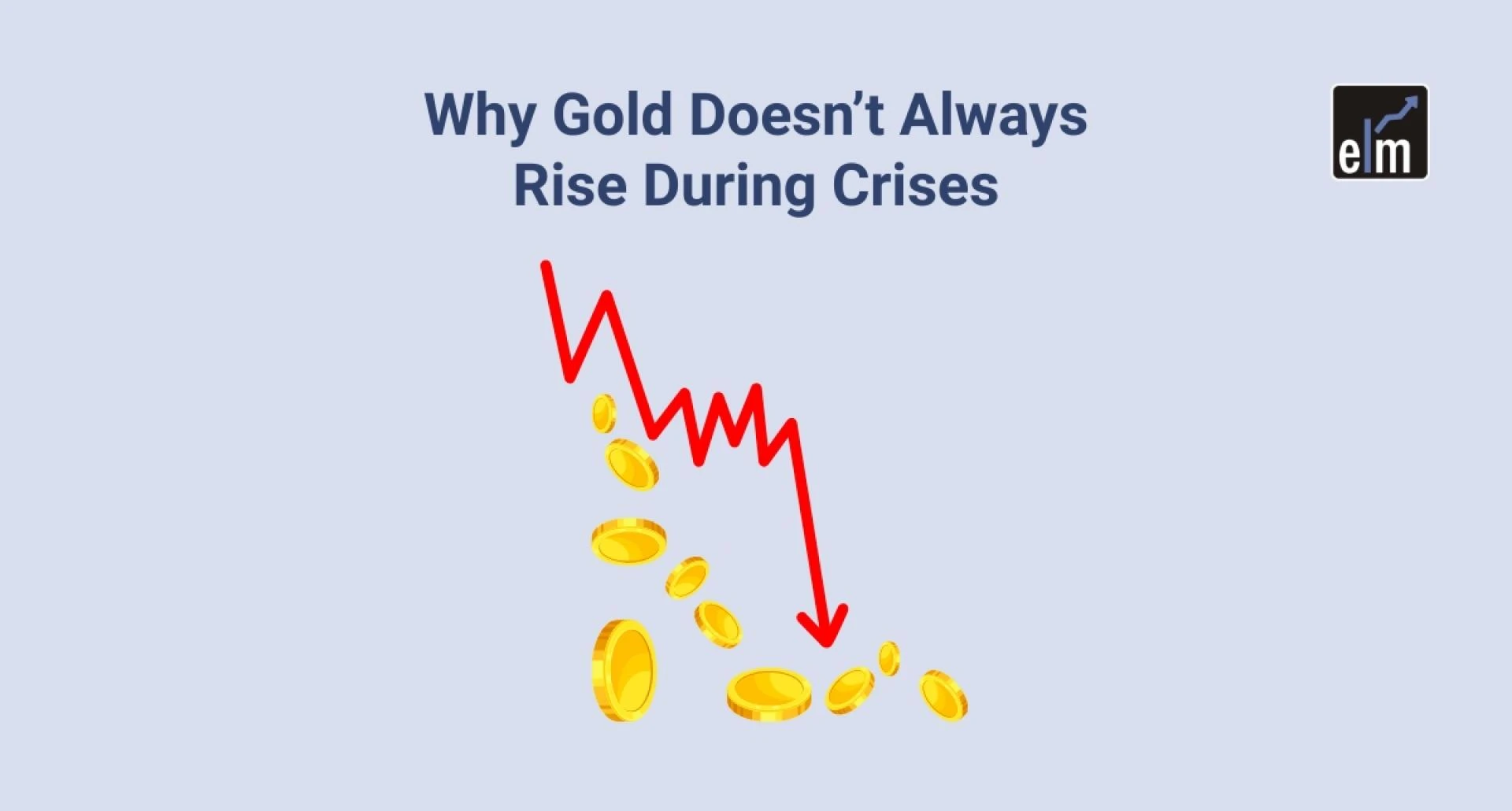

Gold is often called a “safe-haven asset". During economic uncertainty, wars, or market crashes, investors usually move their money into gold because it is considered a store of value. However, history shows that gold does not always rise during crises. In some situations, gold prices can even fall temporarily despite global uncertainty.
Understanding why this happens requires looking at several factors such as currency movements, investor behaviour, and global monetary policy. For traders and investors, learning how these factors interact is important for making better decisions in volatile markets.
The Safe-Haven Role of Gold
Gold has historically been viewed as a safe asset during financial instability. According to the World Gold Council, investors often turn to gold during periods of inflation, currency weakness, or geopolitical tension because it tends to preserve value over long periods.
For example, during the Global Financial Crisis of 2008, gold prices rose significantly as investors searched for safer assets. Between 2008 and 2011, gold prices climbed from around $800 per ounce to over $1,800.
However, this pattern does not happen every time a crisis occurs.
1. Strength of the US Dollar
Gold and the United States dollar often move in opposite directions.
When global uncertainty increases, investors sometimes buy the dollar because it is the world’s primary reserve currency. A stronger dollar makes gold more expensive for buyers using other currencies, which can reduce demand and push gold prices down.
This is one reason gold may fall even when markets are nervous.
2. Liquidity Pressure During Market Stress
During major market corrections, investors sometimes sell assets simply to raise cash. This includes selling gold.
For example, during the early phase of the COVID‑19 market crash of 2020, gold prices initially fell along with stocks because investors were liquidating positions to cover losses or meet margin requirements. Once markets stabilised, gold prices started rising again.
This shows that short-term price movements in gold are often driven by liquidity needs rather than long-term fundamentals.
3. Interest Rate Expectations
Gold does not generate interest or dividends. Because of this, its attractiveness depends partly on interest rates.
When investors expect higher interest rates from central banks like the Federal Reserve, they may move money into interest-bearing assets such as bonds instead of gold.
Higher interest rates can therefore reduce demand for gold, even during uncertain economic periods.
4. Profit-Booking by Traders
Gold prices often rise ahead of major geopolitical events as traders anticipate uncertainty. When the event actually occurs, some traders start booking profits, which can lead to temporary declines in prices.
This behaviour is common in financial markets and is often referred to as “buy the rumour, sell the news".
The Role of Knowledge and Mentorship in Trading
Market behaviour during crises can sometimes appear confusing. Many new traders assume that gold will always rise when markets fall, but real market dynamics are more complex.
This is why learning from experienced traders or mentors can be valuable. A good trading mentorship programme can help traders understand how different factors, such as currency strength, liquidity conditions, and global macroeconomic trends, affect asset prices.
Instead of relying on assumptions, traders can learn to analyse markets more objectively and make better risk-managed decisions.
Conclusion
Gold is widely regarded as a safe-haven asset, but its price does not always rise during crises. Factors such as a strong US dollar, liquidity pressures, rising interest rate expectations, and profit-booking can lead to temporary declines in gold prices even during periods of uncertainty.
For investors and traders, understanding these dynamics is essential. Markets are influenced by multiple global factors, and developing the knowledge to interpret them, often through education and mentorship, can help individuals navigate volatility more effectively.


























Sign in to leave a comment.