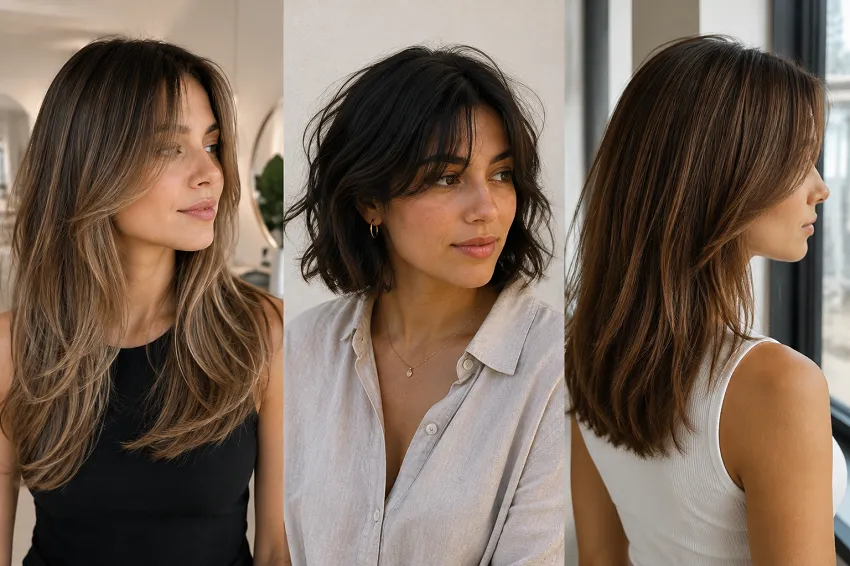

A new hairstyle can look irresistible on a screen.
The photograph is perfectly lit. The hair falls into exactly the right position. The colour catches the light beautifully, and the overall effect appears effortless. Within hours, thousands of people may have saved the image, shared it and decided that they want something similar.
Then comes the salon appointment.
And that is often when reality begins.
The problem is not necessarily that the hairstyle was a bad choice. The problem is that hair trends exist in a world of photographs, while real hair exists in a world of texture, weather, routines, growth and time.
What looks effortless in an image can require considerable effort in everyday life.
This is one reason professional hairdressers continue to play an important role despite the enormous amount of styling information now available online. Their job is not simply to reproduce a picture. It is to interpret what makes the picture appealing and determine how that idea can work on a different person.
That distinction is becoming increasingly important.
Social media has changed the speed at which hair trends travel. A style that once took months or years to move between cities can now become popular internationally within days. A haircut spotted in London can appear in salons across the world almost immediately.
The result is an extraordinary level of inspiration.
But inspiration and suitability are not the same thing.
Every head of hair has its own characteristics.
Some hair is naturally dense. Some is fine. Some grows in several different directions. Some has strong natural movement, while other hair remains relatively straight regardless of the technique used.
Even seemingly minor differences can completely change how a haircut behaves.
A fringe provides a simple example.
The same fringe can look soft and relaxed on one person while appearing much heavier on another. Natural growth patterns, forehead shape, density and texture all influence the result.
A photograph cannot communicate those details.
A stylist can.
This is why the consultation has become increasingly important in modern hairdressing.
When clients bring photographs to appointments, the best professionals do not necessarily ask, "How can I copy this?"
They ask a more useful question:
"What do you like about this?"
Perhaps the client likes the movement.
Perhaps they like the softness around the face.
Maybe they like the colour rather than the haircut.
Or perhaps the image simply represents how they want their hair to feel.
Understanding that distinction allows a stylist to recreate the idea without copying every detail.
This is often how successful trend adoption works.
A good haircut does not necessarily reproduce fashion exactly.
It borrows from it.
A modern version of a classic bob may incorporate softer layers.
A popular fringe may be adjusted to suit a different face shape.
A fashionable colour technique may be adapted to require less frequent maintenance.
The trend remains visible, but the result becomes personal.
That personalisation is particularly important because real life is considerably less controlled than a professional photograph.
People sleep.
They exercise.
They commute.
They travel.
They get caught in rain.
They wash their hair at different intervals.
They do not always have access to a professional blow-dry every morning.
A hairstyle therefore has to survive circumstances that are rarely visible in the original image.
This is where maintenance becomes part of the conversation.
Some trends are relatively easy to live with.
Others require considerable commitment.
A dramatic colour transformation may look spectacular initially but demand regular salon visits to maintain the intended tone.
A highly structured haircut may require frequent styling.
Certain fringe shapes need regular trimming.
Textured cuts may look exceptional when professionally dried but require a little technique to reproduce at home.
None of this means these styles should be avoided.
It simply means clients deserve to know what they are committing to.
Good hairdressing includes that honesty.
There is a tendency to think that a stylist's job is to say yes.
In reality, professional expertise sometimes means explaining why a particular request needs modification.
That does not have to be a negative experience.
A stylist can preserve the spirit of an idea while changing its practical execution.
For example, someone may want extremely short layers because they have seen a fashionable editorial cut.
If their hair is very fine, a stylist might recommend a different distribution of layers to create the same sense of movement without sacrificing density.
The client still receives the visual character they wanted.
The haircut simply works with their hair rather than against it.
This is one of the less visible forms of technical skill in hairdressing.
It does not produce dramatic before-and-after photographs.
But it determines whether the haircut continues looking good several weeks later.
Longevity is often the real test of a trend.
A hairstyle that looks beautiful on appointment day but becomes difficult to manage after two weeks is not necessarily a successful result.
A style that continues looking balanced as it grows can be far more valuable.
This is why experienced hairdressers think about the future while working on the present.
They consider how the shape will change.
Where the weight will move.
How the fringe will grow.
How colour will fade.
What the client will be able to manage at home.
These considerations become particularly important with colour.
Modern colour techniques can create exceptionally subtle results, but the best hair colourists think beyond the first photograph.
They consider regrowth.
Maintenance.
Previous colour.
Hair condition.
Future changes.
A colour that has been carefully planned can evolve beautifully rather than becoming a problem that needs correcting later.
This long-term thinking is one of the clearest differences between professional work and online inspiration.
The internet shows the destination.
The stylist understands the journey.
There is also a growing appreciation for trends that work with natural texture.
For years, many fashionable styles were presented on hair that had been extensively prepared for the camera.
Today, there is greater interest in natural curls, waves, movement and individuality.
That is a positive development.
Instead of asking everyone to achieve the same polished finish, modern hairdressing increasingly allows different textures to become part of the final look.
Yet natural texture also requires understanding.
Curly hair does not behave like straight hair with a curl added to it.
Wavy hair has its own patterns.
Fine hair can have significant movement without having much density.
Thick hair can appear completely different depending on how weight is distributed.
A stylist who understands these differences can use them creatively rather than trying to eliminate them.
This philosophy extends into haircare.
The products used at home influence how a trend translates into everyday life.
A haircut designed around natural movement needs products that support that movement.
Fine hair may require lightweight styling rather than heavy creams.
Dry or textured hair may need more substantial conditioning.
Colour-treated hair may benefit from a routine designed to maintain its condition and appearance between appointments.
The most successful results therefore involve a relationship between the haircut and what happens afterwards.
Some professional salons have developed their own haircare philosophies precisely because they see this connection every day.
Perhaps this is why the most enduring hair trends are not always the most dramatic ones.
They are the trends that leave room for individuality.
A haircut can be fashionable without looking like a copy of someone else's.
A colour can feel contemporary without requiring constant maintenance.
A styling technique can create movement without turning the morning routine into a project.
The strongest trends adapt.
They evolve according to the person wearing them.
This is also why photographs should be treated as conversation starters rather than instructions.
A good reference image communicates an idea.
It should not dictate every detail.
The client and stylist can then work together to determine what elements are worth carrying across and what needs to change.
That collaborative process is where modern hairdressing becomes particularly interesting.
The stylist brings technical knowledge.
The client brings personal preference.
The final result belongs somewhere between the two.
It may not look exactly like the original photograph.
It may actually look better.
Because the objective was never really to recreate an image.
It was to capture the feeling behind it.
Hair trends will continue to move quickly.
New cuts will become popular.
Colours will return in different forms.
Old styles will be rediscovered and given new names.
There is no reason to resist that cycle.
Trends can be fun, inspiring and creatively useful.
The important thing is remembering that real hair does not exist on a screen.
It exists on a person.
It has texture, history and habits.
It has good days and difficult days.
And the most successful hairstyle is rarely the one that looks perfect in a photograph.
It is the one that still feels right when the photograph is long forgotten.























Sign in to leave a comment.