
There is a familiar frustration that comes with fine hair. You style it carefully in the morning—there is lift at the roots, a sense of movement through the lengths, and everything feels light, controlled, and intentional. But as the hours pass, something shifts. The volume softens, the structure fades, and the hair begins to settle into a flatter, less defined version of itself. It is not dramatic, but it is noticeable enough to feel like the effort did not quite hold.
This is often mistaken for a styling issue, but in reality, it is rarely about the styling itself. Fine hair does not struggle to achieve shape—it struggles to retain it. The difference between those two is where most routines fall short. In London, where the environment constantly shifts between humidity, dryness, and urban exposure, this challenge becomes even more pronounced. Hair that feels full and responsive in the morning may behave very differently by the afternoon, not because anything went wrong, but because the foundation beneath the styling was not strong enough to support it.
To understand why styling fades so quickly, it becomes necessary to look at what happens before styling even begins.
The Lightweight Nature of Fine Hair
Fine hair is defined by the thinness of each strand, not necessarily the amount of hair on the head. This distinction is important because it explains why fine hair can appear full at first, yet struggle to maintain that fullness over time. Each strand is lighter, more flexible, and less resistant to external forces such as gravity, moisture, and product weight.
Because of this, fine hair reacts quickly. It absorbs moisture from the air, it responds to oil production at the scalp, and it is easily influenced by the products applied to it. This responsiveness can be an advantage when styling, as the hair can be shaped relatively easily. However, it also means that the shape is less stable.
Without internal support, fine hair returns to its natural state quickly. The challenge is not creating volume—it is maintaining it.
Why Traditional Volume Solutions Don’t Last
Many routines attempt to solve this issue by focusing on volume-enhancing products. Sprays, mousses, and lifting products are layered in an effort to create height and structure. While these can be effective in the short term, they often fail to deliver lasting results.
The reason is simple: they work on the surface.
They create the appearance of volume, but they do not change the underlying behaviour of the hair. Once the initial effect wears off, the hair returns to its original state. In some cases, the added product can even weigh the hair down, accelerating the loss of volume.
This is why styling can feel temporary. The structure is applied externally, rather than supported internally.
The Importance of Pre-Styling Support
The most significant change in fine hair routines happens when the focus shifts to what is applied before styling.
Instead of relying on finishing products to create volume, the goal becomes to prepare the hair so that it can hold shape more effectively on its own. This preparation step is often overlooked, but it is where the foundation for lasting styling is built.
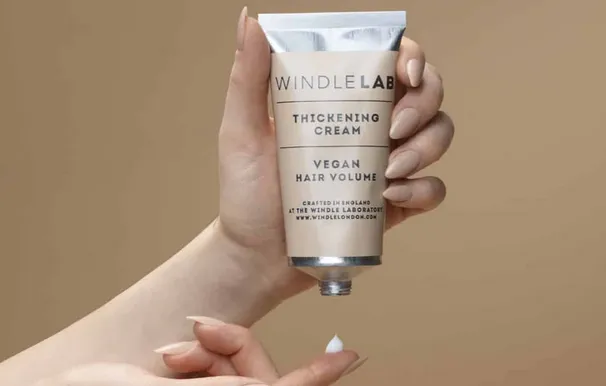
At this stage, introducing hair thickening products can redefine how fine hair behaves. Rather than sitting on the surface, it integrates into the strands, subtly increasing their ability to hold structure while maintaining their natural lightness.
This does not create artificial volume. It enhances the hair’s ability to support volume naturally.
London’s Environment and Its Effect on Styling
London presents a unique challenge for fine hair.
The city’s environment is constantly changing. Outdoor humidity can soften the hair, making it more prone to collapse. Indoor heating can dry it out, reducing flexibility and movement. Pollution introduces particles that settle on the hair, adding subtle weight.
These factors may seem minor individually, but together they create a cycle of instability. Fine hair, being highly responsive, reacts quickly to these changes.
This is why styling that feels secure in one environment may not hold in another. Without a strong foundation, the hair adapts to its surroundings rather than maintaining its intended shape.
The Balance Between Lightness and Structure
One of the biggest challenges in working with fine hair is maintaining a balance between lightness and structure.
Too much structure, and the hair becomes stiff or heavy. Too much lightness, and it loses shape entirely. Finding the point where both coexist is what allows styling to last.
Hair thickening products contribute to this balance by providing subtle support without compromising movement. They allow the hair to retain its natural softness while improving its ability to hold form.
This balance is what transforms styling from temporary to consistent.
Why Less Product Often Works Better
There is a common assumption that more product leads to better results. For fine hair, the opposite is often true.
Because the strands are so lightweight, even small amounts of product can have a significant impact. Overloading the hair can lead to buildup, reducing movement and flattening volume.
A more refined approach—using fewer, more targeted products—allows the hair to behave more naturally. It reduces interference and makes the routine more predictable.
This is particularly important in environments like London, where external factors are already influencing the hair throughout the day.
A More Considered Approach to Fine Hair
There is a growing shift toward more thoughtful, minimal routines for fine hair.
Rather than layering multiple products, the focus is on choosing formulations that work with the hair’s natural behaviour. This includes supporting structure, maintaining lightness, and avoiding unnecessary weight.
This shift reflects a deeper understanding of fine hair—not as something that needs to be forced into shape, but as something that needs to be supported.
Long-Term Changes in Hair Behaviour
When fine hair is consistently supported, its behaviour begins to change.
It holds volume for longer periods. It responds more predictably to styling. It requires fewer adjustments throughout the day.
These changes are gradual, but they are significant. They reduce the need for constant intervention and make the routine more efficient.
Over time, the hair becomes easier to manage, not because it has been transformed, but because it has been understood.
From Temporary Volume to Lasting Shape
The difference between styling that fades and styling that lasts lies in the foundation.
By focusing on what is applied before styling, it becomes possible to create a base that supports the hair throughout the day. This reduces reliance on surface-level solutions and allows the hair to maintain its structure more naturally.
Hair thickening products play a key role in this by enhancing the hair’s internal support system, making it more capable of holding shape without added weight.
A Closing Perspective on Styling That Actually Lasts
Fine hair does not need to be overloaded to look full—it needs to be supported in the right way.
When the foundation is strong, styling becomes more reliable. Volume lasts longer, movement feels natural, and the hair maintains its shape with less effort.
A hair thickening products solution offers a way to achieve this balance—improving structure, enhancing manageability, and allowing fine hair to hold its style without losing its lightness.
If you’re ready to move beyond short-lived volume and build a routine that delivers lasting results, explore the Windle London collection to discover expertly formulated thickening solutions designed to support fine hair, helping it feel fuller, stronger, and consistently styled from morning through evening without compromise.















Sign in to leave a comment.