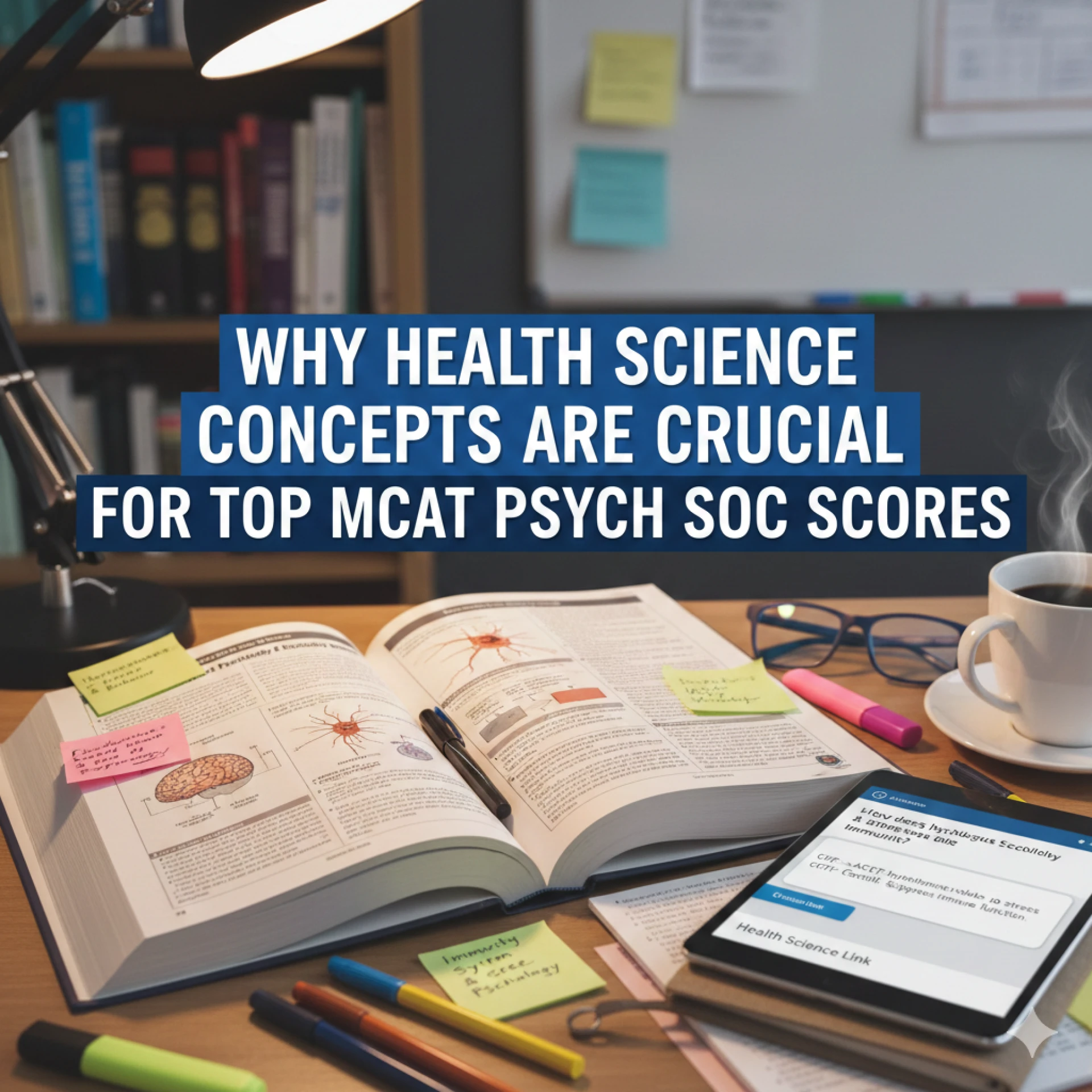

The MCAT Psychological, Social, and Biological Foundations of Behavior section, often called Psych/Soc, is more than just memorizing terms. It tests how well you understand health science concepts and apply them to real-world scenarios. Students who overlook this connection often struggle to reach top scores, even if they are strong in memorization. This is where a solid grounding in health science, paired with MCAT tutoring services or structured mcat prep classes, can make a real difference.
Understanding the MCAT Psych Soc Section
What Topics Are Tested in Psych Soc?
The Psych/Soc section blends psychology, sociology, and health-related sciences. You’ll see topics like behavior, mental processes, social structures, epidemiology, and healthcare disparities. These are not isolated ideas. They are deeply rooted in health science concepts such as disease prevention, patient behavior, and population health.
Why This Section Matters for Medical School
Medical schools want future doctors who understand patients as people, not just as symptoms. This section evaluates whether you can think critically about how biological, psychological, and social factors interact. A high score here shows readiness for patient-centered care.
The Role of Health Science in MCAT Psych Soc
Biological Foundations of Behavior
Health science provides the biological “why” behind behavior. Understanding anatomy, physiology, and pathology helps you explain psychological outcomes logically instead of guessing.
Hormones, Neurotransmitters, and Behavior
Neurotransmitters like dopamine or serotonin are not just vocabulary words. They are health science concepts tied to mood disorders, addiction, and treatment outcomes. When passages describe patients or experiments, these links become essential.
Social Determinants of Health
Health science also examines how income, education, environment, and culture affect health outcomes. Many MCAT passages focus on disparities in care or disease prevalence, and recognizing these patterns helps you answer questions faster and more accurately.
Applying Health Science Concepts to Passage-Based Questions
Data Interpretation and Experimental Design
Psych/Soc passages often include charts, graphs, and study designs. Health science training teaches you how to evaluate variables, controls, and biases. This skill is critical for eliminating wrong answer choices.
Real-World Health Scenarios
The MCAT loves realistic scenarios, community health programs, patient interviews, or behavioral interventions. Students familiar with health science concepts can connect theory to practice, making complex passages feel manageable.
How MCAT Tutoring Services Strengthen Conceptual Mastery
Personalized Learning Plans
One major advantage of MCAT tutoring services is personalization. Tutors identify weak areas in health science understanding and build targeted strategies. This saves time and boosts confidence.
Expert Feedback and Strategy
Experienced tutors explain why an answer is right or wrong, often using clinical or public health examples. This deeper understanding is what separates average scores from top percentiles.
Benefits of Enrolling in mcat prep classes
Integrated Curriculum Design
Well-designed mcat prep classes integrate health science with psychology and sociology. Instead of studying topics in isolation, you learn how concepts overlap, just like they do on the exam.
Practice Exams and Analytics
Prep classes usually include full-length exams and detailed performance reports. These analytics highlight whether you struggle with health-related passages, allowing focused improvement before test day.
Common Mistakes Students Make Without Health Science Foundations
- Memorizing terms without understanding application
- Ignoring public health and epidemiology concepts
- Struggling with research-based passages
- Misinterpreting social science data
- Running out of time due to inefficient reasoning
Building health science knowledge helps avoid all of these pitfalls.
Frequently Asked Questions (FAQs)
1. Is the MCAT Psych Soc section mostly memorization?
No. While terminology matters, application of health science concepts is far more important.
2. How much health science background do I need?
A basic understanding of biology, public health, and research methods is enough when applied correctly.
3. Do MCAT tutoring services really help with Psych Soc?
Yes. They help translate abstract concepts into test-ready strategies.
4. Are mcat prep classes better than self-study?
For many students, structured classes improve consistency, accountability, and integration of concepts.
5. Can I improve my Psych Soc score quickly?
Yes, especially by strengthening health science reasoning and practicing passage-based questions.
6. What’s the biggest advantage of understanding health science for Psych Soc?
It allows you to reason through unfamiliar passages instead of relying on memorization alone.
Conclusion
Scoring high in the MCAT Psych/Soc section requires more than knowing definitions. Health science concepts form the backbone of this section, helping you interpret passages, analyze data, and understand human behavior in context. Whether you choose MCAT tutoring services, enroll in mcat prep classes, or combine both, investing in health science understanding is one of the smartest moves you can make on your path to medical school.




























Sign in to leave a comment.