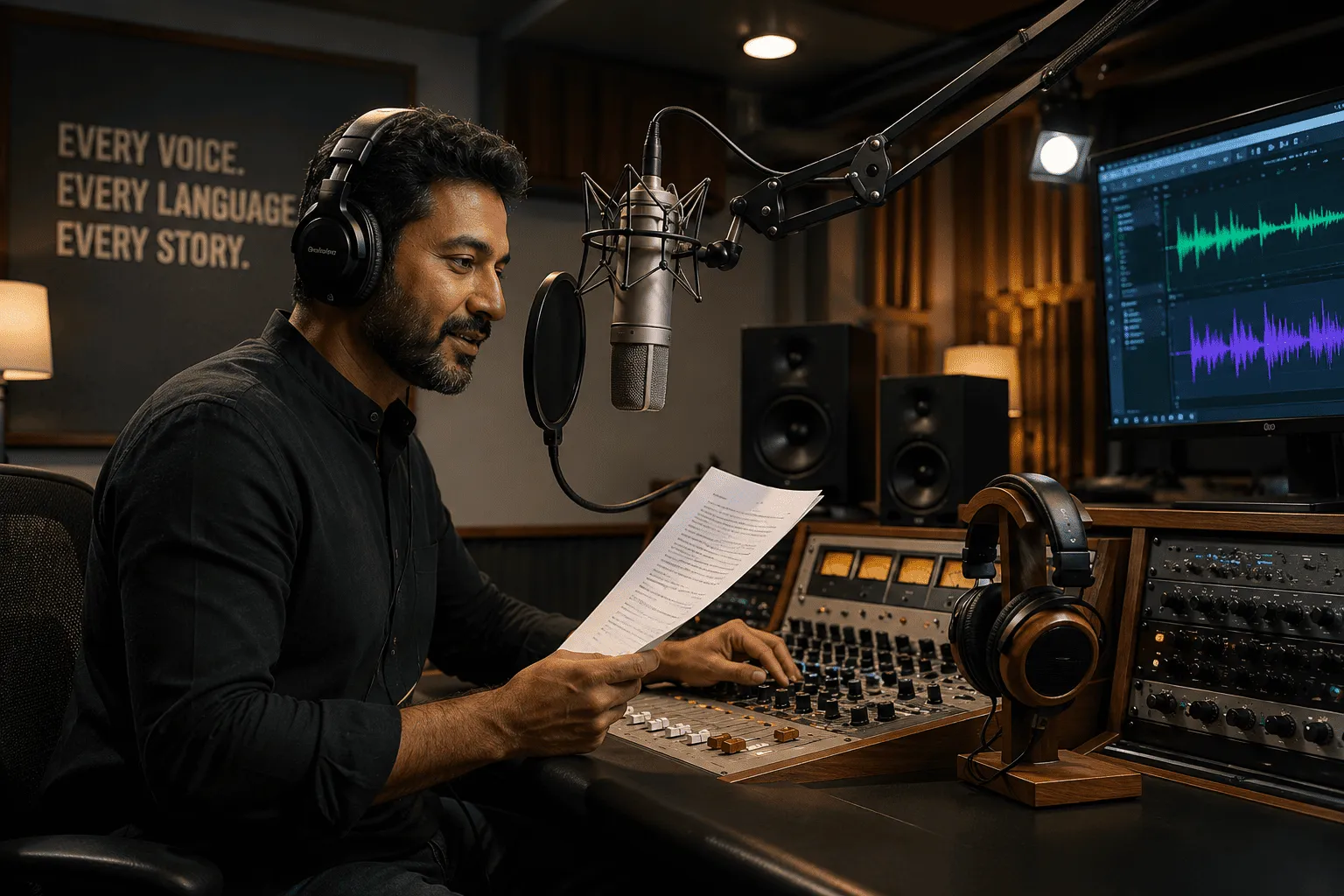

India is not one market. It never was.
With 22 officially recognized languages, over 19,500 dialects, and a population that consumes content across seven distinct script systems, India is perhaps the most complex media landscape any streaming platform has ever tried to crack. And yet, in the span of just a decade, platforms like Netflix, Amazon Prime Video, JioHotstar, ZEE5, and SonyLIV have collectively onboarded hundreds of millions of subscribers across the subcontinent.
The question worth asking is how.
The honest answer is “not original content alone.” It is not lower subscription tiers or even smartphone proliferation, though both played their parts. The real engine behind India's streaming explosion, the one that made mass adoption possible, is regional language dubbing.
The Scale of India's Language Problem (and Opportunity)
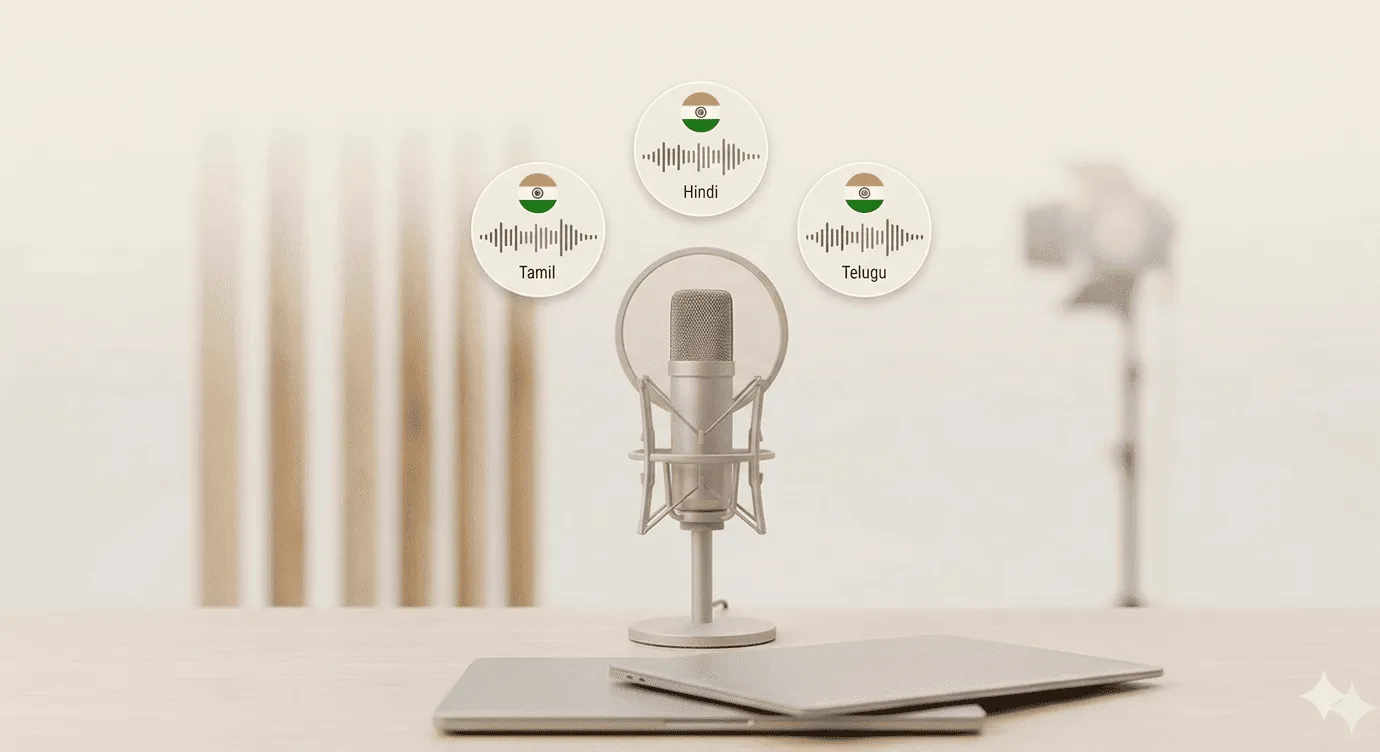
When a global OTT platform enters India, it walks into a country where roughly 44% of the population speaks Hindi as a primary or secondary language. That leaves over 700 million people whose first language is something else entirely: Tamil, Telugu, Kannada, Malayalam, Bengali, Marathi, Punjabi, Odia, or dozens of other tongues.
For decades, Bollywood and English-language Hollywood content dominated urban multiplexes, leaving vast regional audiences underserved. The satellite television era partially addressed this gap, but cable infrastructure had its own limitations.
OTT platforms arrived with a different promise: personalized, on-demand content in the language of your choice, available on a phone in your pocket. Fulfilling that promise at scale required and continues to require a robust, professional regional language dubbing ecosystem.
Dubbing Changed Who Could Watch What
The most significant cultural shift triggered by regional language dubbing on OTT platforms is not what people are watching. It is who is watching.
Before localization became standard practice on Indian streaming services, a Tamil-speaking grandmother in Coimbatore had virtually no access to Korean dramas, Spanish thrillers, or even Hindi blockbusters. Today, she can watch Money Heist dubbed in Tamil, follow Squid Game in Telugu, or catch up on a Bollywood hit in her own dialect all on the same app.
This democratization of content access is not sentimental. It is statistical. According to industry data, dubbed content routinely outperforms subtitled content in non-metro India by significant margins. Viewers in Tier 2 and Tier 3 cities, the next frontier for OTT growth, show a strong, consistent preference for audio localization over on-screen text. When platforms invested in professional regional language dubbing, their active user counts in these cities climbed sharply.
The OTT Platforms That Got It Right
Netflix's India strategy offers one of the clearest case studies in how seriously global platforms have come to take regional language dubbing. The platform now offers dubbing in Hindi, Tamil, Telugu, Malayalam, and Kannada for a significant portion of its global catalog. Titles like Stranger Things, Wednesday, and The Crown are not just available in India; they are fully localized, with voice artists carefully matched for age, tone, and emotional register.
Amazon Prime Video went a step further, commissioning original regional-language content, Tamil, Telugu, and Malayalam films and series while simultaneously dubbing its global catalogue into multiple Indian languages. The result was a content library that felt native rather than imported.
Disney+ Hotstar, with its deep roots in Indian sports broadcasting and access to the Star network's regional channels, understood early that language segmentation was not a feature but a fundamental product requirement. Its dubbing investment spans both international content and cross-regional Indian content, a Hindi drama dubbed in Tamil for Tamil-speaking audiences, for instance.
ZEE5 and SonyLIV, both homegrown platforms with legacy connections to regional television, have taken similar approaches, using their existing dubbing infrastructure to extend the reach of their catalogues across linguistic borders.
Regional Language Dubbing and the Rise of South Indian Cinema on OTT
Perhaps nowhere is the power of regional language dubbing more visible than in the meteoric rise of South Indian cinema on national and global platforms.
Baahubali set the template. When S. S. Rajamouli's epic was dubbed into Hindi and released theatrically, it became a national phenomenon. OTT platforms drew the obvious lesson: if professional dubbing could turn a Telugu film into a pan-India blockbuster on the big screen, it could do the same at far lower distribution cost on streaming.
The success of KGF: Chapter 2, RRR, Pushpa, and Vikram on OTT platforms, all released with comprehensive multilingual dubbing across Hindi, Tamil, Telugu, Kannada, and Malayalam, proved this theory right several times over. These films did not just perform well in their home language markets. They became watercooler conversations from Mumbai to Delhi to Kolkata, driven almost entirely by accessible, high-quality audio localization.
This cross-pollination has worked in both directions. Hindi films with strong regional dubbing have found new audiences in southern states, while Tamil and Telugu originals have crossed into the Hindi belt with unprecedented ease. Regional language dubbing is, in this sense, not just a technical service it is a cultural bridge.
The Economics Behind Localization Investment
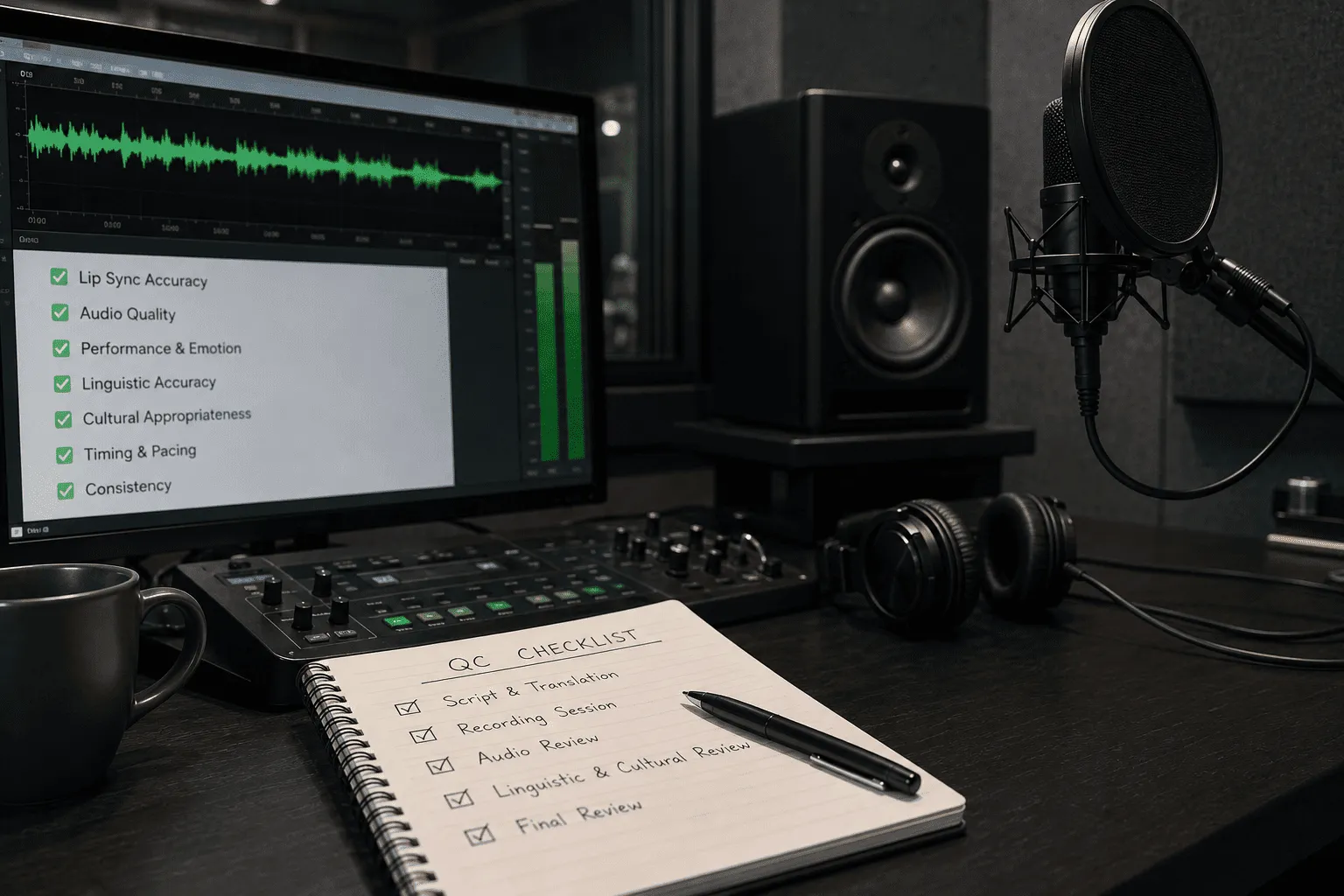
Investing in regional language dubbing is not cheap. A single feature film can require weeks of casting, recording, post-production synchronization, and quality review across five or six language tracks. For a serialized OTT show with ten episodes per season, the scale multiplies quickly.
Yet the economics have proven compelling. The cost of dubbing a title into four additional Indian languages is a fraction of the cost of acquiring or producing a new original. And the return on that investment, measured in subscriber retention, watch-time, and new user acquisition in non-metro markets, consistently justifies the expenditure.
This is why entertainment localization has become one of the fastest-growing segments of India's media services industry. Dubbing studios, voice talent agencies, and localization technology companies have all seen substantial growth on the back of OTT investment. The sector supports thousands of voice artists, sound engineers, dialect coaches, and language reviewers whose work rarely makes the credits but drives a significant portion of the viewing experience.
AI and the Future of Dubbing in India
The conversation around regional language dubbing in India cannot ignore the rapid emergence of AI-powered localization tools. Automated dubbing, voice cloning, and lip-sync AI are advancing quickly, and several platforms are quietly experimenting with these technologies to reduce turnaround times and production costs.
To be fair, AI has demonstrated genuine competence in certain dubbing contexts. For globally dominant languages such as English, Spanish, and French, where large volumes of training data exist, AI-driven dubbing tools can produce serviceable results with reasonable consistency. But that competence has a clear boundary, and it falls sharply when the focus shifts to regional language dubbing.
Indian regional languages present a different challenge altogether. Tamil, Telugu, Kannada, Malayalam, and their many dialects are significantly underrepresented in the datasets that power current AI voice and dubbing models. The consequence is not just technical inaccuracy it is emotional flatness. AI systems trained on limited linguistic data cannot reliably capture the tonal shifts, cultural idioms, and performance timing that define how these languages actually sound in lived experience. A Telugu villain's menacing monologue, a Malayalam comedy's rhythm-dependent punchline, a Punjabi folk song's layered feeling, these are not problems that any current synthesis pipeline handles with confidence.
The result is a clear and growing gap between what AI can deliver for well-resourced languages and what regional language dubbing actually demands. Until that data gap closes, and until AI can genuinely replicate human emotional range, the craft of skilled voice artists and directors remains not a legacy cost to be engineered away, but the irreplaceable core of quality localization for India's regional audiences.
What This Means for India's Content Economy
India's OTT market is projected to cross $15 billion in revenue by the end of this decade, with subscriber growth driven overwhelmingly by non-English, non-Hindi-speaking audiences. Every credible forecast points to the same conclusion: the next hundred million OTT subscribers in India will come from regional markets, and they will subscribe and stay subscribed only if they find content in their own language.
That reality places regional language dubbing at the center of every meaningful growth strategy in Indian streaming. It is not a supplementary feature on a content platform's roadmap. It is the infrastructure on which the entire regional expansion project rests.
For platforms, production houses, and media companies operating in this space, the question is no longer whether to invest in localization. It is how to do it well, consistently, and at the scale that India demands

















Sign in to leave a comment.