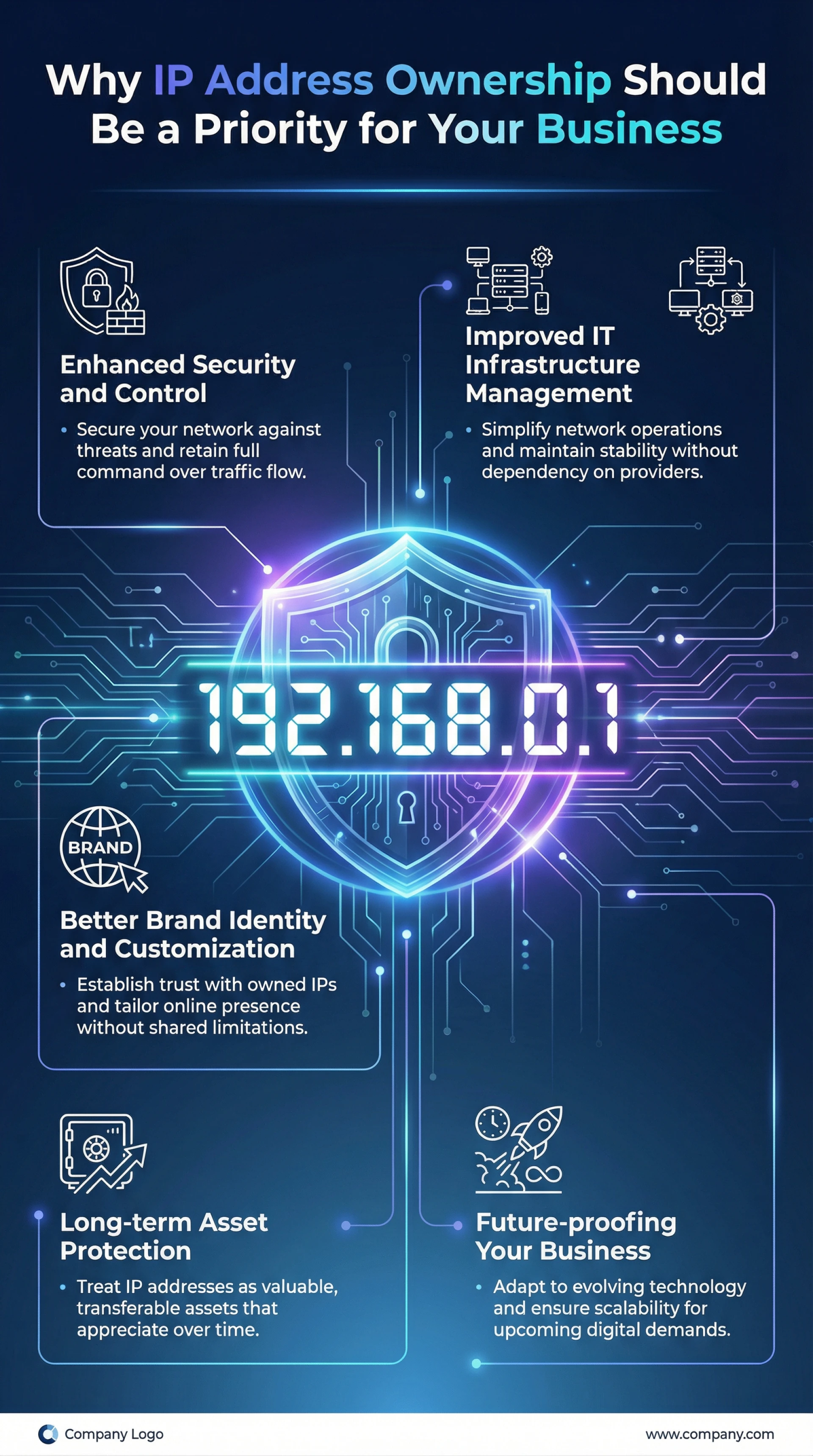

In today’s digitally-driven world, every business relies on the Internet to operate efficiently, reach customers, and store sensitive data. Yet, one critical component of your online infrastructure often goes overlooked: IP addresses. While they may seem like just a series of numbers, IP addresses are fundamental digital assets that play a crucial role in networking, security, and the overall integrity of your business online. Understanding and managing IP address ownership is no longer optional—it is a strategic necessity.
What Does IP Address Ownership Mean?
An IP (Internet Protocol) address is a unique numerical label assigned to every device connected to a network. This address allows devices to communicate with each other and ensures that data reaches the right destination. However, owning an IP address goes beyond simply using one. True IP address ownership means having control and legal rights over the address block, ensuring that it is registered under your organization’s name and not merely allocated temporarily by an Internet Service Provider (ISP).
IP address ownership is managed through Regional Internet Registries (RIRs) such as ARIN, RIPE NCC, APNIC, LACNIC, and AFRINIC. These organizations allocate IP addresses globally and maintain accurate records of which entity owns which blocks. Being listed as the rightful owner gives your organization legal recognition, control over your network identity, and the ability to manage routing policies without dependence on third parties.
Why IP Address Ownership Matters
Network Control and Independence
Relying on third-party providers for IP addresses can limit your flexibility. Ownership gives your organization the freedom to design your network infrastructure according to your requirements. You can reassign IPs internally, expand your network, or implement redundancy strategies without seeking external approvals.
Enhanced Security
Cybersecurity is more effective when you have control over your IP assets. IP address ownership allows you to monitor traffic, apply firewalls, and block malicious actors more efficiently. Additionally, owning your IP addresses helps prevent your network from being inadvertently blacklisted due to misuse by another entity, a risk that is higher when using shared IP addresses.
Reputation and Trust
A business with its own registered IP address blocks appears more professional and trustworthy to partners, clients, and service providers. It ensures that communications and digital services are traceable and accountable to your organization, reinforcing credibility in industries where data security and reliability are critical.
Financial Asset Potential
IP addresses are increasingly being recognized as valuable digital assets. Properly registered and maintained IP blocks can be leased, sold, or used as collateral in certain financial arrangements. Organizations that ignore IP ownership risk losing control over these assets or facing disputes that could devalue them.
Steps to Secure IP Address Ownership
Securing ownership begins with understanding your current allocation. Conduct an audit to determine which IP addresses are registered under your organization and which are leased or indirectly controlled. Next, engage with your Regional Internet Registry to ensure proper registration and compliance with reporting standards. For businesses with growing digital infrastructures, investing in IP address blocks directly from RIRs rather than through ISPs can future-proof your operations.
Conclusion
IP addresses are more than technical necessities—they are strategic assets. Ownership ensures control, enhances security, strengthens reputation, and even carries financial value. In a digital economy where connectivity defines competitiveness, neglecting IP address ownership could leave your business vulnerable to operational, security, and legal risks. By treating IP addresses as critical assets rather than mere numbers, your organization can secure a more resilient, efficient, and trustworthy digital presence.



































Sign in to leave a comment.