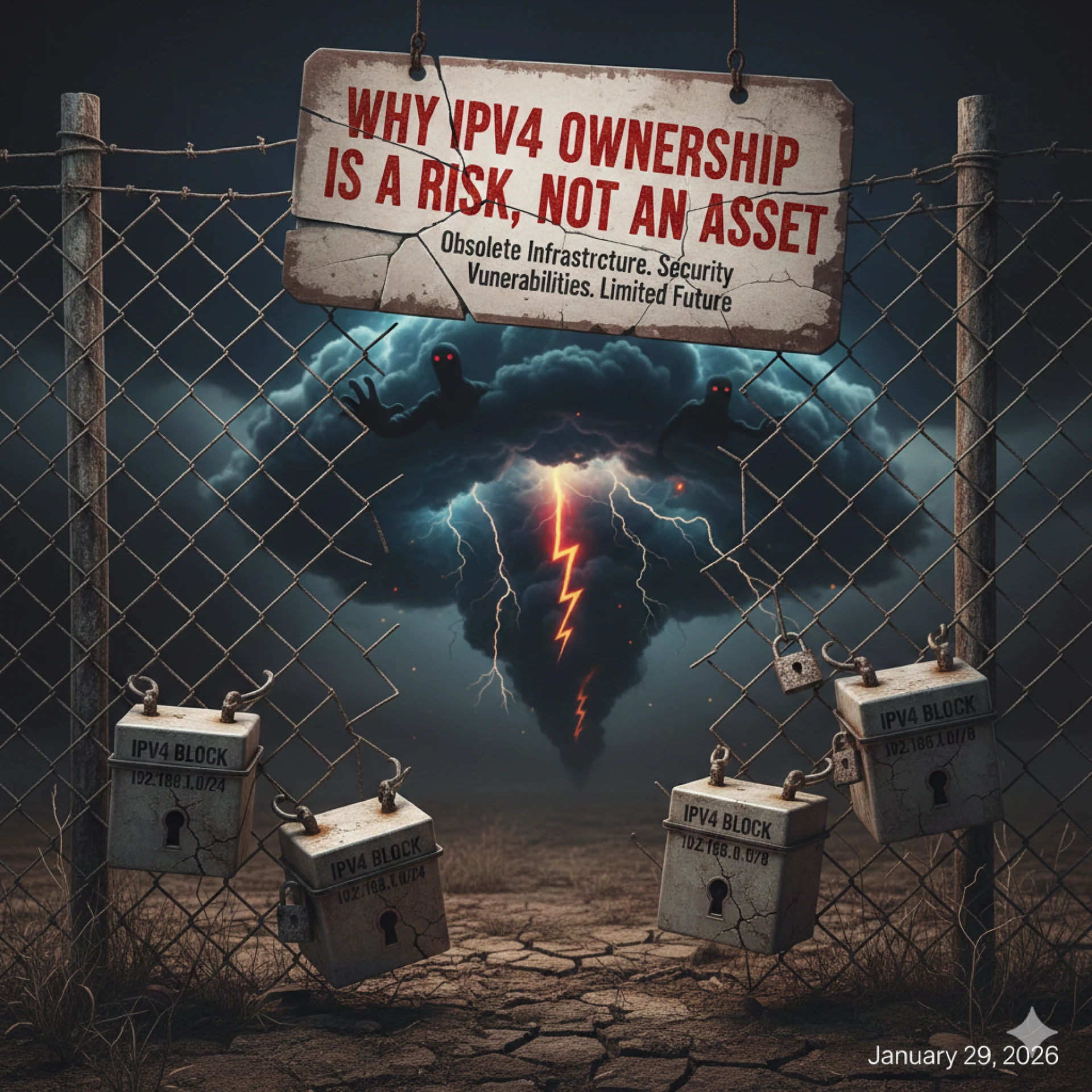

The global internet operates on a collective delusion: the belief that the governance of IP addresses—the very foundation of connectivity—is permanent, neutral, and guaranteed.
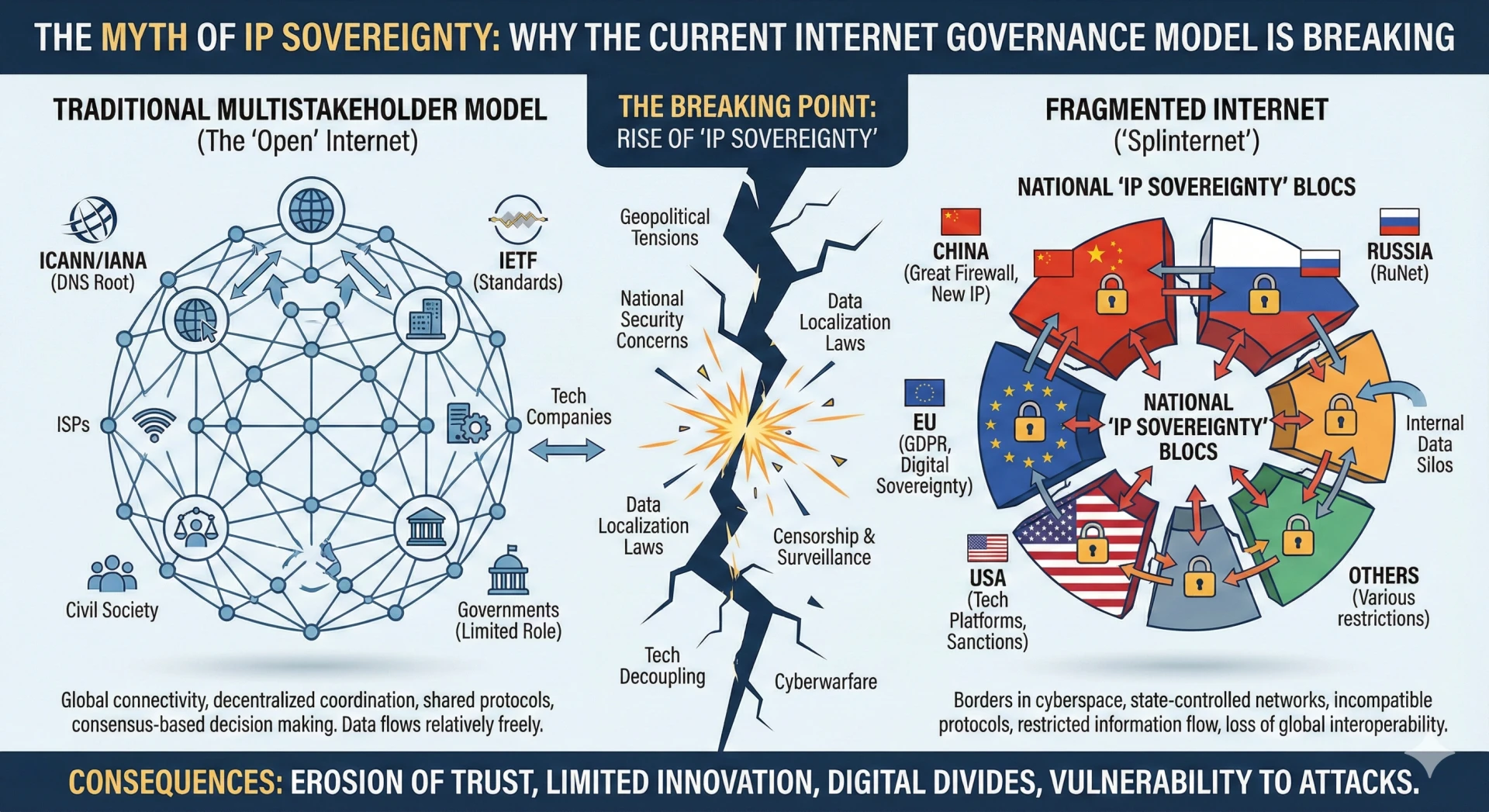
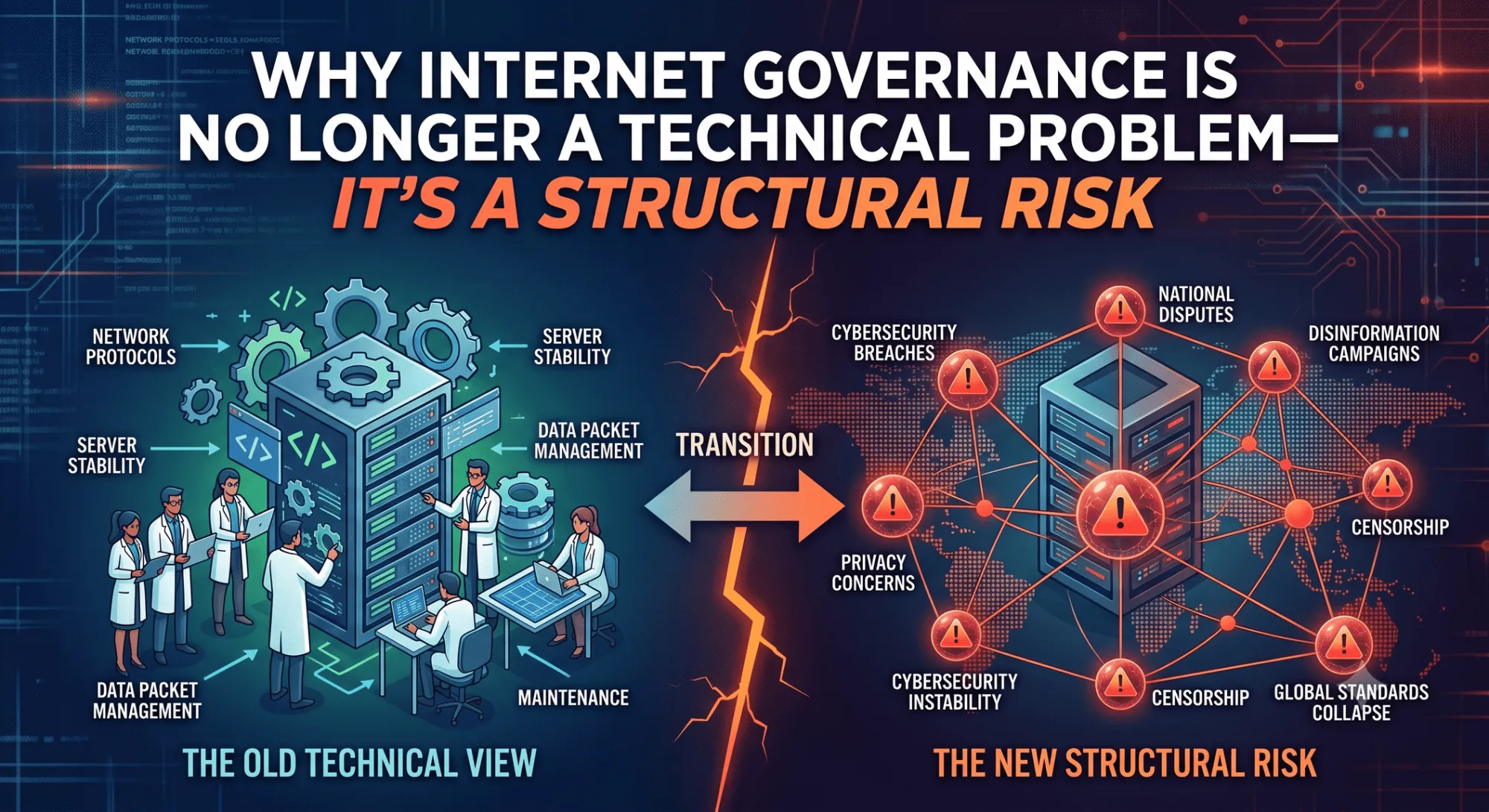
For decades, operators assumed that the regional bodies managing these numbers would always coordinate and always renew. This was a convenient fiction during the internet’s era of abundance. Today, as IPv4 scarcity has transformed administrative entries into high-value capital, that illusion has shattered. We are left with a system of voluntary cooperation governed by five small private entities, operating without global sovereign enforcement.
When the stakes are this high, voluntary systems are fragile. Under political pressure, legal action, or internal failure, the "guaranteed" renewal of your IP space can vanish.
The Myth of Ownership
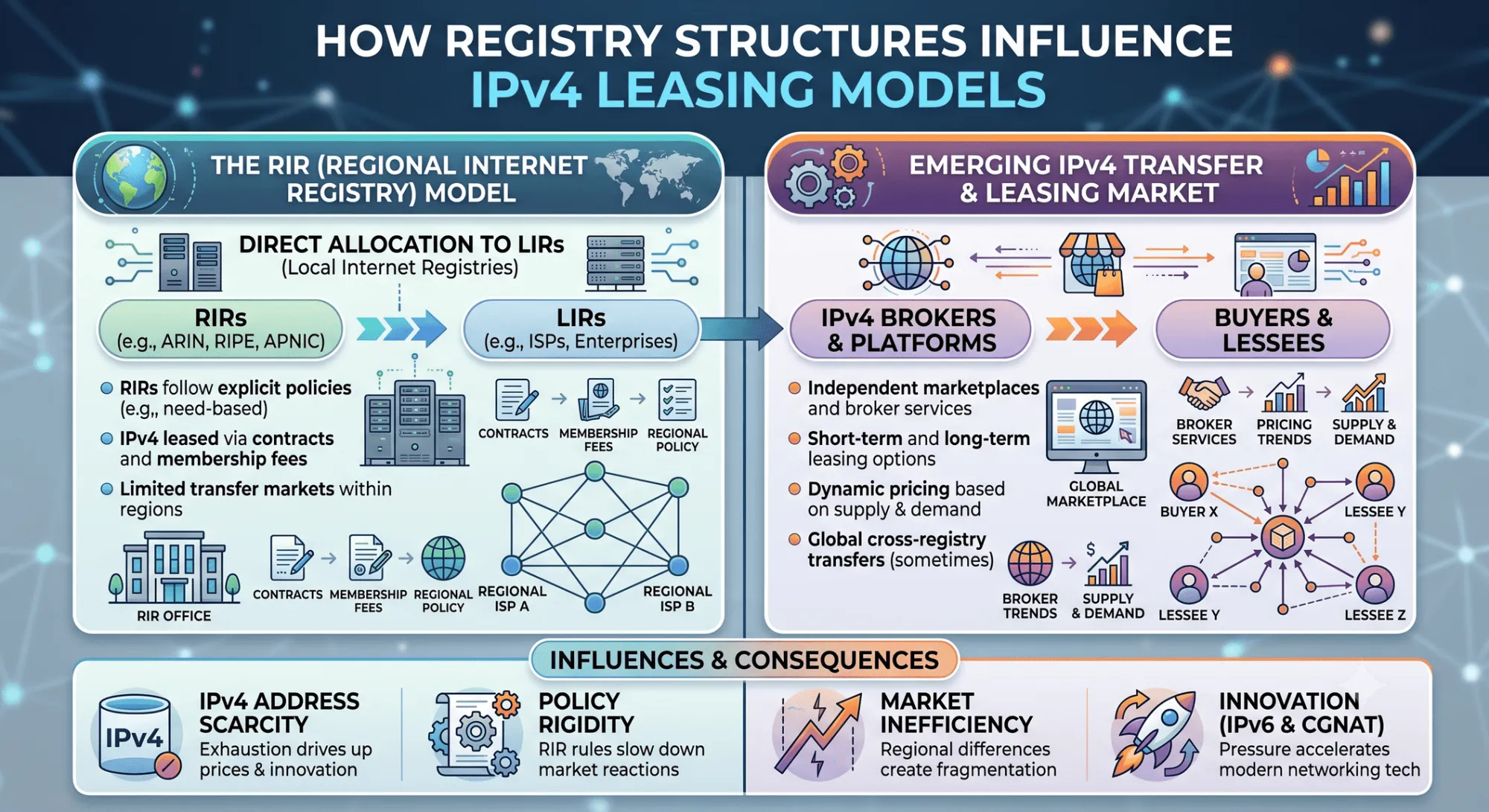
Many operators believe they "own" their IPv4 space. In reality, this ownership is legally illusory. There is no perpetual title or sovereign guarantee; there is only a service agreement with a Regional Internet Registry (RIR) that is subject to policy shifts and jurisdictional whims.
When you "buy" IPv4 today, you aren't buying land. You are prepaying decades of rent in a system with no inherent renewal protection. Ownership doesn't eliminate risk—it concentrates it. If a registry fails or an agreement is contested, the "owner" is the first to lose everything.
LARUS: Moving Risk from the Network to the Registry Layer
LARUS exists because the industry can no longer afford to ignore these structural cracks. We are not a broker or a middleman; we are one of the world’s largest first-party IPv4 lessors.
We don't just lease address space; we provide governance-layer business continuity. Here is how we differ from the traditional model:
- Contractual Certainty: We don't rely on "implied" renewals. We provide perpetual leasing with written, predictable terms.
- Risk Absorption: We sit between the RIR and the operator. We absorb the legal, jurisdictional, and governance risks so our clients don't have to.
- Legal Standing: LARUS has been judicially recognized as having rights equivalent to a shareholder within an RIR. Unlike a standard customer, we have the legal standing to challenge discretionary treatment and enforce continuity.
Proven Under Pressure
While others relied on hope, LARUS has been stress-tested. Over the last five years, as internet governance faced policy overreach and legal fracturing, we didn't stay quiet. We structured our operations to survive scrutiny and proved—in court—that registry disruption does not have to mean operational downtime.
What protects LARUS protects our customers. We have engineered continuity so that when the registry layer is inevitably tested, your network remains untouched.
The Strategic Choice
In critical infrastructure, ownership does not equal safety—structure does. Just as enterprises lease aircraft engines or spectrum to ensure reliability, savvy operators lease IPv4 from LARUS to decouple their connectivity from registry risk.
The question for your network is no longer if the registry system will face a crisis, but when. You can carry that risk yourself, or you can partner with the only provider that has turned registry uncertainty into a legal and operational guarantee.
For any network where downtime is not an option, the choice isn't just a business decision. It’s an existential one.

























Sign in to leave a comment.