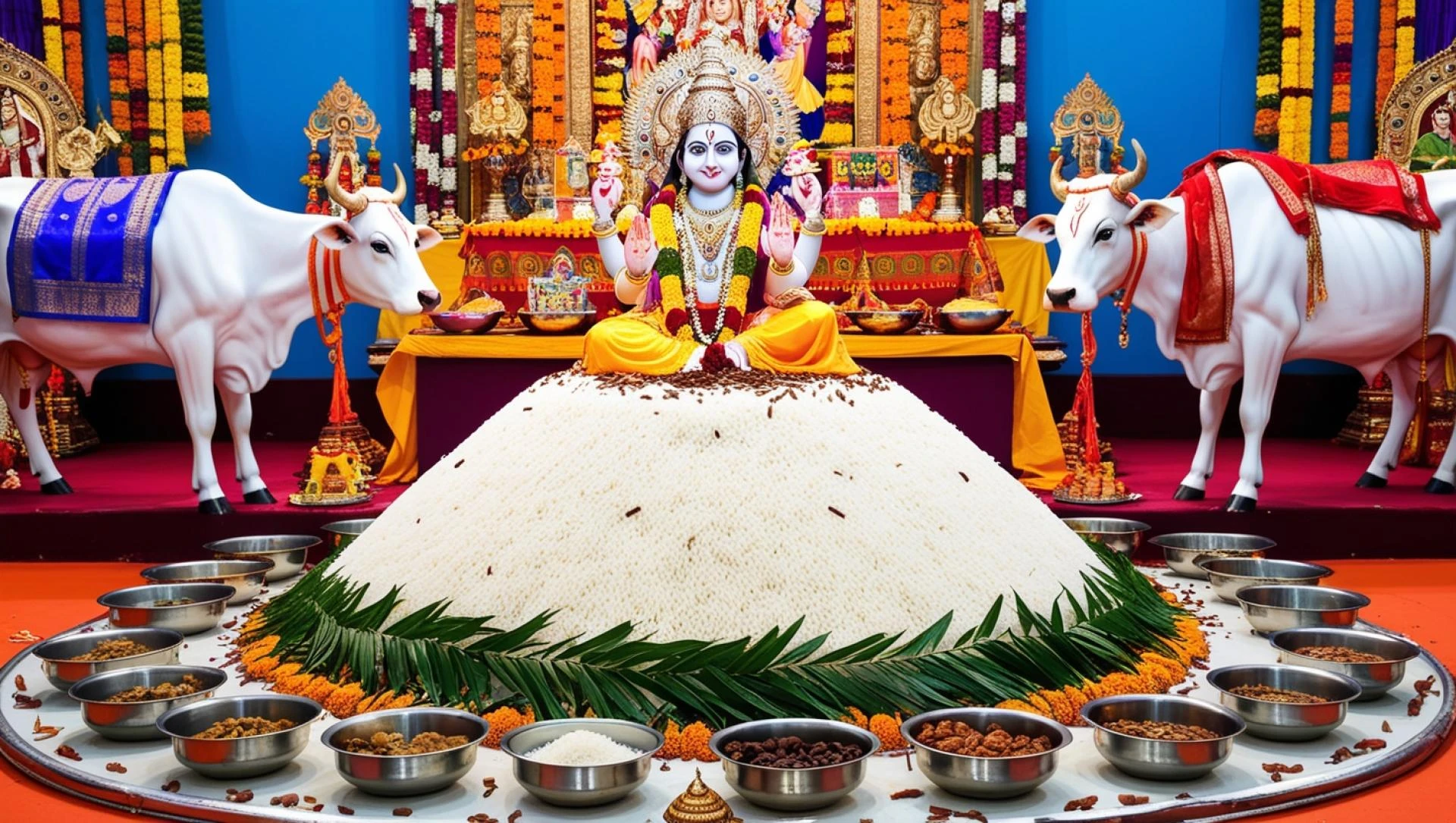

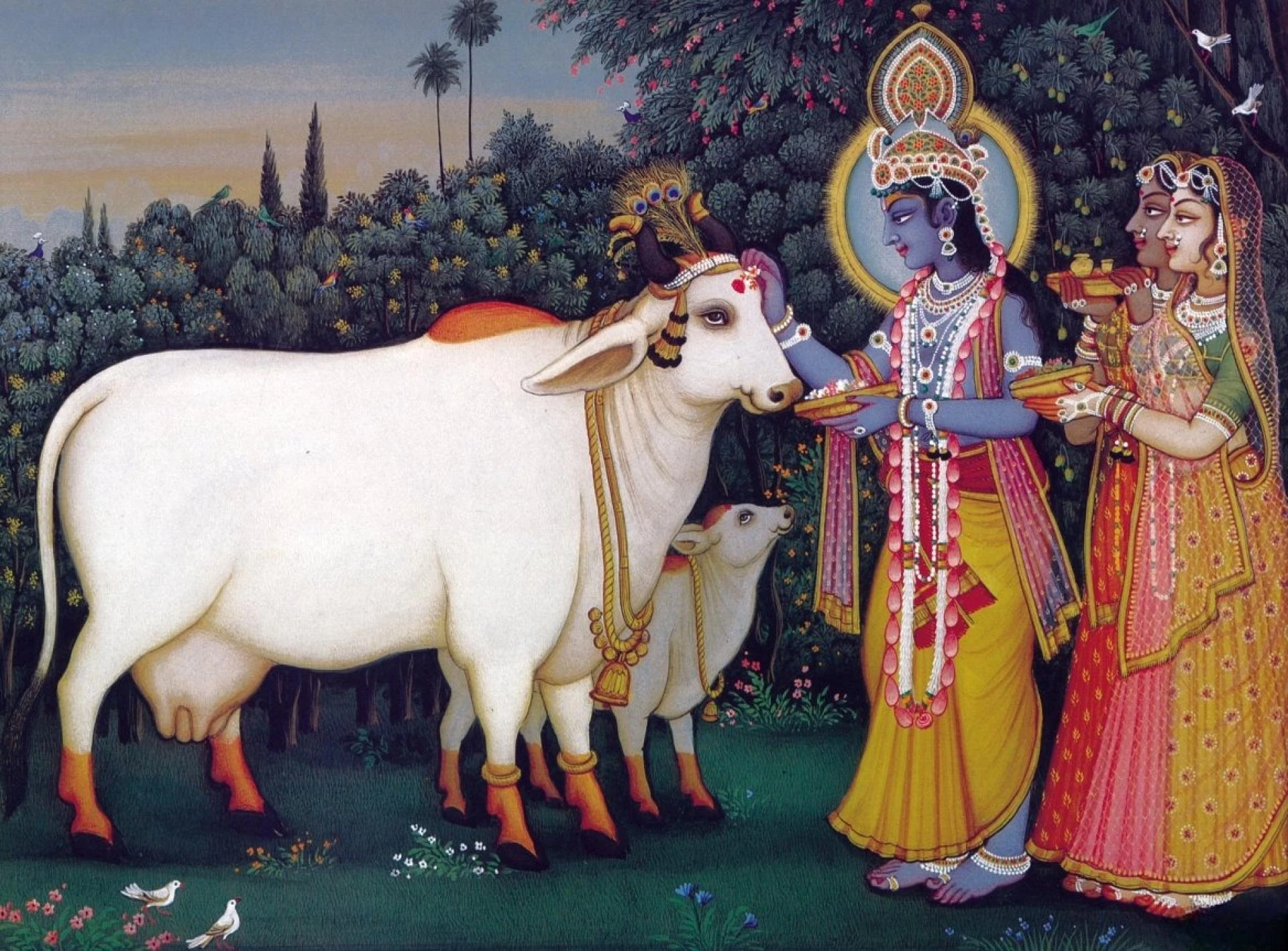
In the tapestry of Hindu ritual and belief, the cow holds a uniquely revered place—not merely as an animal, but as a divine manifestation. At Krishnayan, this sacred relationship extends to cow dung (gobar) and urine (gomutra), honored for both spiritual sanctity and practical significance.
1. Divine Residue: A Seat of the Sacred
According to Krishnayan, the cow houses 33 crore deities, making its byproducts intrinsically sacred. Scriptures invoke the concept of a Surya–Ketu Nadi along the cow’s spine—believed to imbue urine, dung, and other derivatives like milk with healing qualities, even producing “gold” under sunlight that brings health to humans and vitality to fields. This belief elevates cow excrement to a spiritual and medicinal status.
2. Ritual Purity and Prosperity
Cow dung is sanctified in ritual contexts at Krishnayan, used to purify homes and altars before puja or havan. Superstitions and traditions hold that Lakshmi, the goddess of prosperity, resides in cow dung—thus smearing it is believed to invite auspiciousness and cleanse the sacred space. Across Hinduism, sacred texts mandate the use of cow dung and urine in temple cleaning, vessel purification, and sacrificial rites—linking ritual hygiene to spiritual merit.
3. Panchgavya and Healing Traditions
Cow dung and urine are integral to Panchgavya—a blend of five cow-derived substances (milk, curd, ghee, dung, and urine). This mixture is deeply embedded in rituals and Ayurvedic practice. Krishnayan highlights that urine and dung, in particular, bear medicinal properties—urine acting as a purifier and dung providing antiseptic benefits.
4. Environmental & Practical Benefits
Beyond spiritual and medicinal realms, cow dung serves as a traditional disinfectant, fuel, and flooring material—practices still observed in rural India. Its smoke is believed to cleanse the air and maintain positive energy, while biofertilizers and natural pest repellents derived from cow excreta reflect age-old ecological wisdom.
5. A Tapestry of Tradition and Continuity
Together, these narratives form a cohesive worldview: cow dung and urine are not dismissed as waste, but embraced as pure, protective, and healing. For Krishnayan, this belief system is a reminder of nature’s interconnectedness—where what sustains life, supports ritual sanctity, and nourishes the soul must be honored.
Guest Insights from the Reddit Community:
“A cow gives milk… Cow dung and urine have antibacterial properties, so cow dung was smeared around the house floor… and then the urine would be sprinkled here and there… It sounds strange, but there is science behind it.”
“Pancha gavya prashana is performed in some rituals where… cow milk, curd, ghee, a bit of urine, a bit of dung… is given to the devotee to clean or become shuddhi.”
These reflections highlight how both spiritual symbolism and pragmatic benefits influence everyday life and rituals.
At Krishnayan, cow dung and urine are much more than mere residues—they are vehicles of purity, tokens of prosperity, and bridges between the terrestrial and divine. Woven into the fabric of Vedic tradition, their sacred role transcends centuries, reminding us that in reverence, even the humblest offering can hold deep spiritual significance.





























Sign in to leave a comment.