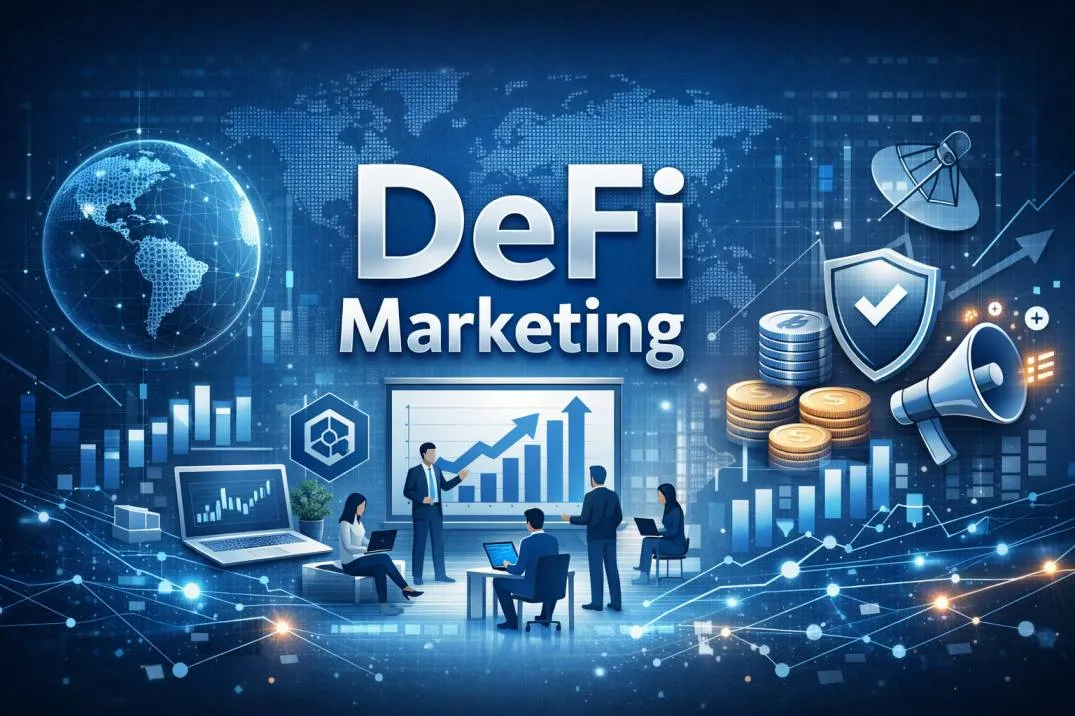

Decentralized Finance (DeFi) has rapidly transformed from an experimental niche into a powerful financial ecosystem in 2026, attracting both retail users and institutional participants. As the market matures, simply building a technically sound protocol is no longer enough to guarantee adoption. The growing complexity of blockchain technology, combined with increased competition and user awareness, has made marketing a fundamental pillar of success. DeFi marketing today goes far beyond promotion it is about educating users, building trust, shaping narratives, and ensuring long-term engagement. In a space where users are cautious and informed, marketing has become the bridge that connects innovation with real-world adoption.
The Evolution of DeFi From Speculation to Utility
In its early stages, DeFi was largely driven by speculative interest, with users chasing high yields and short-term gains through liquidity mining and token incentives. While these strategies generated rapid growth, they often lacked sustainability. By 2026, the DeFi ecosystem has shifted toward real-world utility, offering services such as lending, borrowing, derivatives trading, and tokenized assets that rival traditional financial systems.
This transition has fundamentally changed how users evaluate protocols. Instead of focusing solely on returns, users now prioritize reliability, security, and usability. As a result, marketing strategies must also evolve, focusing on communicating long-term value and real-world applications rather than temporary incentives.
Intensifying Competition Across Multi-Chain Ecosystems
The rise of multi-chain ecosystems has significantly expanded the DeFi Marketing landscape, with protocols operating across Ethereum, Layer 2 solutions, and alternative blockchains. While this expansion has created new opportunities, it has also intensified competition. Thousands of protocols are now vying for attention, liquidity, and user trust.
In such an environment, even highly innovative projects can struggle to gain visibility. Marketing plays a crucial role in differentiating protocols, clearly articulating their unique value propositions, and ensuring they stand out in a crowded market. Without strong marketing, even the most advanced technologies risk going unnoticed.
Trust as the Foundation of Adoption
Trust has emerged as one of the most critical factors influencing DeFi adoption in 2026. The industry’s history of hacks, scams, and unsustainable projects has made users more cautious. As a result, protocols must actively demonstrate their credibility and reliability.
Marketing is essential in building this trust. Transparent communication, regular updates, security audits, and open engagement with the community all contribute to a protocol’s reputation. Users are more likely to engage with platforms that clearly communicate risks and demonstrate accountability, making trust-driven marketing a necessity.
The Role of Education in Lowering Entry Barriers
DeFi remains a complex space, especially for newcomers unfamiliar with blockchain technology. Concepts such as smart contracts, liquidity pools, and decentralized governance can be difficult to understand without proper guidance.
Marketing strategies in 2026 increasingly focus on education as a core component. Tutorials, explainer content, onboarding guides, and simplified user interfaces help bridge the knowledge gap. By making DeFi more accessible, educational marketing not only attracts new users but also empowers them to participate confidently, leading to higher retention and engagement.
Community-Centric Growth Strategies
Community has always been central to the success of DeFi projects, but its importance has grown even further in 2026. Strong communities act as both users and advocates, driving organic growth and contributing to protocol development.
Marketing efforts now prioritize building and nurturing these communities through active engagement, feedback loops, and governance participation. Instead of one-way communication, successful projects foster two-way interactions that make users feel involved and valued. This approach strengthens loyalty and encourages long-term commitment.
The Power of Clear Narrative and Positioning
In a saturated market, having a compelling narrative is essential. Users need to quickly understand what a protocol does, why it matters, and how it differs from competitors. Without clear messaging, even innovative projects can fail to capture attention.
Marketing helps shape and communicate this narrative, translating complex technical concepts into relatable stories. Effective positioning highlights a protocol’s strengths, whether it is superior security, better user experience, or unique financial products. A strong narrative not only attracts users but also builds brand identity.
Moving Beyond Incentive-Driven Growth
Token incentives and yield farming were once the primary tools for attracting users, but they often resulted in short-term engagement. Users would move between protocols in search of higher returns, creating instability and limiting long-term growth.
In 2026, DeFi projects are shifting toward sustainable growth models that prioritize real usage and long-term engagement. Marketing strategies now focus on promoting genuine value, encouraging repeat usage, and building lasting relationships with users. This shift reflects a more mature and stable ecosystem.
Institutional Adoption and Changing Audience Dynamics
The increasing involvement of institutional investors has expanded the DeFi user base beyond retail participants. Institutions bring significant capital and credibility but also require higher levels of transparency, security, and compliance.
Marketing strategies must adapt to these new audiences by providing detailed information, risk assessments, and clear value propositions. Unlike retail users, institutional players demand a more professional and data-driven approach, making marketing more sophisticated and targeted.
Content Marketing and Thought Leadership
Content has become a powerful tool for establishing authority in the DeFi space. High-quality content helps protocols educate users, share insights, and demonstrate expertise.
Thought leadership, including research reports, technical analyses, and industry commentary, positions projects as trusted voices. This not only attracts users but also fosters partnerships and collaborations. In 2026, marketing teams play a crucial role in creating and distributing knowledge that supports the entire ecosystem.
Data-Driven and Product-Led Growth
Modern DeFi marketing relies heavily on data and analytics to optimize strategies and improve user experience. On-chain data provides valuable insights into user behavior, enabling projects to refine their approach and target the right audience.
At the same time, product-led growth has become increasingly important. A well-designed product with intuitive interfaces and seamless onboarding can attract users organically. Marketing supports this by highlighting key features and guiding users through the adoption process.
Regulatory Influence on Marketing Practices
As regulatory frameworks around digital assets continue to evolve, they are shaping how DeFi projects approach marketing. Compliance, transparency, and responsible communication are becoming essential components of marketing strategies.
Protocols must ensure that their messaging is accurate, avoids misleading claims, and clearly communicates risks. This shift not only enhances credibility but also aligns the industry with broader financial standards, paving the way for mainstream adoption.
Enhancing User Retention Through Engagement
Acquiring users is only part of the challenge; retaining them is equally important. In a competitive environment, users have numerous options and can switch between platforms.
Marketing plays a key role in maintaining engagement through regular updates, community interaction, and value-driven communication. Loyalty programs, governance participation, and continuous innovation help keep users invested in the ecosystem, ensuring long-term growth.
Multi-Channel Marketing for Maximum Reach
DeFi marketing in 2026 is highly diversified, utilizing multiple channels to reach different audiences. Social media, community platforms, content hubs, and traditional media all play a role in driving awareness and engagement.
An integrated approach ensures consistent messaging and maximizes impact. By leveraging various channels effectively, projects can connect with users at different stages of their journey, from discovery to active participation.
Simplifying User Experience Through Marketing
User experience remains a significant barrier to DeFi adoption, particularly for non-technical users. Complex interfaces and processes can discourage potential participants.
Marketing helps address this challenge by simplifying communication, providing clear instructions, and offering support throughout the onboarding process. By reducing friction, marketing makes DeFi more accessible and user-friendly.
The Growing Role of Branding in DeFi
Branding has become a key differentiator in the DeFi space. A strong brand identity helps projects stand out and build emotional connections with users.
Beyond visual elements, branding reflects a protocol’s values, mission, and vision. Consistent and authentic branding enhances trust and recognition, making it easier for users to choose and remain loyal to a platform.
Insights from Community Trends
Community trends in 2026 highlight a preference for transparency, authenticity, and meaningful engagement. Users are increasingly drawn to projects that communicate openly, demonstrate progress, and involve the community in decision-making.
Targeted engagement with niche communities is also gaining traction, as it leads to more meaningful interactions and higher-quality user acquisition. These trends reinforce the importance of tailored marketing strategies.
Why DeFi Marketing Is a Core Growth Engine
DeFi marketing is no longer a secondary function it is a core driver of protocol success. It influences every stage of the user journey, from awareness and onboarding to engagement and retention.
Projects that invest in effective marketing can accelerate adoption, build strong communities, and achieve sustainable growth. Conversely, those that neglect marketing risk being overshadowed, regardless of their technical innovation.
Conclusion
In 2026, DeFi marketing has evolved into a sophisticated discipline that goes far beyond promotion. It is about building trust, educating users, fostering communities, and creating meaningful connections. As the DeFi ecosystem continues to mature, marketing has become essential for bridging the gap between complex technology and user adoption.
The success of a DeFi protocol now depends not only on its technical capabilities but also on its ability to communicate value and engage its audience effectively. In this rapidly evolving landscape, marketing is not just important it is indispensable for driving adoption and ensuring long-term success.


























Sign in to leave a comment.