
If you step into a restaurant kitchen today, especially a busy one, you’ll notice something has quietly disappeared. Paper tickets.
They used to be everywhere. Orders printed, clipped, passed around. That was the system for years and honestly, it worked fine… until things got more complicated.
Now there’s dine-in, takeaway, multiple delivery apps, maybe even a direct ordering website. Orders don’t come from one place anymore. They come from everywhere, all at once.
And that’s where the old setup starts struggling. Not because it’s completely broken, but because it just wasn’t designed for this kind of load.
That’s why more restaurants are moving to a kitchen display system (KDS). Not as a trend, but more like a practical necessity.
What’s Actually Not Working in Traditional Kitchen Setups?
The issue is not just paper tickets. It’s how everything connects, or doesn’t connect.
Orders come in from different channels, but they don’t always flow into the kitchen smoothly. Sometimes there’s a delay. Sometimes staff have to recheck or re-enter things. During rush hours, that slows everything down more than expected.
Tickets can get mixed up too. Or missed. It doesn’t happen all the time, but when it does, it creates confusion across the line.
Also, there’s no real visibility. Once a ticket is printed, you don’t really know where it stands unless someone checks manually.
At low volume, this is manageable. When things get busy, it becomes harder to control.
What Does a Kitchen Display System (KDS) Actually Do Differently?
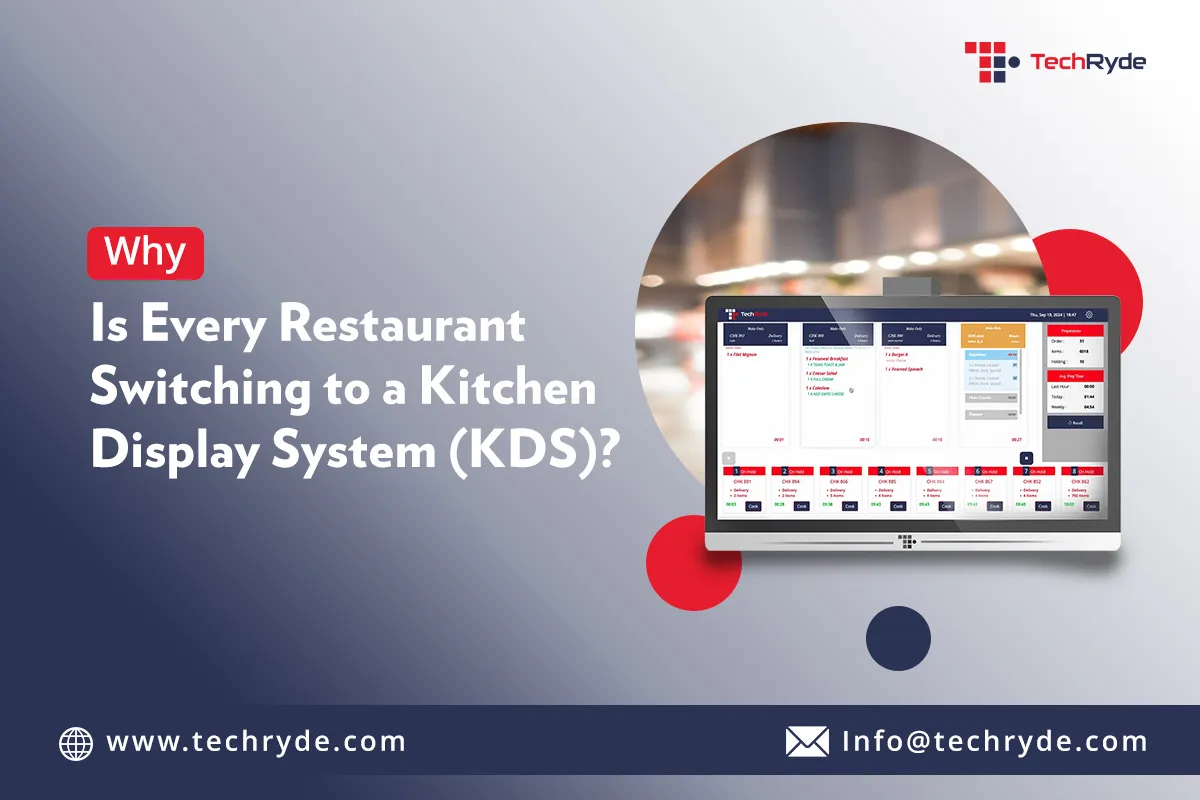
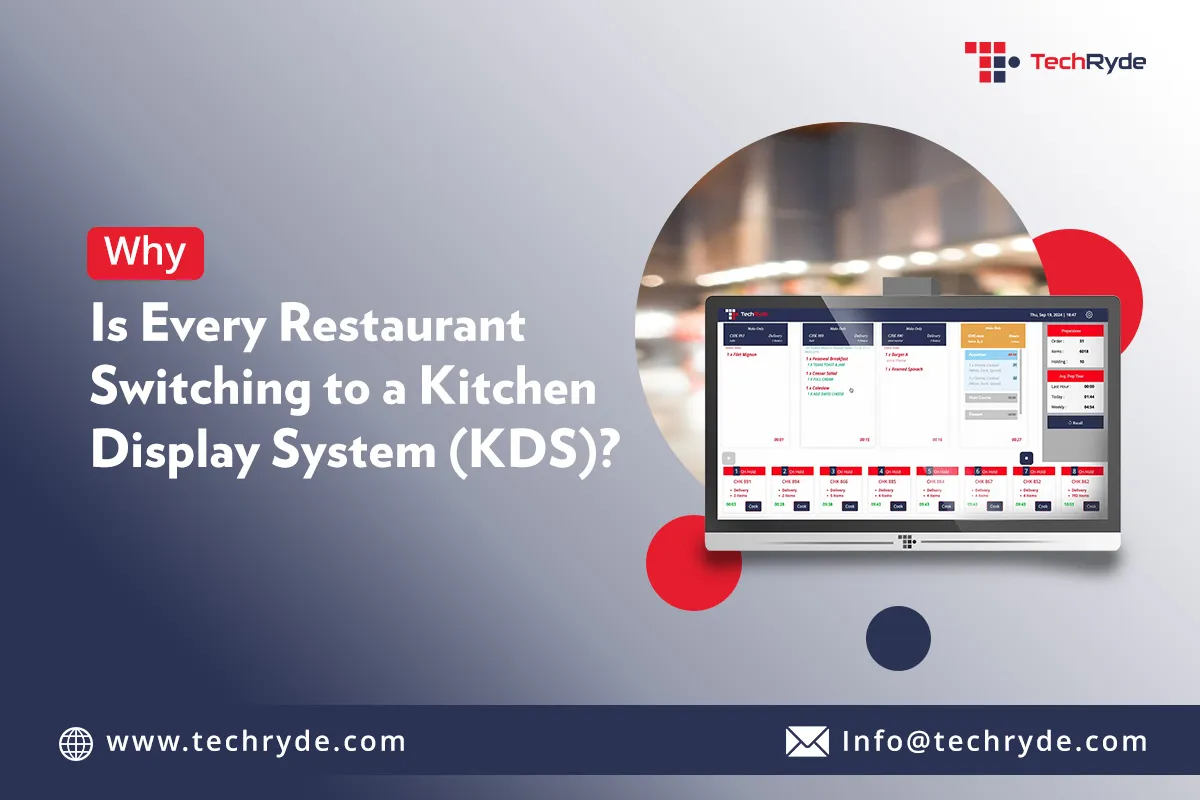
At a basic level, it replaces paper with a digital screen. But that’s not really the main point.
What changes is how orders move through the system. Orders come in automatically from POS or online platforms and appear directly on the kitchen screen. No manual steps in between.
They’re also organized. Not just listed, but structured in a way that makes sense for the kitchen.
Instead of reacting to tickets one by one, the team works through a system that already has some order built into it.
It feels small at first, but it changes the pace of how things move.
Does It Really Help With Order Accuracy?
This is where a lot of kitchens see improvement fairly quickly.
Most errors are not big mistakes. They’re small things. A missed modifier, unclear handwriting, something skipped during communication.
With a KDS, orders are displayed clearly. What the customer selected is exactly what the kitchen sees.
There’s less back and forth, less guessing.
It doesn’t make things perfect, but it definitely reduces the number of small errors that usually slip through.
Is It Actually Faster or Just More Organized?
It’s more organized first, and that’s what leads to speed.
A KDS allows orders to be prioritized based on prep time or urgency. So instead of just picking the next ticket, the kitchen follows a flow that makes more sense.
During busy periods, this matters more than you’d expect.
Because delays usually don’t happen during cooking itself. They happen before an order starts or after it’s ready.
When those gaps are reduced, everything feels faster even if the cooking time stays the same.
What Difference Does Real-Time Visibility Make?
This is one of those things that sounds simple but has a big impact.
With a KDS, you can see exactly what’s happening in the kitchen at any moment. Which orders are waiting, which are being prepared, and which are done.
It helps the kitchen, but also everyone else.
Front-of-house can give better updates. Managers can step in if something is delayed. Delivery drivers don’t have to keep asking if an order is ready.
It just removes a lot of unnecessary backs and forth.
Does It Hold Up During Peak Hours?
Peak hours are usually where systems either hold or break.
With paper tickets, things can get messy quickly. Orders stack up, tickets overlap, and it becomes harder to keep track of everything.
A KDS handles this a bit differently. Orders stay in a queue, organized and visible. Nothing really gets lost in the same way.
The kitchen doesn’t have to change how it works just because volume increases. The system absorbs some of that pressure.
Does It Actually Help Improve Over Time?
This is something people don’t always think about in the beginning.
A KDS tracks data. Prep times, delays, order flow, all of it.
Over time, this becomes useful. You start seeing patterns. Certain items take longer. Certain times of day are slower.
It gives restaurants something to work with, instead of just relying on guesswork or experience.
So Why Is Everyone Switching Now?
It’s not really about technology for the sake of it.
It’s more about how restaurant operations have changed. More orders, more channels, more pressure to be fast and accurate.
Managing all of that manually creates friction. A kitchen display system (KDS) reduces that by bringing structure into the process.
That’s really the reason behind the shift. It fits better with how things work today.
Bottom Line
Kitchens haven’t become more complicated for no reason.
They’ve just evolved. And the tools need to evolve with them.
A kitchen display system (KDS) doesn’t just replace paper tickets. It changes how orders are handled, how teams communicate, and how smoothly everything runs during service.
That’s why more restaurants are moving in this direction. Not because they have to, but because it makes daily operations easier to manage.


























Sign in to leave a comment.