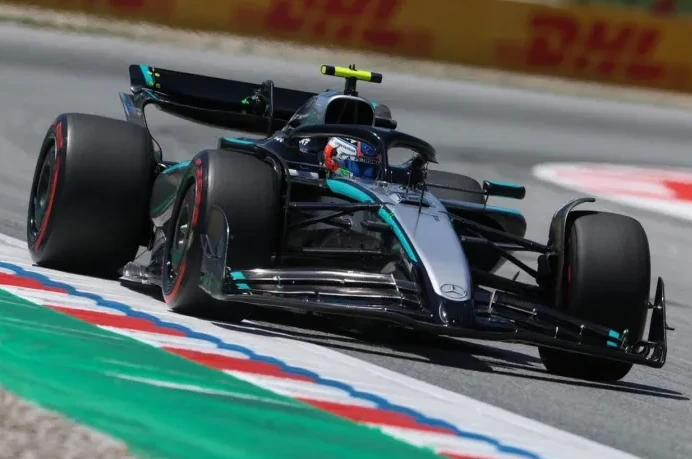

Mercedes’ decline in Formula 1 has been one of the most talked about stories in recent seasons. Once the standard-bearer for consistency and engineering excellence, the team that won eight consecutive Constructors’ Championships now finds itself fighting just to make the podium. Understanding why Mercedes is not winning in F1 today requires a deeper look into technical, regulatory, and strategic factors that have shaped the current competitive landscape.
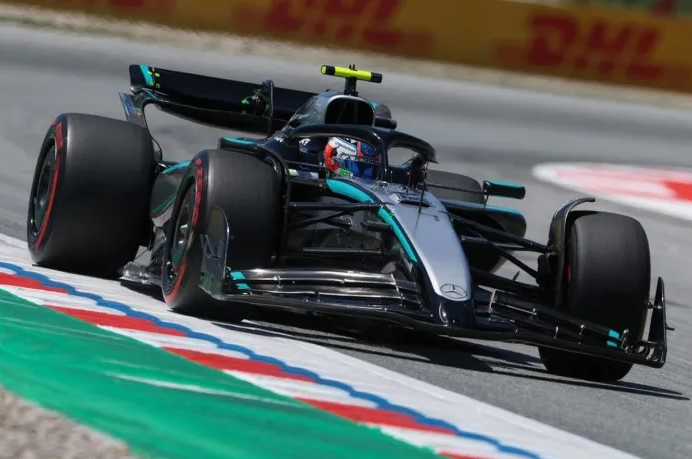
The Regulatory Shift: The Start of Troubles
Formula 1’s rules are the foundation of team performance, and the latest round of regulation changes has played a crucial role in Mercedes’ decline. Beginning in 2022, F1 entered the ground-effect era, aiming to create cars that can race more closely and generate more downforce from the floor of the car. Mercedes responded with a radical design, famously called the “zero-pod” concept. While innovative, this approach exposed the car to severe issues with stability, balance, and a phenomenon called porpoising – a violent bouncing motion on straights caused by aerodynamic stall and regain.
At the time, the Mercedes design was highly original, but it soon became clear that it was much more difficult to manage than the solutions implemented by competitors like Red Bull. The new regulations demanded a delicate balance between downforce and chassis geometry, and Mercedes struggled to find a sweet spot. Instead of providing an advantage, their unique approach left them playing catch-up with rivals who found more consistent performance.
Development Pathways and Technical Hurdles
Mercedes attempted to resolve core performance problems by introducing new concepts and components, including flexible wings designed to adapt to different speed ranges. The flexible front wing helped with turning in slow corners, while maintaining high-speed stability. However, the FIA clamped down on flexible aerodynamic elements in the 2025 season to prevent excessive manipulation of aerodynamics. This regulatory clampdown forced Mercedes to make rapid changes to their set-up and recalibrate their understanding of the car’s performance window.
Andrew Shovlin, Mercedes’ Trackside Engineering Director, has acknowledged that adapting to these restrictions took time. Their focus on solving rear tyre temperature problems through innovative but rule-sensitive components led them to struggle once those solutions were banned or limited. This situation underlines the inherent risk in pursuing development solutions that skirt the margins of legality.
Problems with Car Concept and Performance Consistency
A major factor in Mercedes’ winless struggles is their continued faith in their original car concept. The team stuck closely to their 2022 chassis and aerodynamic philosophy even when results were poor, hoping that incremental improvements would unlock potential. This conservative strategy contrasted sharply with the readiness of teams like McLaren to change direction aggressively, reaping rewards as a result.
The Mercedes car has shown flashes of pace – including a brief run of victories before the 2023 summer break – but these successes were often heavily dependent on track characteristics and race incidents. Fast circuits with smoother surfaces played to their strengths, while twisty tracks and high tyre degradation revealed their weaknesses. This means the car is extremely sensitive; small changes to circuit, temperature, or tyre compounds produce big swings in performance. Mercedes drivers often find themselves at the mercy of balance issues, unable to extract consistent pace over a race distance.
Aerodynamic Upgrades and Unintended Consequences
Mercedes introduced several floor and wing upgrades in recent seasons, attempting to address lost downforce and inconsistency. Some upgrades provided improvements in qualifying but did not deliver consistent race pace due to tyre management problems and erratic balance. For example, after fitting a new floor at the Belgian Grand Prix, they reverted to the older version due to persistent bouncing and feedback from the drivers. This ongoing uncertainty over the design direction has hindered confidence and progress.
Other teams, notably Red Bull, have been more decisive in their development plans and have attracted highly talented engineers like Adrian Newey. Mercedes chose not to aggressively pursue external design talent, putting faith in their existing technical group. While stability has advantages, it also means fewer fresh ideas to solve new problems.
Competitive Dynamics: The Rise of Rivals
The decline of Mercedes is equally a story of the rise of strong competitors. Red Bull, under new technical regulations, produced a car that was quick from the outset and, crucially, easy for the drivers to operate at the limit. Ferrari also capitalized on Mercedes’ difficulties by refining their car and regularly challenging for front-row starts and race wins. McLaren has been one of the most notable improvers, leapfrogging Mercedes with strong aerodynamic and mechanical upgrades.
Mercedes’ performance drop is not just about missing out on race wins. Finishing outside the top three in the Constructors’ Championship is a clear sign that others have overtaken them on speed, strategy, and development rate. Even as an established engine supplier, Mercedes’ own power unit no longer guarantees them an advantage, as seen by McLaren’s better results using the same engine.
Team Management and Future Prospects
Toto Wolff and the Mercedes management team recognize the importance of bold decision-making in such a competitive environment. However, recent seasons have highlighted the pitfalls of sticking too rigidly to an initial plan. Mercedes has conceded that their core car concept may need a more fundamental reset, especially as the next major round of F1 regulation changes looms in 2026.
The nature of modern Formula 1 means that constant innovation is required to stay at the sharp end. A winning team must be able to interpret new rules quickly, adapt its structures, and risk making bold moves when the situation demands it. Mercedes is now taking stock, analyzing why they lost their competitive advantage and seeking a new direction that celebrates their traditional strengths – teamwork, preparation, and attention to detail.
Conclusion
Mercedes’ current troubles do not spell the end of their time as a top F1 outfit. The team’s resource base, technical staff, and experience still rank among the best in global motorsport. But getting back to winning ways will require a combination of humility to admit conceptual mistakes, openness to disruptive new ideas, and clear-eyed leadership as they prepare for the revolutionary 2026 technical rules.
In summary, Mercedes is not winning Formula 1 today because it underestimated the scale and complexity of the regulatory changes, held on too long to a struggling car concept, and failed to match the development pace of their leading rivals. The team’s experience, resilience, and resources offer hope for a turnaround, but the challenge for Mercedes is to innovate and adapt faster than ever – because in F1, standing still means falling behind.




























Sign in to leave a comment.