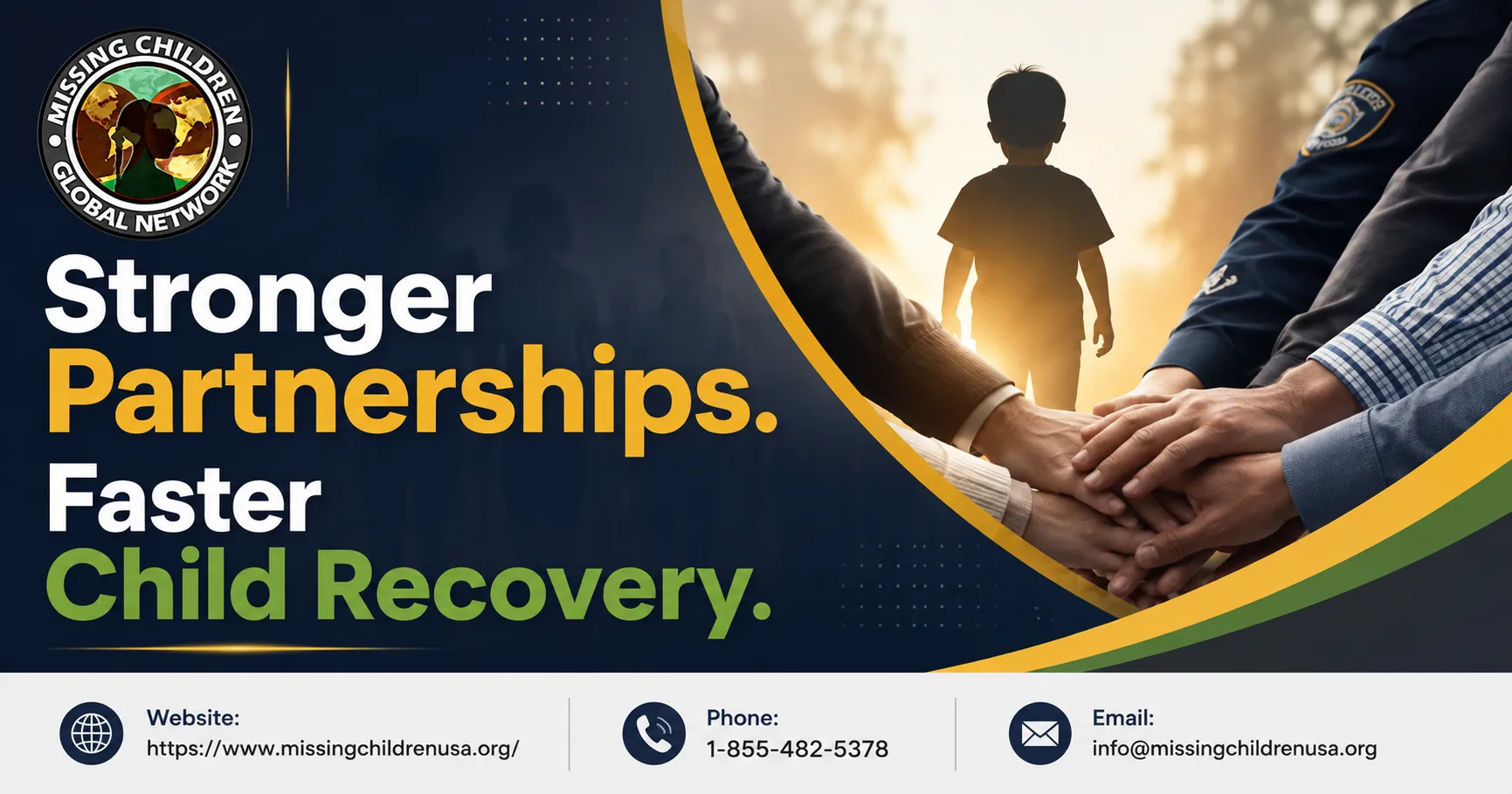

Every hour matters when a child goes missing. Parents feel helpless. Communities feel afraid. And the race against the clock begins the moment someone realizes a child is not where they should be.
What many families don't know is that how quickly a missing child comes home often depends on something happening behind the scenes — a well-coordinated partnership between law enforcement agencies and dedicated nonprofits. These collaborations are not just helpful. For many missing children, they are lifesaving.
At Missing Children Global Network, we've seen firsthand what happens when these two forces work together. In this post, you'll learn why these partnerships matter, how they actually function on the ground, and what steps your family can take right now to be better prepared.
What Makes a Missing Child Case So Complex?
When a child disappears, the situation rarely fits neatly into one jurisdiction or one category. A runaway teen in Miami might cross county lines overnight. An abducted child in Tampa may be transported across state borders within hours. International family abductions add legal and diplomatic layers that no single agency can navigate alone.
Law enforcement has the legal authority, databases, and investigative tools. Nonprofits focused on missing child recovery services bring community reach, specialized training, case management support, and advocacy that government agencies often cannot provide on their own.
Neither can do this work as effectively alone.
How Law Enforcement and Nonprofits Work Together
Sharing Real-Time Information
One of the most critical advantages of these partnerships is information flow. When a nonprofit like Missing Children Global Network is embedded in the response process, families have a single point of contact while investigators focus on fieldwork. Case coordinators pass along tips from the community, flag social media leads, and help law enforcement prioritize actionable information.
This reduces noise and speeds up decision-making during the critical early hours of a case.
Expanding Search and Outreach Capacity
Police departments across Florida are stretched thin. Nonprofits fill that gap by coordinating volunteers, distributing flyers, and running digital outreach campaigns that get a missing child's face in front of thousands of eyes quickly. Social media alerts, community text chains, and school notification systems are tools nonprofits can move fast with while law enforcement handles the investigative side.
Providing Trauma-Informed Support for Families
Families of missing children are often in crisis. They need someone to answer the phone at 2 a.m., explain what detectives mean when they change a case status, or help them understand the legal process if parental abduction is involved.
Missing children organizations like ours bridge this gap. Trained case advocates walk families through every step — not replacing law enforcement, but supporting what they cannot always provide: time, emotional presence, and clarity.
Why Florida-Based Families Face Unique Challenges
Florida's geography and demographics create specific vulnerabilities. With major international airports, a large transient population, and an extensive coastline, the state presents real logistical challenges for missing child recovery.
Florida also leads the nation in human trafficking cases, many of which involve children. Nonprofits with relationships inside communities — including immigrant communities that may distrust law enforcement — can gather information and provide safe access that agencies cannot always reach on their own.
For Florida families, connecting with a missing children organization early — before a crisis happens — can make a meaningful difference in outcomes.
The Role of Technology in Modern Partnerships
Today's most effective missing child recovery services use technology in ways that would have been unthinkable a decade ago.
- Facial recognition tools help match a missing child's photo against databases of unidentified individuals.
- GPS and cell phone data can establish timelines when shared appropriately between agencies and nonprofit analysts.
- National databases like NCMEC's case management system are accessible to vetted nonprofit partners, creating a unified picture of a child's case across state lines.
At Missing Children Global Network, we invest in the training and tools that make these collaborations seamless — because speed and accuracy together are what bring children home.
What Families Can Do Right Now
You don't have to wait for a crisis to prepare. Here are practical steps every Florida parent can take today:
- Take a recent photo of your child every six months and store it in a cloud-based location you can access quickly.
- Know your local resources — find your county's non-emergency police line and the name of your nearest missing children organization.
- Teach children what to do if separated — a trusted adult, a store clerk, or a police officer are all appropriate contacts.
- Register with community alert systems through your school district and local government.
- If your child goes missing, call 911 immediately — there is no waiting period required.
Frequently Asked Questions
Q: Does law enforcement accept help from nonprofits in missing child cases? Yes. Many agencies actively partner with certified missing children organizations because they extend capacity and provide specialized support. The key is that nonprofits work alongside law enforcement, not independently.
Q: How quickly should I contact a missing children organization? As soon as possible. Organizations like Missing Children Global Network can begin outreach support, family advocacy, and case coordination immediately — even while law enforcement is opening their investigation.
Q: What's the difference between a missing children organization and a private investigator? Nonprofits focused on missing child recovery services are victim-centered, work cooperatively with law enforcement, and do not charge families. Private investigators operate independently and fees apply. For most families, a trusted nonprofit is the right first call alongside police.
Q: Are these services available throughout Florida? Yes. Missing Children Global Network operates across Florida and maintains relationships with agencies nationwide, supporting cases wherever they develop.
Q: What if I suspect international abduction? Contact law enforcement immediately and then reach out to a missing children organization with international case experience. These cases require coordination with federal agencies and sometimes foreign governments — experience matters enormously here.
Faster Recovery Starts With Better Coordination
The evidence is clear. When law enforcement and nonprofits operate as genuine partners — sharing information, dividing responsibilities, and keeping families at the center — missing children come home faster.
At Missing Children Global Network, our mission is to be that bridge. We work alongside Florida law enforcement agencies, community organizations, and families to ensure no case falls through the cracks and no family faces this alone.
If your child is missing, call 911 first. Then contact Missing Children Global Network.
If you want to support our work, learn about our services, or connect your agency with our team, visit our website or reach out directly today. Every second counts — and we're ready.




























Sign in to leave a comment.