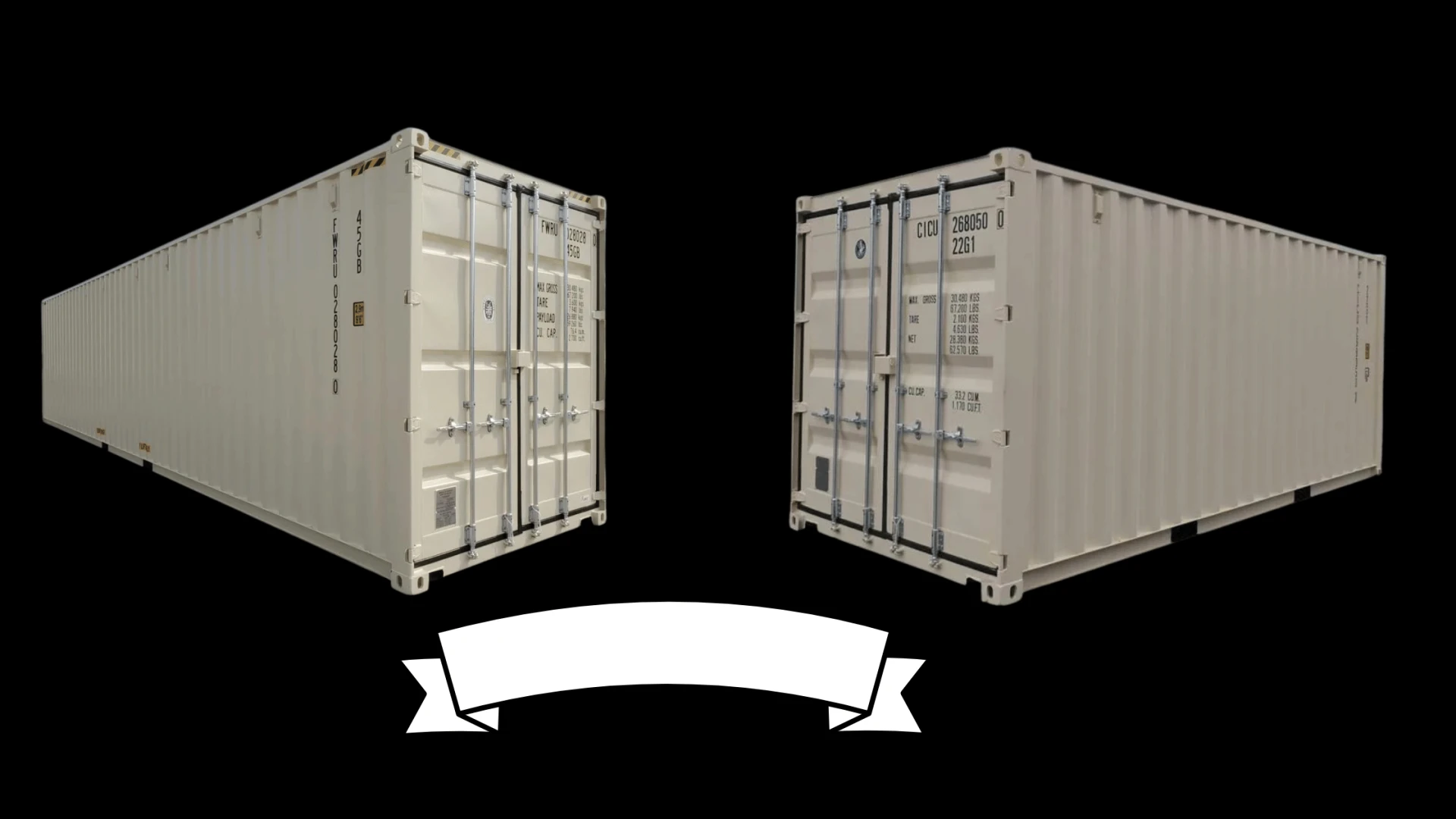

Nova Scotia is dealing with the same pressures that have pushed people across the country to rethink how they use space. Construction costs have climbed steadily, traditional storage options have not kept pace with what people actually need, and the old solutions, sheds, garages, rented units in faceless facilities, are starting to feel inadequate. Shipping containers have stepped into that gap, and the number of Nova Scotians making the switch continues to grow for reasons that make practical sense.
The Shift Toward Practical and Flexible Solutions
Homeowners and businesses alike have started asking a different question. Instead of what can I build, they are asking what can I adapt. Traditional storage structures are fixed, expensive to put up, and committed to a single purpose from the day they are finished. A shed stays a shed. A garage stays a garage. When your needs change, the structure does not change with you.
Shipping containers in Nova Scotia do not have that problem. They can be moved, modified, stacked, or repurposed depending on what the situation demands. For a province where seasonal needs shift dramatically and many properties sit on land with room to work with, shipping containers in Nova Scotia offer the kind of flexibility that is genuinely useful rather than just theoretically appealing.
Rising Popularity of Shipping Containers in Nova Scotia
A few years ago, seeing a shipping container on a residential or commercial property in Nova Scotia was unusual enough to make you look twice. That is no longer the case. They appear on farms, construction sites, small business properties, and residential lots across the province, and the reasons are not hard to understand. They are available, they are affordable relative to what else is on the market, and they hold up in conditions that would wear out lesser structures in a fraction of the time.
Key Reasons People Are Choosing Shipping Containers
Cost Efficiency
The upfront cost of a shipping container compares favourably to almost any permanent structure you could build for the same purpose. A used container in solid condition can be delivered and placed on your property for a fraction of what a comparable shed or workshop would cost to construct. Maintenance expenses over time are minimal, and the container holds its value in a way that temporary or lightweight structures simply do not.
Strength and Durability
These containers were designed to cross oceans stacked six high, fully loaded, in the kind of weather that would destroy most things. Nova Scotia's winters, its coastal winds, its freeze-thaw cycles, none of that presents a serious challenge to a well-maintained steel container. The lifespan of a container that is kept off the ground and given basic attention runs to decades without significant intervention.
Quick Setup
There is no construction timeline to manage, no trades to coordinate, and no waiting for approvals that drag on for months. A container is delivered, placed, and ready to use in a timeframe that feels almost unreasonable compared to any built alternative. For businesses dealing with urgent storage needs or homeowners in the middle of a renovation, that speed matters.
Flexibility
A container starts as storage and can become almost anything else with the right modifications. Offices, workshops, retail units, and studios have all been created from standard shipping containers. If your needs change or your property changes, the container can move with you rather than becoming a permanent fixture you have to work around or write off.
Common Uses Driving the Switch
Residential Storage
Seasonal furniture, tools, sporting equipment, and the overflow that accumulates in any household that has been in one place for a few years all find a natural home in a container. Home renovation projects in particular create storage needs that traditional options handle poorly. A container on your own property keeps everything accessible without cluttering your living space or paying ongoing fees to an external facility.
Business and Commercial Applications
Construction companies, seasonal businesses, and retailers dealing with inventory fluctuations have all found containers to be a practical solution that scales with demand. Equipment that needs to be secure and weatherproof, materials that cannot sit exposed, and stock that needs to be accessible but not inside the primary workspace all fit naturally into a container setup.
Creative and Alternative Uses
Pop-up retail, mobile workspaces, hobby studios, and event logistics support are all areas where containers have found a foothold in Nova Scotia. The combination of durability, security, and adaptability makes them a natural fit for uses that conventional structures handle awkwardly or expensively.
Buying vs Renting
Buying makes sense when the need is ongoing and the location is stable. A container you own becomes an asset that continues to serve you without recurring costs beyond occasional maintenance. Renting suits situations where the need is temporary, seasonal, or tied to a specific project with a defined end date. The decision comes down to how long you need it, how often your circumstances change, and what your budget looks like at the outset.
What to Consider Before Making the Switch
Size and condition are the starting points. A container that is too small creates problems immediately, and one in poor condition creates problems that compound over time. Local bylaws and placement rules vary across Nova Scotia's municipalities, and checking those before delivery avoids complications that are far harder to resolve after the fact. Site preparation, meaning level ground and stable footing, is not optional if you want the container to sit correctly and the doors to function properly. Ventilation also deserves attention from the beginning rather than as an afterthought once condensation becomes a visible problem.
Challenges to Be Aware Of
Delivery logistics require planning. Not every property is straightforward to access with a container on a flatbed, and tight driveways or soft ground can complicate placement significantly. Zoning and permit requirements exist in some areas and need to be understood before you commit. Modifications beyond basic storage, adding windows, electrical, or climate control, add cost and complexity that should be factored into the budget from the start rather than discovered mid-project.
The Future of Shipping Containers in Nova Scotia
The trajectory is clear. Demand for flexible, cost-effective space solutions is not going to decrease as construction costs stay elevated and population movement continues across the province. Container use in housing projects, commercial developments, and community spaces is growing, and the modifications being done today are more sophisticated than what was possible even five years ago. Sea Can Kings has watched this shift firsthand across Nova Scotia, and the conversations we are having with customers reflect a market that is still in the early stages of understanding what containers can genuinely do.
Conclusion
More people are switching to shipping containers in Nova Scotia because the case for doing so is straightforward. The cost works, the durability holds up in this climate, and the flexibility to use a container for one purpose today and a different purpose tomorrow is something no conventional structure can match. Whether the need is residential storage, a business solution, or something more creative, containers offer a starting point that adapts rather than limits. The shift is already underway, and the reasons behind it are only getting stronger.
FAQs
Why are shipping containers becoming popular in Nova Scotia?
The combination of affordability, durability, and flexibility covers most of the answer. They cost less than permanent structures, last longer than most alternatives, and can be used for far more than just storage.
Are shipping containers suitable for long term use?
Yes. A container that is properly placed and given basic maintenance will perform reliably for decades. The steel construction handles Nova Scotia's climate without the deterioration that affects wood-based structures over time.
Can shipping containers be used for more than storage?
Easily. Containers have been converted into offices, retail spaces, workshops, studios, and full residential homes. The base structure accommodates a wide range of modifications.
Is renting a shipping container a good option?
For short term or seasonal needs, renting makes financial sense. It avoids the upfront purchase cost and suits situations where the need has a clear end date or the location may change.
What should I check before buying a shipping container?
Start with size, then condition. Inspect the floor, walls, and door seals in person if possible. Ask about cargo history, confirm delivery options to your specific site, and check local regulations before committing.


























Sign in to leave a comment.