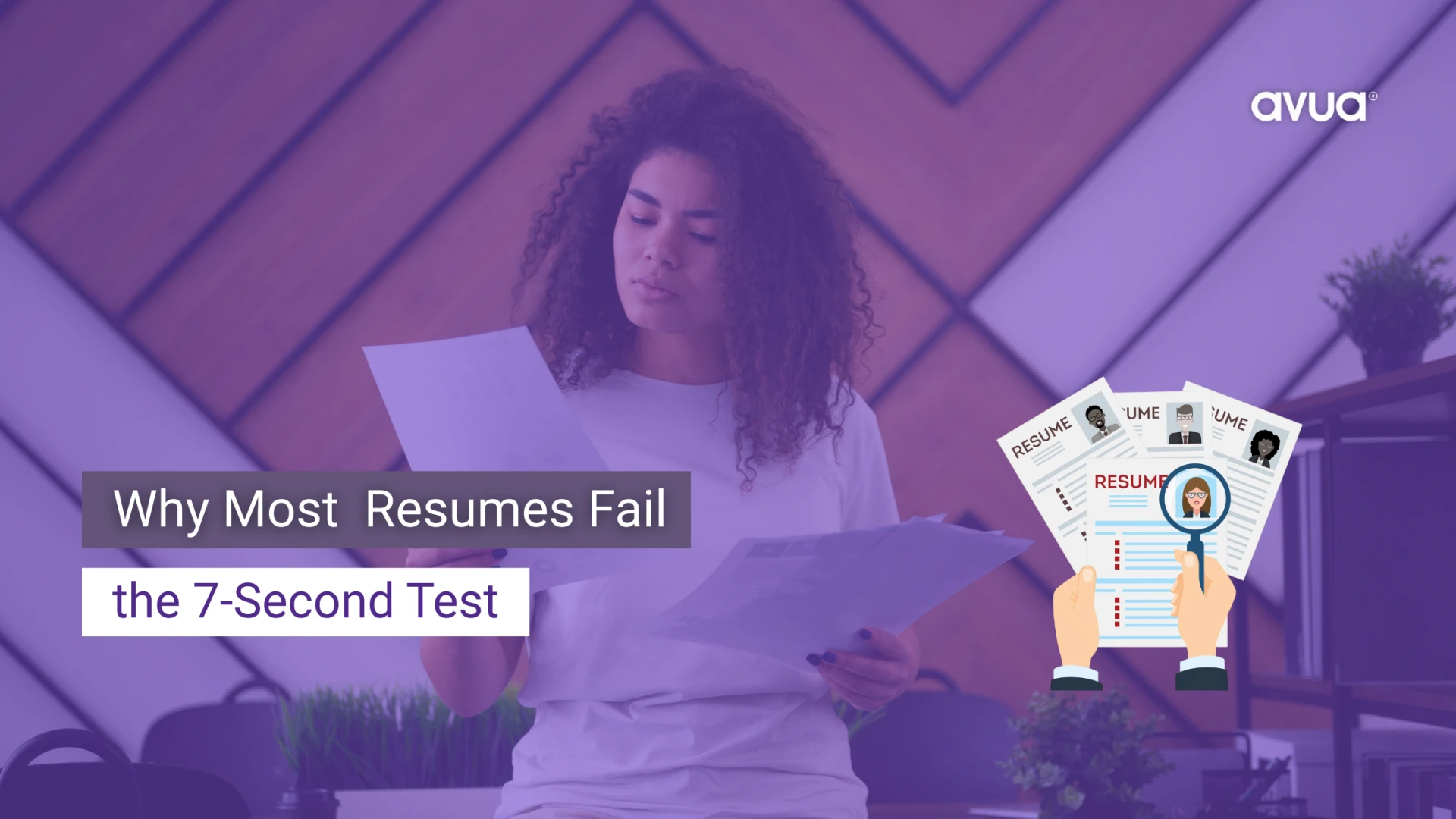

Hiring managers spend, on average, just 7 seconds reviewing a resume before deciding whether to keep reading or move on. In a world where recruiters receive hundreds of applications per role, those few seconds determine whether you land an interview, or end up in the rejection pile.
The good news? With the right strategies, you can ensure your resume passes both human recruiters and Applicant Tracking Systems (ATS). In this blog, we’ll break down why resumes fail the 7-second test and how to fix yours step by step.
Why Recruiters Only Spend 7 Seconds
Recruiters are busy professionals who juggle multiple openings at once. They skim resumes to quickly spot keywords, achievements, and alignment with the job description. Here’s what they’re scanning for in those 7 seconds:
- Clear formatting: Is the resume clean and easy to read?
- Relevant skills: Does the applicant show the right technical and soft skills?
- Measurable achievements: Are results quantified (e.g., “increased sales by 20%”)?
- Keyword match: Does it align with the job posting and ATS filters?
- Professional tone: Is the document error-free and polished?
If your resume fails at any of these, recruiters won’t hesitate to move on.
The Role of ATS in the 7-Second Test
Before your resume even reaches a human recruiter, it often goes through an ATS system. These platforms filter resumes based on keywords, formatting, and job relevance. Using a best ATS resume builder helps structure your resume correctly so it clears ATS hurdles.
For example, an ATS might reject resumes with:
- Fancy designs that confuse parsing.
- Missing job-relevant keywords.
- Poorly structured sections.
That’s why relying on a resume score checker or CV analysis tool is essential, it ensures your resume is not just visually appealing but also ATS-friendly.
Common Resume Mistakes That Fail the 7-Second Test
Most professionals unknowingly make errors that instantly hurt their chances. Let’s explore the top mistakes:
1. Overly Generic Content
Resumes with vague statements like “Responsible for managing projects” fail to impress. Recruiters want specifics, not generic phrases.
Fix: Use quantifiable achievements. For example:
“Managed a $2M project portfolio, delivering a 15% cost reduction.”
2. Poor Formatting and Layout
Cluttered resumes with long paragraphs are hard to skim. Remember, recruiters are scanning, not reading word-for-word.
Fix: Use bullet points, professional fonts, and consistent spacing. Tools like an online resume builder tool can help you create ATS-compliant layouts.
3. Missing Keywords
ATS systems rely heavily on keywords from the job posting. If your resume doesn’t include them, you risk automatic rejection.
Fix: Identify keywords in the job description (e.g., “project management,” “data analysis”) and weave them naturally into your resume.
4. Focusing on Duties, Not Results
Listing responsibilities instead of outcomes makes your resume look weak. Employers care about impact, not just tasks.
Fix: Frame every bullet point with achievement-based metrics. For instance, instead of saying “Handled customer accounts”, write “Increased client retention by 25% through personalized account management.”
5. Typos and Grammatical Errors
Even a single typo can create a negative impression, signaling carelessness.
Fix: Always proofread or use a free resume checker to catch mistakes before submitting.
6. Using Outdated Formats
Resumes that include old elements like “References available upon request” or lengthy career objectives look outdated.
Fix: Replace career objectives with a professional summary that highlights your strengths and career goals.
How to Pass the 7-Second Resume Test
Now that we’ve seen the pitfalls, let’s explore practical steps to fix your resume:
Step 1: Start with a Strong Professional Summary
The first 2–3 lines of your resume matter most. This is where you grab attention.
Example:
“Results-driven IT specialist with 8+ years of experience in cloud security and AI automation, delivering scalable solutions across Fortune 500 companies.”
Step 2: Structure for Easy Skimming
Recruiters should be able to scan quickly and find key information.
- Use bold headings (Education, Experience, Skills).
- Keep bullet points short (1–2 lines max).
- Place the most relevant experience near the top.
Step 3: Align with Job Descriptions
Every job posting has hidden cues. A resume analyzer or resume score checker can reveal which keywords and skills your resume is missing. Tailor each application accordingly.
Step 4: Showcase Results with Numbers
Recruiters love measurable success. Instead of saying “Improved processes,” say “Reduced processing time by 30% through workflow automation.”
Step 5: Keep It ATS-Friendly
Avoid images, tables, or fancy fonts that confuse parsing. Stick to standard resume builder formats that pass ATS filters seamlessly.
How avua Helps You Pass the 7-Second Test
At avua, we understand how critical resume optimization is. That’s why our resume builder and CV analysis tool help you:
- Score your resume against industry standards.
- Identify weak spots instantly with a resume score checker.
- Optimize formatting for ATS compatibility.
- Highlight sector-specific skills to stand out.
Whether you’re applying in Energy, IT, Pharma, Construction, Finance, or Healthcare, avua ensures your resume aligns with both recruiter expectations and ATS demands.
And while many platforms advertise a free resume builder or free CV analysis, what really matters is a resume score, a data-backed measure of how your resume performs. That’s where avua gives you an edge.
Extra Tips to Boost Resume Success
Here are some additional strategies to make your resume recruiter-proof:
- Use action verbs: Words like “achieved,” “led,” “designed” create stronger impact.
- Tailor for each role: One-size-fits-all resumes rarely work.
- Keep it concise: 1 page for entry-level, 2 pages for experienced professionals.
- Highlight transferable skills: Especially useful for career changers.
- Update regularly: Don’t wait until you’re job hunting to refresh your resume.
Final Thoughts
Passing the 7-second resume test isn’t about luck, it’s about strategy. By avoiding common mistakes, focusing on measurable achievements, and using tools like avua’s resume builder and resume score checker, you can transform your resume into a powerful career tool.
Your resume is more than a document, it’s your professional brand. Make those 7 seconds count.
FAQs
Q1: What is the 7-second resume rule?
It’s the average time recruiters spend scanning your resume before deciding whether to continue or move on.
Q2: How can I make my resume ATS-friendly?
Use an ATS resume builder, avoid complex designs, and include keywords from the job posting.
Q3: What is a resume score, and why does it matter?
A resume score evaluates your document against hiring standards, highlighting areas for improvement. Using a resume score checker boosts your chances of passing both ATS and recruiters.
Q4: How often should I update my resume?
Update it every 6–12 months, or whenever you gain a new skill, project, or role.
Q5: How does avua support resume improvement?
avua provides a resume builder and CV analysis tool that ensure your resume is polished, ATS-ready, and tailored for six core sectors: Energy, IT, Pharma, Construction, Finance, and Healthcare.

























Sign in to leave a comment.