
Concussions remain one of the most common and concerning injuries in sports today. From football to hockey to soccer, athletes of all ages are at risk of head injuries that can impact performance, academics, and long-term health. While much of the focus in recent years has been on helmets, rule changes, and return-to-play protocols, there’s another critical piece that often gets overlooked: neck training.
The neck plays a key role in stabilizing the head and reducing the motion that leads to concussions. Incorporating neck training concussion prevention strategies into athletic programs is a smart, science-backed move that can dramatically reduce risk. Here's why neck training should be a foundational part of every concussion prevention plan.
The Science Behind Neck Training and Concussion Risk
Concussions typically happen when the brain moves rapidly within the skull after a sudden hit or jolt. This rapid acceleration—especially when combined with rotational force—can cause damage to brain tissue. A stronger neck acts like a shock absorber, helping slow down that movement and stabilize the head during impact.
Studies show that athletes with stronger neck muscles experience lower rates of concussions. In fact, for every one-pound increase in neck strength, the risk of concussion may decrease by as much as 5%. That’s a powerful stat that highlights the value of targeted neck strengthening.
This is where neck training concussion prevention programs come into play. These programs don’t just build bulk—they improve coordination, reaction time, and control in all directions, reducing the likelihood of brain trauma during collisions.
Why Neck Training Works
1. Slows Head Acceleration
In contact sports, rapid head movement is a major cause of injury. Neck training helps athletes better resist forces from multiple angles, especially during unexpected impacts. The stronger the neck, the slower the head moves—which translates to less force on the brain.
2. Improves Postural Control and Balance
Good posture starts at the neck and shoulders. Strengthening these areas enhances overall body mechanics and reduces the chances of awkward falls or whiplash-like injuries.
3. Supports Rotational Stability
Many concussions happen not from direct hits, but from rotational forces. Training the neck to resist twisting and lateral movements makes it better equipped to absorb these forces safely.
How to Implement Neck Training for Concussion Prevention
It doesn’t take hours in the gym to benefit from neck training. With just a few minutes a few times per week, athletes can build the protective strength they need.
Here are some simple but effective approaches:
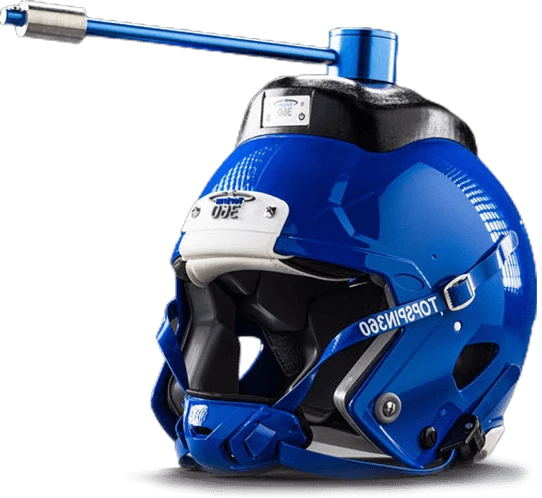
- Dynamic equipment like TopSpin360: Tools like these allow for multi-directional movement and reflex-based training, replicating real game scenarios.
- Isometric holds: Holding positions with resistance to build static strength.
- Controlled flexion and extension: Moving the head forward, backward, and side to side with light resistance.
- Rotational resistance training: Important for preparing the neck for twisting forces experienced in collisions.
When implemented regularly, these exercises can significantly boost an athlete’s resilience on the field.
Who Should Be Doing Neck Training?
Everyone—from youth players to elite professionals—can benefit from neck strength development. However, certain groups are especially important:
- Football players: Linemen and other positions that engage in frequent collisions.
- Soccer and basketball players: Where unintentional head contact or falls are common.
- Wrestlers and martial artists: Who experience continuous head and neck forces.
- Youth athletes: Who are still developing the muscle and control needed for safety.
The earlier neck training starts, the better prepared an athlete will be as the demands of their sport increase.
Final Thoughts: Don’t Skip the Neck
Injury prevention plans often focus on flexibility, core strength, and conditioning—but neck training concussion prevention should be viewed with the same level of importance. Not only does it help reduce the risk of serious brain injuries, but it also builds confidence, improves posture, and enhances overall athletic performance.
By including targeted neck training in every concussion prevention plan, coaches, parents, and athletes take a proactive step toward a safer sports future. Tools like TopSpin360 make this training efficient, engaging, and sport-specific—so there’s no excuse to leave the neck out of the equation.


























Sign in to leave a comment.