
Hello, I'm Dr. Yogitaa Mandhyaan, Founder of Shape and Strength, Kolkata. I am a Physiotherapist, Certified Nutritionist, and Weight Management Specialist with over 20 years of clinical experience in helping people recover from pain, improve mobility, and lead healthier lives. In 2023, I was honoured with the Bharat Gaurav Puraskar and the India's 100 Women Achievers Award, recognitions that inspire me to continue serving my patients with evidence-based care and compassion.
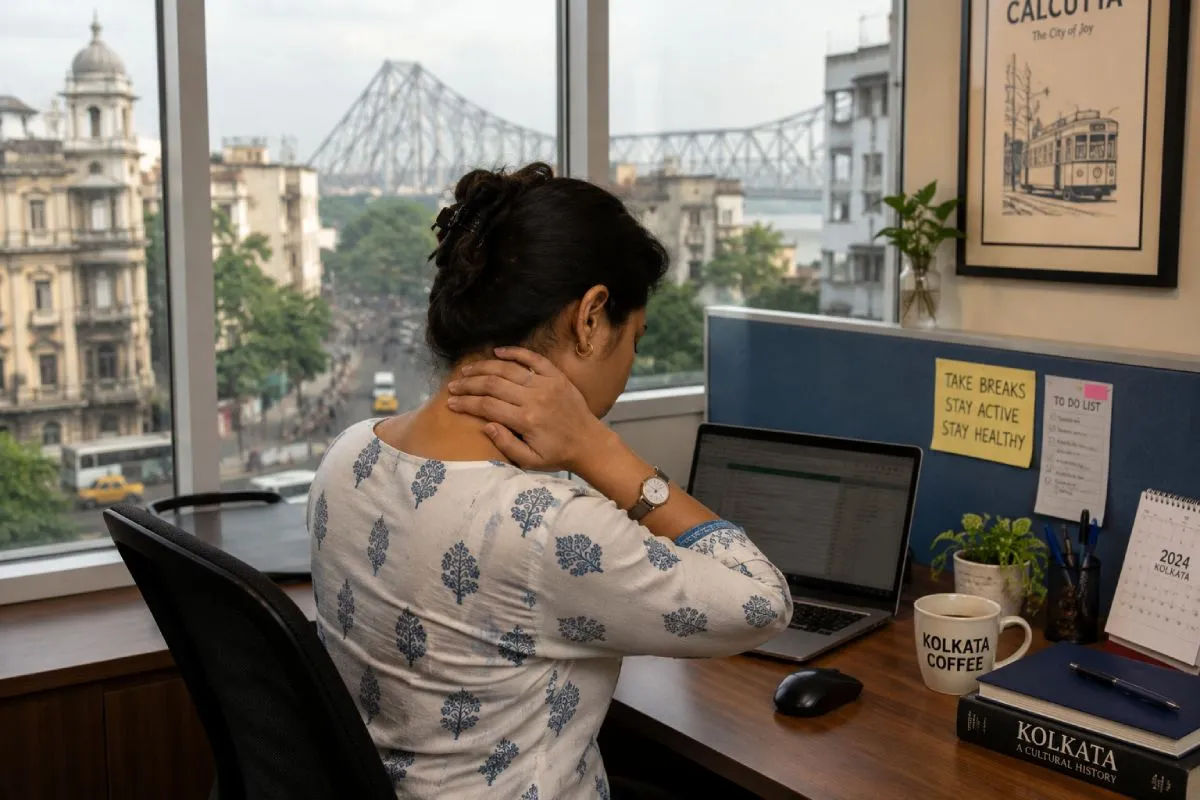
Over the last two decades, one thing has become increasinly clear to me. Neck pain is no longer just a problem for older adults or people doing physically demanding work. Today, the majority of neck pain patients walking into my clinic are office professionals, IT employees, business owners, students preparing for competitive exams, and even people working from home.
If you live and work in Kolkata, chances are you've experienced stiffness in your neck after a long day at your desk. You may have ignored it, thinking it would settle on its own. Sometimes it does, but very often it returns, becomes more frequent, and slowly starts affecting your daily life.
In this article, I want to share what I see every day in my practice, why this problem has become so common in Kolkata, and what you can realistically do to prevent it before it turns into something more serious.
Why Is Neck Pain Becoming So Common Among Office Workers in Kolkata?
Every city has its own lifestyle challanges, and Kolkata is no different.
Many professionals spend eight to ten hours in front of a computer. Add to that long commuting hours, heavy traffic, constant mobile phone usage, irregular exercise, and increasing work pressure, and it creates the perfect environment for neck pain.
One thing I've noticed over the years is that most people don't injure their neck in a single incident. Instead, the problem develops slowly. Small daily habits keep putting stress on the muscles and joints until one day the pain becomes impossible to ignore.
The Real Problem Isn't Your Neck
This often surprizes my patients.
Many people believe the pain starts in the neck itself. In reality, the neck is usually reacting to everything happening around it.
When I assess a patient, I rarely look only at the painful area. I check posture, shoulder movement, upper back mobility, muscle strength, workstation habits, sleep position, stress levels, and even breathing patterns.
Very often, the real cause lies elsewhere.
Someone may have weak upper back muscles.
Another person may sit with rounded shoulders for hours.
Someone else may constantly tilt their head while looking at two computer screens.
Unless we identify the actual reason, the pain keeps coming back.
Common Habits I See Almost Every Day
These are some of the most frequent issues I observe in office workers across Kolkata.
People sit continuously for three to four hours without getting up.
Laptop screens are placed too low, forcing the head to bend forward.
Many work from dining tables or sofas instead of a proper workstation.
Mobile phones remain in hand even after office hours.
People carry stress in their shoulders without even realizing it.
Sleep is often inadequate, and recovery becomes poor.
None of these habits look dangerous individually. Together, however, they create constant strain on the cervical spine.
The Symptoms You Shouldn't Ignore
Neck pain doesn't always begin with severe pain.
Sometimes it starts with a mild stiffness after work.
You may notice discomfort while reversing your car.
Turning your head becomes slightly difficult.
Headaches begin near the base of the skull.
Pain may spread towards the shoulder blade or arm.
Some people also experience tingling or numbness in their fingers.
If these symptoms continue for several weeks, it's important not to ignore them.
Why Painkillers Are Not a Long-Term Solution
One conversation I have almost every day goes something like this.
"Doctor, the pain goes away after taking medicine, but it comes back after a few days."
That happens because painkillers reduce symptoms. They don't correct posture, strengthen weak muscles, improve mobility, or change daily habits.
Medication certainly has its place when advised by your doctor, but relying only on tablets without addressing the root cause often delays recovery.
What Actually Helps?
Recovery usually requires a combination of simple but consistent changes.
Improve your workstation setup so your screen is at eye level.
Take a short movement break every 30 to 40 minutes.
Strengthen your upper back and shoulder muscles instead of only stretching your neck.
Reduce unnecessary mobile phone usage.
Improve your sitting posture, but remember that even perfect posture shouldn't be held for hours. Movement is more important than sitting "perfectly."
Get adequate sleep and include regular physical activity in your routine.
These changes may sound simple, but when followed consistantly, they make a remarkable difference.
My Experience Treating Office Workers in Kolkata
Over the years, I've treated thousands of patients with neck pain, and one pattern has remained consistant.
Those who seek help early usually recover faster.
Those who continue working through pain for months often need a longer rehabilitation process because muscles become weaker, joints become stiffer, and movement patterns become abnormal.
The encouraging part is that most office-related neck pain responds very well to physiotherapy when assessed correctly and treated with an individualized rehabilitation plan.
Every patient is different. A software engineer, a teacher, a banker, and a chartered accountant may all complain of neck pain, but the reason behind their pain can be completely different.
That is why I never believe in one exercise program for everyone.
When Is It Time to See a Physiotherapist for Neck Pain?
If your neck pain lasts for more than a week, keeps returning, limits your movement, causes headaches, or starts radiating into your shoulder or arm, it's a good idea to consult the Best Physiotherapist in Kolkata for a detailed assesment rather than waiting for the problem to worsen.
Early physiotherapy often helps prevent chronic pain and reduces the need for prolonged medication.
Choosing the Right Neck Pain Treatment
There is no single exercise or machine that works for everyone.
The Best Neck Pain Treatment in Kolkata begins with understanding why the pain developed in the first place. A proper clinical assessment helps identify the contributing factors, whether they involve posture, muscle imbalance, joint stiffness, ergonomics, or lifestyle habits.
Treatment should always be personalized and may include manual therapy, therapeutic exercises, posture correction, ergonomic advice, and a structured home exercise program designed specifically for the individual.
A Final Word
As someone who has spent more than two decades treating patients across Kolkata, I can confidently say that neck pain has become one of the most common lifestyle-related conditions I see today.
The good news is that it is also one of the most preventable.
Don't wait until a simple stiffness turns into persistent pain that affects your work, sleep, or quality of life. Listen to your body, move more during the day, maintain good workplace habits, and seek professional advice if your symptoms continue.
Small changes made today can help you avoid much bigger problems tomorrow.


























Sign in to leave a comment.