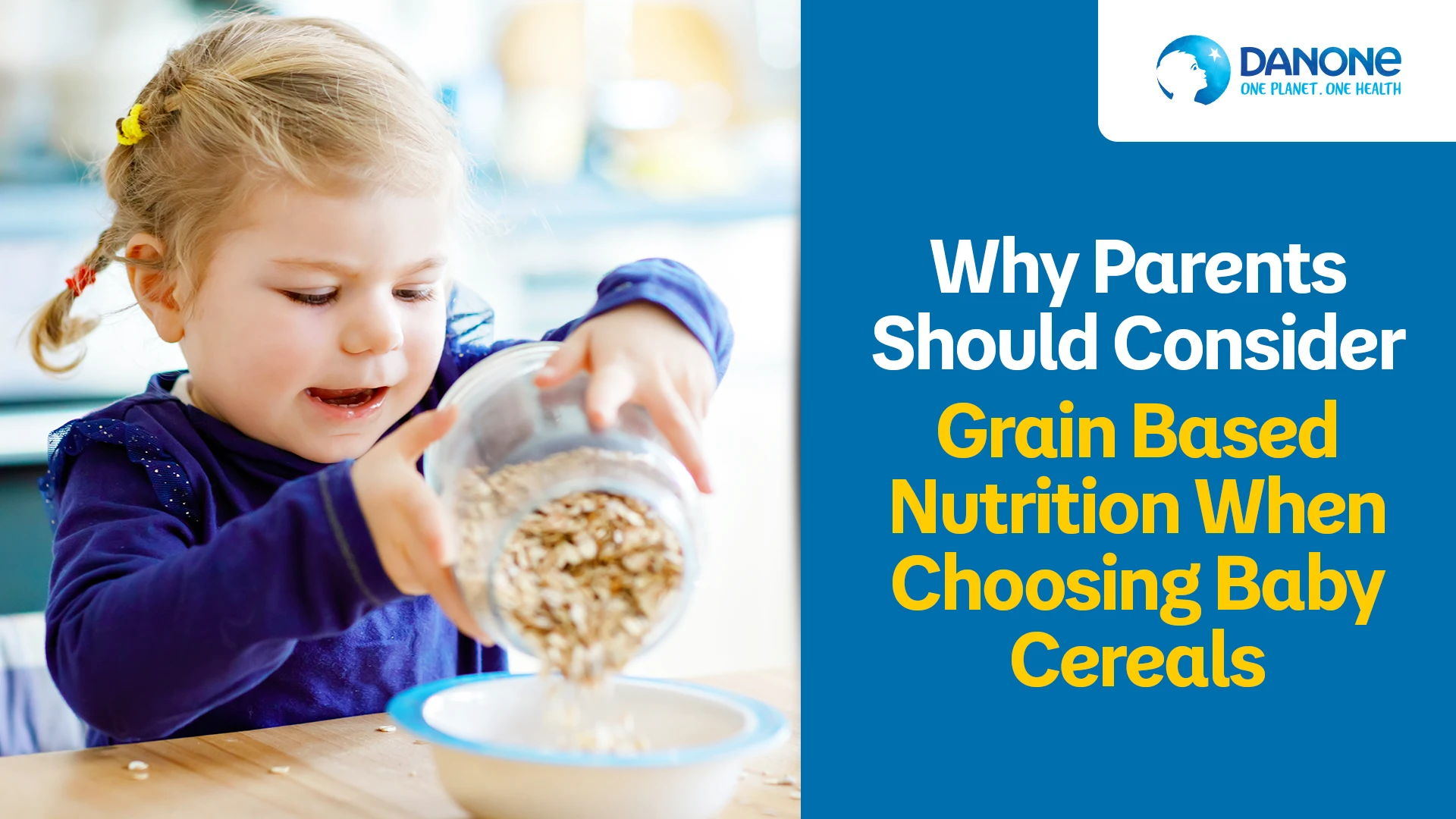

Choosing your baby's first cereal is not as simple as it looks, as the grain base matters more than most parents realise. The right baby cereal helps offer iron, energy, and a texture your baby can comfortably manage during early complementary feeding. It also helps shape variety in your baby's diet early on.
Health guidance supports introducing complementary foods at around 6 months, while continuing breastmilk or infant formula as the main source of nutrition. At this stage, parents consider cereal as one of the first foods because it is easy to prepare, easy to adjust in texture, and is widely available. But close attention is needed when choosing between grains such as oats, barley, rice, wheat, or multigrain options.
Why grain based nutrition matters in Baby Cereal
Grains influence nutrient content, texture, digestibility, and dietary variety, not just add bulk.
A well-chosen baby cereal can help you with:
- A soft and safe texture for early feeding
- Greater grain diversity, which supports a more varied diet over time
- Iron fortification, which matters because infants aged 7 to 12 months need 11 mg of iron per day
- Better practical fit for busy days, travel, or when you want a consistent feeding routine
For many families, baby cereals are useful because they nutritional support with combine convenience, especially when you are still learning your baby’s hunger cues and feeding pace.
Why Iron is Central when choosing Baby Cereals
At around 6 months, your baby’s iron needs increase. Breastmilk remains valuable, but complementary foods begin to play a bigger role in meeting the total iron requirements.
That is why iron-fortified cereal is often recommended as a practical early food. According to the NIH Office of Dietary Supplements, standard iron-fortified formulas meet infant iron needs in the first year, and iron-containing complementary foods such as fortified cereals become important as solids begin.
What to check on the label
- Iron per serving
- Serving size
- Whether the cereal is clearly meant for infants
- Whether the grain source matches your baby’s stage and tolerance
If you are comparing two baby cereals, the better choice is usually the one that supports iron intake clearly and fits your baby’s age and feeding readiness.
Why Grain Variety is a Smart Choice
One of the biggest reasons to consider grain based nutrition carefully is variety. Public health guidance from the CDC advises offering a variety of fortified infant cereals such as oat, barley, and multigrain, rather than relying only on rice cereal. This is partly because feeding only rice cereal can increase arsenic exposure risk.
Practical grain options to look for
- Oat cereal for a familiar single-grain option
- Barley cereal for variety
- Multigrain cereal to broaden exposure to different grains
- Rice cereal in rotation rather than as the only cereal
This does not mean rice must always be avoided. It means grain diversity is the better long-term approach.
How different grains can support feeding progress
Each grain base can affect texture and the overall feeding experience.
Oats
- Often mix smoothly
- Easy to adjust from thin to thicker textures
- Helpful when you want a simple single-grain starting point
Barley
- Adds variety to the feeding routine
- Can be useful once your baby has accepted a few first foods
Multigrain
- Helps expand taste and grain exposure
- Useful when your baby is ready for slightly broader variety
Rice
- Common and familiar
- Better used as one option among several, rather than the only cereal choice
Texture matters because your baby’s eating skills develop in stages. Start with a thin, smooth cereal and then gradually thicken it to support comfort and acceptance.
Baby Cereal With Omega 3 And Omega 6
You may also come across Baby Cereal with Omega-3 And Omega-6. Though it sounds highly technical, the idea is straightforward.
Omega 3 and omega 6 are essential fatty acids. They must come from the diet because the body cannot make the parent fatty acids in these families. They play an important role in normal growth and development, especially for the brain and retina in early life.
What this means for you
- A cereal with added omega 3 and omega 6 can contribute to overall nutrient intake
- It should still be judged as part of the whole product, not by one claim alone
- Iron content, grain variety, ingredient quality, and suitability for your baby still matter most
In other words, Baby Cereal With Omega 3 And Omega 6 may be useful and should support the basics of a strong cereal choice.
What to look for when buying Baby Cereal
When choosing among Baby Cereals, a short checklist can make the decision easier.
A useful checklist
- Iron fortification
This should be one of your first checks because iron needs rise in later infancy. - Grain source
Choose from oat, barley, multigrain, or a rotation of grains instead of relying only on rice. - No added sugar
Early feeding works best when babies learn the natural taste of foods. - Clear age suitability
The cereal should match your baby’s developmental stage. - Simple preparation instructions
This helps you adjust thickness correctly and prepare each feed safely.
How to use Baby Cereal well at home
Even a good cereal works best when it is used thoughtfully.
Start with these basics
- Prepare it to a thin, smooth texture at first
- Use breastmilk, formula, or safe water according to the product directions
- Offer a small amount, such as 1 to 2 teaspoons, initially and increase gradually
- Keep your baby seated upright and supervised during feeding
You can also combine cereal with other first foods as your baby becomes comfortable.
Simple pairing ideas
- Oat cereal with pear puree
- Multigrain cereal with banana mash
- Iron-fortified cereal with a fruit puree for variety
These combinations can help with taste acceptance while keeping meals simple.
Common concerns parents have
- What if your baby refuses cereal at first
That is common. Try again after a day or two, adjust the thickness, and keep portions small. - What if you are unsure which grain is best
Start with a single grain such as oats, then expand to barley or multigrain once your baby is tolerating solids well. - What if you are choosing between basic cereal and Baby Cereal With Omega 3 And Omega 6
Choose the one with the stronger overall profile: iron, suitable grain base, simple ingredients, and clear age fit. The added fats can be a useful extra, but they should not outweigh the basics.
At Danone, early-life Nutrition connects with the wider idea of One Planet. One Health. For you, this can mean choosing foods that support healthy growth, encouraging variety from the start, and building feeding habits that are simple, safe, and evidence-based.
Your Cereal Checklist
If you are choosing a Baby Cereal now, compare two or three options by looking at the grain source, iron content, ingredient list, and age suitability. Start with one cereal, keep the texture simple, and rotate grains gradually as your baby becomes more comfortable. Share in the comments which Baby Cereals you are considering and what questions you want answered next.
Read More - How Infant Formula Milk Can Influence Digestion, Sleep and Early Growth Patterns
FAQ
Q1. When should you start Baby Cereal?
A. Most guidance supports starting complementary foods at around 6 months, while continuing breastmilk or infant formula.
Q2. Why does grain choice matter in Baby Cereal?
A. Different grains affect nutrient profile, texture, and dietary variety. Guidance also recommends offering grains such as oat, barley, and multigrain instead of relying only on rice cereal.
Q3. Is rice cereal unsafe?
A. Rice cereal is not always unsafe, but it should not be the only cereal used regularly because relying only on rice cereal can increase arsenic exposure risk.
Q4. What does Baby Cereal With Omega 3 And Omega 6 mean?
A. It usually means the product contains added essential fats. Omega 3 and omega 6 are important for normal growth and early brain and eye development.
Q5. Why is iron so important in Baby Cereals?
A. Infants aged 7 to 12 months need 11 mg of iron per day, so iron-fortified cereal can help support this requirement during complementary feeding.
Q6. What should you prioritise when choosing among Baby Cereals?
A. Prioritise iron fortification, grain variety, simple ingredients, and clear age suitability. Those factors matter more than marketing claims alone.



























Sign in to leave a comment.