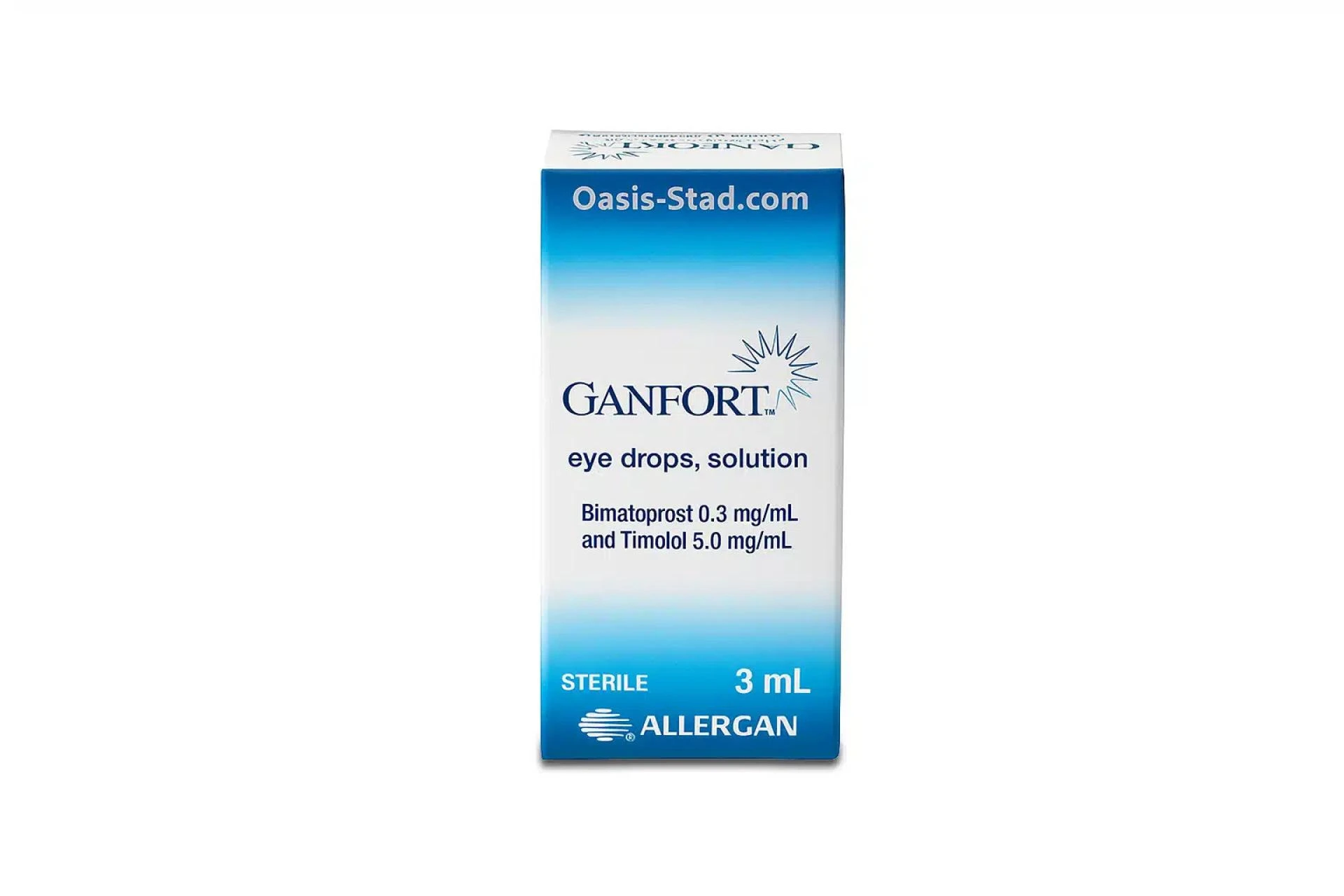

Many people with glaucoma or high eye pressure are switching to Ganfort Eye Drops because they are a strong and easy way to lower pressure. Ganfort Eye Drops are made with two well-known ingredients, bimatoprost and timolol, that work together to keep your vision healthy and stop more damage to the optic nerve. These ingredients work together to stop fluid from building up in the eye. It is one of the most trusted options for treating glaucoma today because doctors often recommend it for patients who need effective, long-lasting relief with fewer bottles and easier dosing.
What is Ganfort Eye Drops?
Ganfort Eye Drops contain two active drugs: bimatoprost (a prostamide/prostaglandin-like agent) and timolol (a beta-blocker). Together they act in different ways to lower intraocular pressure (IOP). The fixed combo is made so patients need only one bottle and usually one or two drops per day.
Why a fixed combination matters
Taking two separate eye drops can be hard. Patients forget doses. Bottles get mixed up. Using one combination drop makes life simpler. Fixed combinations like Ganfort Eye Drops reduce the number of drops, lower the chance of dosing errors, and often improve adherence. Clinical reviews and trials of combination drops show similar or better pressure lowering than taking the two agents separately.
How Ganfort lowers eye pressure
Bimatoprost works mainly by increasing the outflow of fluid from the eye. Timolol lowers the production of fluid inside the eye. Together they reduce pressure more than either one alone in many patients. In trials, the fixed bimatoprost/timolol combination lowered IOP by around 8–10 mmHg on average, a meaningful drop for many people with open-angle glaucoma or ocular hypertension.
Real benefits patients notice
- Fewer bottles. One bottle can replace two.
- Fewer daily steps. Simpler routines mean better use.
- Strong pressure lowering. Many patients see a clear drop in measurements.
Because of these benefits, many clinicians include Ganfort Eye Drops as an option when a prostaglandin analogue plus a beta-blocker is needed. NHS and regional glaucoma pathways list bimatoprost/timolol combinations among recommended options for patients who need combination therapy.
Safety and side effects — what to expect
Like all eye medicines, Ganfort Eye Drops have side effects for some people. The most common are eye redness, eyelash changes (longer or darker lashes), and sometimes a slight darkening of the skin around the eye. Timolol can affect the heart or lungs in sensitive people, so doctors review medical history before prescribing. Clinical safety reviews and product labels cover these risks and how to manage them.
If you have asthma, certain heart conditions, or are taking certain systemic medicines, tell your doctor. They will decide whether a beta-blocker containing eye drop is safe for you.
How Ganfort compares to other choices
Research shows that fixed combinations can be as effective as giving the same two drugs separately. Some fixed combos use different partners (for example, brimonidine/timolol). Ganfort’s pairing of bimatoprost + timolol has been found very effective in lowering IOP and is a commonly used combination in many treatment pathways. This is why many patients and clinics are switching to Ganfort Eye Drops when single-agent therapy is not enough.
Who might benefit most
- Patients who need more than one medicine to control IOP.
- People who struggle to use multiple bottles on a tight schedule.
- Those who prefer a once-daily or twice-daily routine with fewer steps.
Practical tips for using Ganfort Eye Drops
- Wash your hands.
- Tilt your head back and pull down the lower eyelid.
- Place one drop into the lower eyelid pocket.
- Close your eyes for 1–2 minutes. Press gently on the inner corner (nasolacrimal sac) to reduce systemic absorption if advised.
- Use exactly as prescribed. If you wear contact lenses, remove them before use and wait the recommended time before reinserting. Instructions and the patient leaflet give more detail.
Evidence and official guidance
- The European Medicines Agency (EMA) reviewed Ganfort and concluded it is effective at lowering eye pressure in people with open-angle glaucoma and ocular hypertension. EMA documents summarize trials showing meaningful IOP reductions.
- National health bodies and local formularies reference bimatoprost/timolol fixed combinations when combination therapy is needed. The NHS and regional pathways include such combinations in stepwise glaucoma care.
- Clinical reviews and randomized trials in the NIH/PMC literature show that fixed combinations of prostaglandin-like agents and beta-blockers provide effective IOP lowering and can improve adherence compared with separate bottles.
Why patients are switching
- Fewer steps in daily life. One bottle. One routine.
- Proven pressure control. Trials and reviews show meaningful IOP lowering.
- Backed by clinical data. Major regulatory and health authorities have reviewed fixed combination therapy and list it in treatment pathways.
These factors help explain the trend: Ganfort Eye Drops can make glaucoma care simpler and effective. Many patients find this combination easier to follow than multiple single medicines.
Important safety reminder
This blog explains what studies and health agencies report about fixed combination eye drops. It is not medical advice. Always follow your eye doctor’s guidance. If you have breathing problems, heart disease, or are pregnant or nursing, talk to your clinician before using drops that contain a beta-blocker.
Conclusion
Ganfort Eye Drops are a clinically proven and patient-friendly choice for people who want reliable eye pressure relief all day long. It helps protect long-term vision and makes daily tasks easier by combining all of the steps for treating glaucoma into one. Always talk to your eye doctor before starting any new glaucoma treatment. However, with medical advice, Ganfort Eye Drops can be a simple way to get clearer, healthier vision and a better quality of life.
































Sign in to leave a comment.