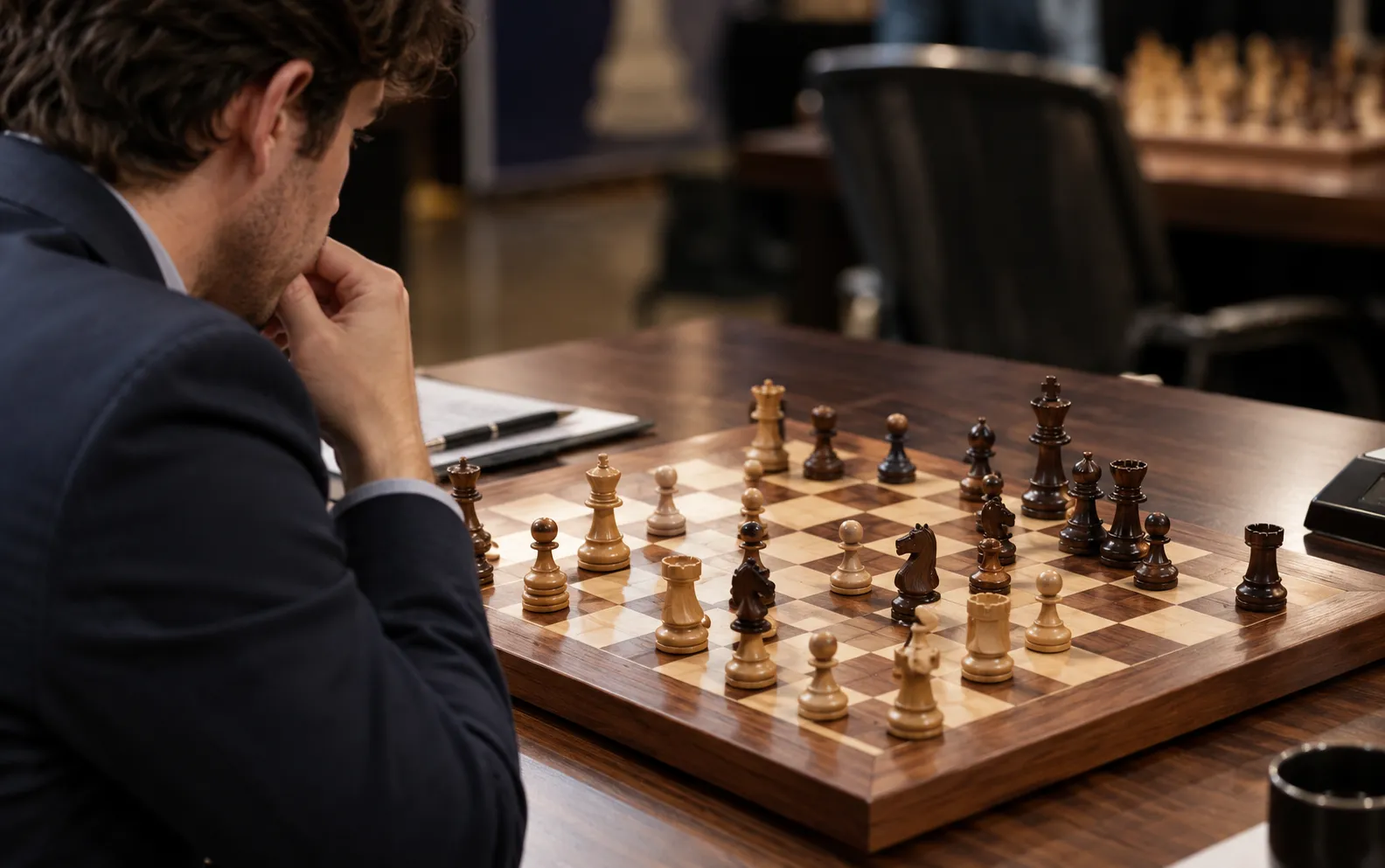

A chess position can sometimes leave you unsure about your next move. Your pieces are developed, there’s no obvious tactical opportunity, and several moves appear reasonable. This is where pawn structure can help.
The way pawns are arranged gives you information about open files, weak squares, available space, potential pawn breaks, and long-term targets. Pawns cannot move backward, so every pawn move can create weaknesses that may remain important throughout the game.
That’s why Why Pawn Structure Should Influence Your Plans In Chess is a useful positional concept. It gives you a practical way to decide what your next move should accomplish.
Pawn structure gives you a direction
A pawn structure refers to the arrangement of pawns on the chessboard. Chess.com explains that pawn formations can help players identify plans by revealing things such as space, open files, and pawn weaknesses.
Before moving your pieces, study the pawns. Which files are open or half-open? Which pawns need protection? Which squares have lost pawn control? Is the center open, or are the central pawns locked together?
The answers can give your pieces clear roles instead of leaving you to search for moves without a specific purpose.
For instance, an open position can give bishops greater access to diagonals because fewer pawns obstruct their lines. In a closed position, locked central pawns affect piece movement and can influence where play develops.
Weak pawns can become your targets
Pawn formations can contain weaknesses such as isolated, doubled, and backward pawns. These weaknesses can become targets when your pieces are able to attack them.
An isolated pawn has no friendly pawn on an adjacent file supporting it. This can make the pawn vulnerable, especially after the position becomes simpler. A player can blockade the pawn, exchange pieces, and place additional pressure on the weakness.
Doubled pawns can also become targets, but their value depends on the entire position. They may control useful squares or help open a file for a rook. Simply seeing doubled pawns doesn't automatically tell you that they are bad.
The practical lesson is clear: pawn structure should influence your plan, while the position determines whether a weakness can actually be attacked successfully.
Pawn breaks often reveal the real plan
A pawn break is a pawn move that challenges the opponent’s formation. Such a move can open a file, clear a diagonal, create a passed pawn, or change the position around the kings.
Before committing to a pawn break, calculate what the resulting position will look like. Which files will open? Which diagonals will become available? Which piece gains activity? Does your king become more exposed?
Timing is important. An early pawn break can create weaknesses or give the opponent useful open lines. In other positions, maintaining the tension can be stronger because the possibility of a break limits the opponent’s choices without immediately changing the structure.
Different structures can point toward different pawn breaks. The Carlsbad structure, for example, is commonly associated with a queenside minority attack. Other pawn formations create different plans and breaks.
Your pieces should fit the structure
Understanding the pawn structure can make piece placement easier to evaluate.
Knights can benefit from stable outposts, particularly squares that opposing pawns cannot easily challenge. Bishops generally become more active when their diagonals are open. Rooks can become powerful on open and half-open files.
Suppose your opponent has a fixed weakness on a particular file. A rook placed there can increase the pressure. If a pawn move has left a square weak, a knight might be able to use that square as an outpost.
So when choosing a piece square, consider the demands of the pawn structure. Ask what job that piece can perform based on the position in front of you.
This simple habit can make positional decisions easier because your moves begin with a concrete purpose.
Closed centers can change where you attack
The pawn structure also tells you whether the center is open or closed.
When central pawns have been exchanged, pieces usually have greater access to central squares, while bishops can benefit from newly opened diagonals. When central pawns remain locked, piece routes change and play can move toward the sides of the board.
A locked pawn center can create fixed targets and limit some pieces. Your plan therefore needs to consider the available space for both sides and the pawn breaks that could eventually change the structure.
The board already contains useful information. The pawn formation can help you identify where your pieces should go and which part of the position deserves attention.
Pawn structure matters even more in the endgame
Pawn structures can become increasingly important as pieces are exchanged.
An isolated pawn that helped support active play during the middlegame may become a lasting weakness after several pieces disappear. Passed pawns become especially important in endgames because there is no opposing pawn on their file or an adjacent file that can stop their advance directly.
Pawn islands can matter as well. When pawns are divided into separate groups, each group can become a potential target and may require individual protection.
Because of this, piece exchanges should sometimes be evaluated according to the resulting pawn structure. Before trading, consider which side benefits when fewer pieces remain on the board.
A favorable pawn ending can be worth aiming for, while an exchange that leaves your pawns weak can create problems later.
A practical way to use pawn structure
When you reach a position and aren't sure what plan to follow, take a few seconds to examine:
- Which pawns are weak?
- Which squares have become weak?
- Which files are open or half-open?
- Which pawn break is available?
- Which piece can improve because of the structure?
- Would exchanging pieces benefit my position?
- Who benefits if the game reaches an endgame?
These questions fit practical chess planning methods that ask players to examine pawn weaknesses, pawn breaks, available space, open files, and piece placement before selecting a plan.
You can practise this with your own games, too. Once the opening is finished, pause the game before checking an engine and describe the pawn structure. Find the weak pawns, weak squares, possible pawn breaks, targets, and useful piece squares.
Then compare your ideas with what happened in the actual game. This gives you a practical way to see whether your positional reading matched the demands of the position.
Ready to Improve Your Chess Plans?
Learn how to understand pawn structures, identify better plans, and make stronger decisions with guidance from experienced, Master-titled chess coaches.
Book your 1-to-1 trial lesson today.
Call: 614-570-3858
Website: MM Chess Academy
FAQs
Q1. Why should pawn structure influence your plans in chess?
Pawn structure shows weaknesses, open files, available space, weak squares, and possible pawn breaks. These clues can help you decide where to attack and where your pieces should be positioned.
Q2. What is the most important thing to look for in a pawn structure?
Begin by checking weak pawns, weak squares, open files, and possible pawn breaks. These features can reveal targets and suggest useful squares for your pieces.
Q3. Are doubled and isolated pawns always bad?
No. Doubled pawns can control important squares or help open files, while an isolated pawn can provide central space and support active piece play. Their value depends on the position and whether the opponent can attack them.
Q4. How do pawn breaks affect chess plans?
A pawn break can change the pawn formation, open files or diagonals, create targets, and sometimes produce passed pawns. Its timing matters because an unprepared break can create weaknesses or give the opponent useful lines.
Q5. How can I improve my understanding of pawn structure in chess?
Study your own games and identify the pawn formation after the opening. Look for weak pawns, weak squares, possible pawn breaks, and good piece squares before checking an engine. Studying model games from structures you regularly reach can also help you recognize plans more quickly in future positions.


























Sign in to leave a comment.