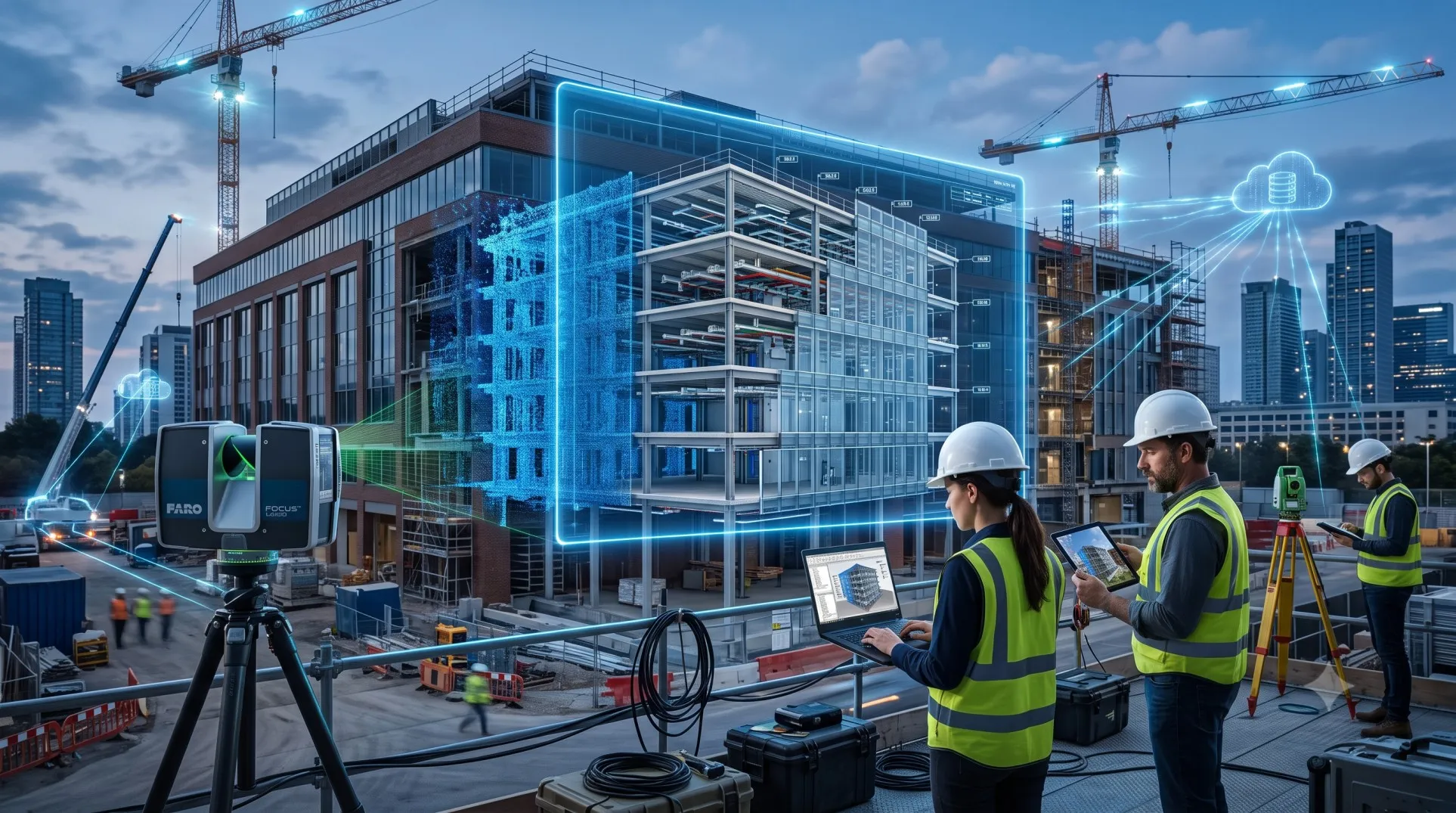

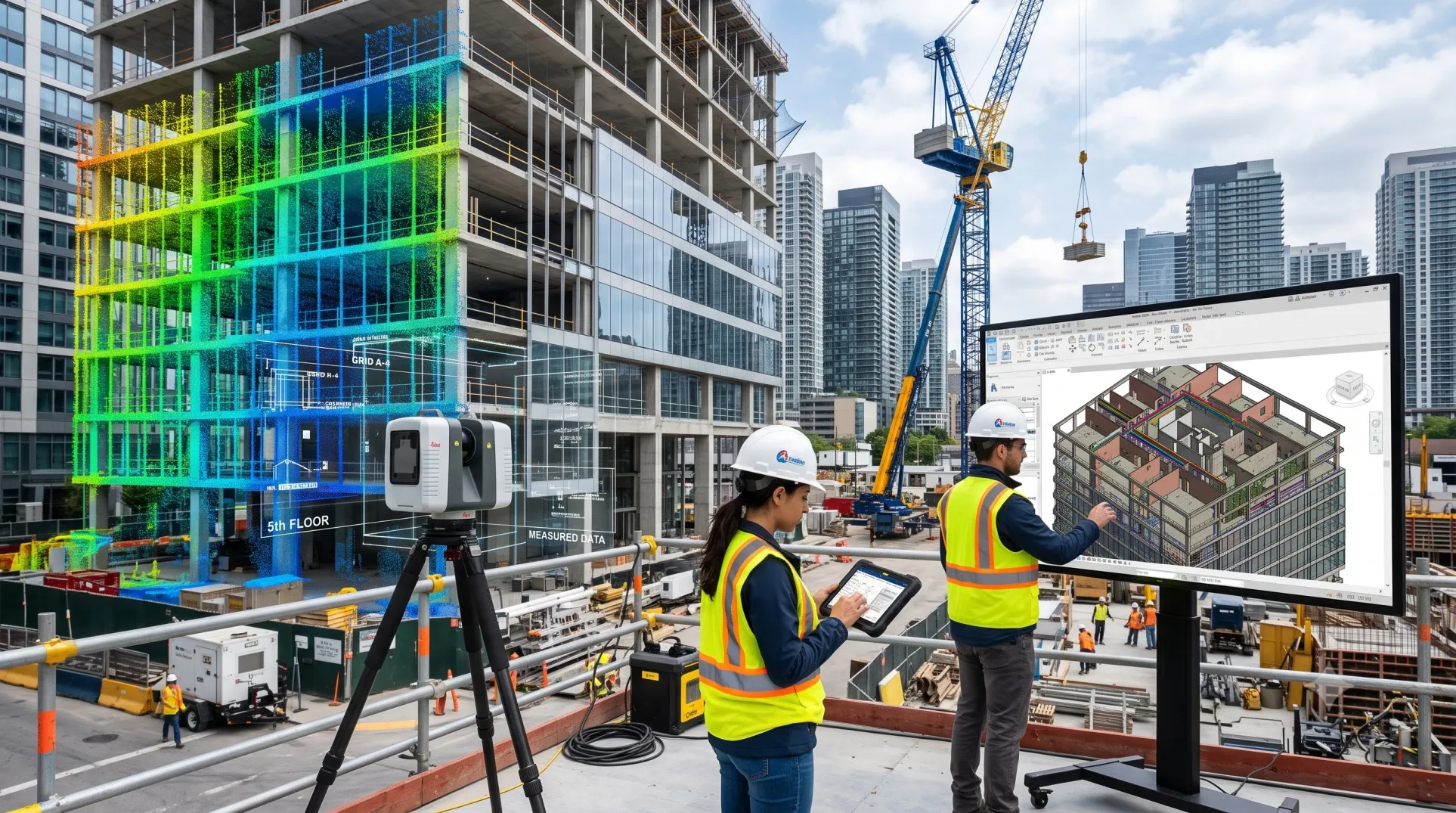
Digital transformation has reshaped the Architecture, Engineering, and Construction (AEC) industry, introducing technologies that improve project accuracy, collaboration, and efficiency. Among these innovations, Point Cloud to BIM has emerged as one of the most valuable workflows for renovation, restoration, facility management, and infrastructure modernisation.
Instead of relying on outdated drawings or manual measurements, project teams can now capture existing buildings with laser scanners and convert millions of data points into intelligent Building Information Models (BIM). This process significantly reduces errors while providing an accurate digital representation of real-world structures.
What Is Point Cloud to BIM?
Point Cloud to BIM is the process of converting laser-scanned data into an intelligent 3D BIM model. Laser scanners capture millions of precise measurements, creating a "point cloud" that accurately represents the geometry of a building or infrastructure asset.
BIM specialists then use this data to develop detailed digital models containing architectural, structural, and MEP information that can be used throughout the project lifecycle.
Why Traditional Surveys Are No Longer Enough
Many renovation projects begin with incomplete or outdated documentation. Original drawings may be missing, inaccurate, or modified over time, making it difficult for architects and engineers to plan confidently.
Traditional site surveys also require significant manual measurements, increasing the possibility of human error. Even small inaccuracies can lead to design conflicts, material waste, and expensive rework during construction.
Point Cloud to BIM eliminates many of these challenges by providing highly accurate as-built information before design work begins.
Key Benefits of Point Cloud to BIM
Exceptional Accuracy
Laser scanners capture existing conditions with millimetre-level precision. This accuracy helps architects and engineers make informed design decisions while reducing the need for repeated site visits.
Better Renovation Planning
Renovation projects often involve working around existing structures. Accurate BIM models help teams identify potential issues before construction starts, reducing delays and unexpected costs.
Improved Collaboration
Architectural, structural, and MEP teams can work from the same coordinated digital model. Everyone has access to the latest project information, improving communication and minimising misunderstandings.
Faster Project Delivery
Having an accurate digital model accelerates design development, clash detection, documentation, and project coordination, helping teams meet tight project deadlines.
Reduced Construction Risks
By identifying design conflicts early, project teams can resolve problems before they become expensive site issues. This improves project quality while reducing change orders and rework.
Industries That Benefit from Point Cloud to BIM
Point cloud to BIM is widely used across multiple sectors, including:
- Commercial building renovations
- Healthcare facilities
- Educational institutions
- Airports
- Industrial plants
- Historic building preservation
- Infrastructure modernization
- Manufacturing facilities
- Government buildings
Any project requiring accurate documentation of existing conditions can benefit from this technology.
Supporting Sustainable Construction
Accurate existing-condition models also contribute to sustainability. Instead of demolishing and rebuilding unnecessarily, project teams can optimise renovation strategies, reuse existing structures, reduce material waste, and improve energy performance through informed design decisions.
As sustainable construction becomes increasingly important, digital workflows such as point cloud to BIM help organizations achieve environmental goals while improving project efficiency.
The Future of Digital Engineering
The integration of laser scanning, artificial intelligence, cloud collaboration, digital twins, and BIM is creating smarter construction workflows. Future projects will rely even more heavily on accurate digital data to improve decision-making throughout planning, construction, operation, and facility management.
Organizations investing in Point Cloud to BIM today are positioning themselves to take full advantage of these emerging technologies.
Conclusion
Point Cloud to BIM has become an essential part of modern digital construction. By transforming precise laser scan data into intelligent BIM models, project teams gain the accuracy, coordination, and efficiency needed to deliver successful renovation and infrastructure projects.
As digital engineering continues to evolve, point cloud to BIM will remain one of the most valuable technologies for reducing project risks, improving collaboration, and supporting smarter construction practices.
Whether working on historic renovations, commercial developments, or complex industrial facilities, adopting Point Cloud to BIM enables organizations to build with greater confidence and precision.
























Sign in to leave a comment.