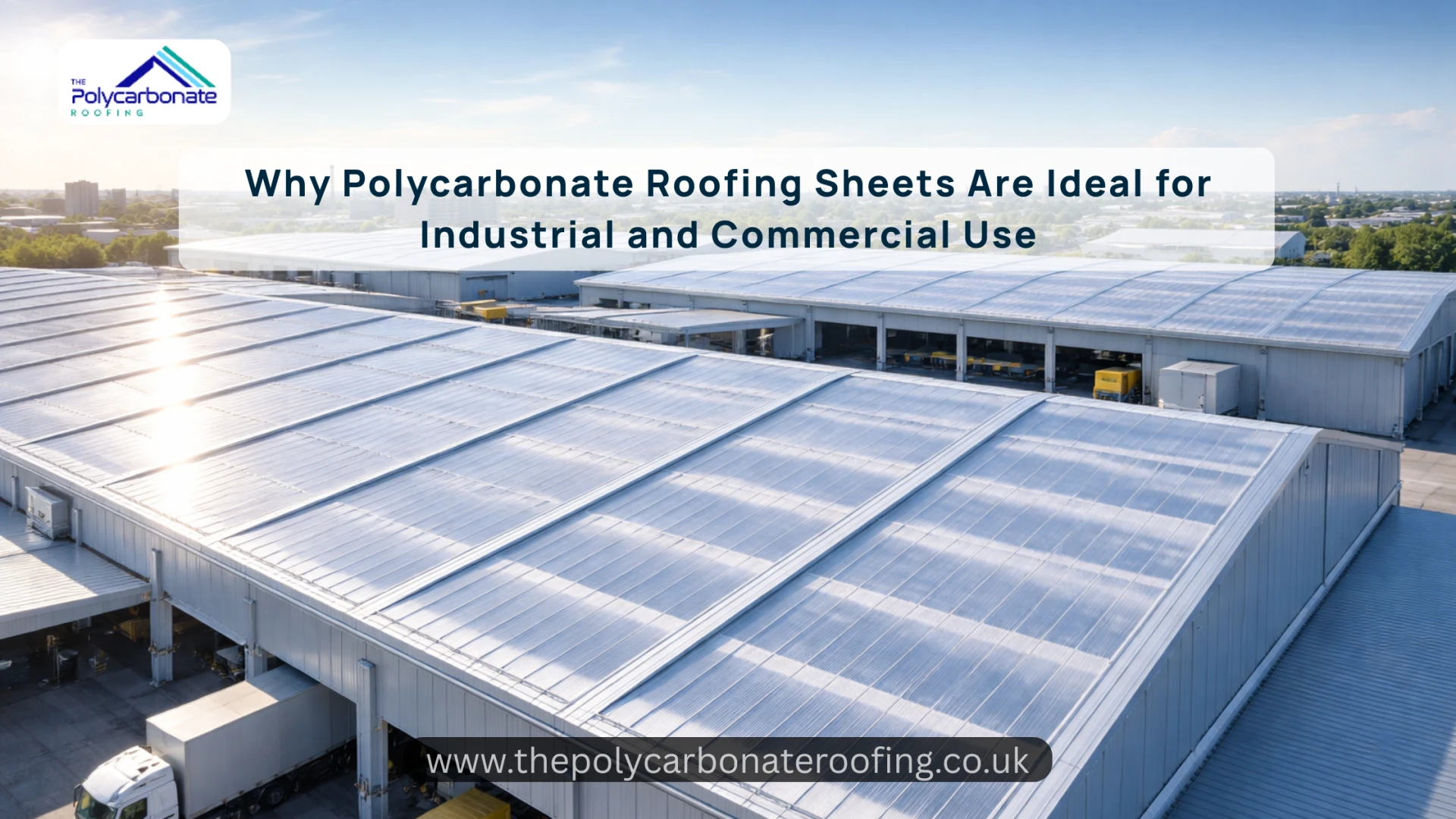

In modern construction, there is a predominant trend toward roofing materials that are strong, lightweight, and economical over the long term. Enterprises prefer materials that keep installation and maintenance costs low while reliably performing.
The ever-increasing demand has brought innovative materials to the forefront, and polycarbonate roofing sheets have become a standout.
From factories to shopping complexes, decision-makers are gradually abandoning traditional roofs for more intelligent alternatives that offer a perfect blend of durability and design flexibility. Modern industrial and commercial buildings require roofing that is just as productive as the building itself, and that is exactly where polycarbonate comes in.
What Are Polycarbonate Roofing Sheets?
Polycarbonate roofing sheets are made from high-performance thermoplastic polymers that offer exceptional strength and clarity. In addition to being lightweight, they have an outstanding load-carrying capacity, making them ideal for large spans and open spaces.
In industrial and commercial applications, these sheets are offered in three types: solid, twinwall, and multiwall. Each type has a unique function: solid sheets offer the highest impact resistance, and multiwall sheets provide insulation and light diffusion. Their combination of rigidity, adaptability, and light transmission makes them ideal for large-scale construction projects requiring high reliability.
Why Polycarbonate Roofing for Industrial Buildings Is a Smart Choice?
Industrial settings can be very demanding on materials. In addition to heavy machinery and continuous movement, there is also exposure to weather that requires roofing materials capable of withstanding these conditions. For example, polycarbonate roofing for industrial buildings is highly impact-resistant, making it suitable for factories, warehouses, logistics hubs, and processing plants.
These polycarbonate sheets can withstand wind pressure, vibration, and temperature changes without degrading. Their ability to consistently deliver performance even under severe conditions makes them an excellent choice for industrial operations where shutting down for repairs is extremely expensive and safety is top priority.
Benefits of Using Polycarbonate Roofing for Commercial Buildings
- Polycarbonate roofing for commercial use delivers a clean, modern look that complements contemporary commercial architecture
- Enables natural daylight to penetrate the building, thereby minimising the use of artificial lighting.
- Enhances the brightness and beauty of shopping malls, offices, showrooms, airports, and parking lots
- Make space more comfortable and inviting for visitors, customers and your team
- Promotes energy efficiency by reducing the need for daytime lighting
Key Advantages of Polycarbonate Roof Sheets
- One of the key benefits of polycarbonate roofing sheets is their combination of strength and low weight.
- Allows for quicker and easier installation when compared to the weight of other roofing products
- Contributes to cost-effective building and labour costs
- Resistant to moisture, rust and weathering
- Delivers consistent and dependable performance for all climates
- Long-term cost savings as a result of fewer repairs and replacements
Polycarbonate Roofing Durability Explained
If we are to talk about polycarbonate roofing durability, then materials of its class are quite limited. These panels are designed to withstand constant hail, debris, and strong winds without requiring replacement; they also tolerate wide temperature swings.
Glass can be broken, while polycarbonate won’t. Metals always rust, whereas polycarbonate doesn't. PVCs inevitably will lose strength over time; polycarbonate remains strong. In demanding industrial facilities with heavy use, polycarbonate roofing can be relied upon to provide the required level of safety and continuous performance.
Polycarbonate Roofing Lifespan and Long-Term Value
Longevity is a major concern for any commercial investment. The polycarbonate roofing lifespan is normally very long; however, it also depends on how well it is installed and the environmental conditions to which it is exposed.
When sheets are correctly placed, they remain resistant to cracking, bending, and colour change.
This longer lifespan translates to fewer replacements, less disturbance, and higher profit from investment - a major factor for large-scale facilities and commercial properties.
Why Is UV Protected Polycarbonate Roofing Important?
The sun's rays can quickly degrade low-cost materials, but a UV-protected polycarbonate roofing is designed to withstand these effects. UV layers block harmful rays, thus keeping the interior cool and protecting the material from degradation.
Such protection not only reduces yellowing, brittleness, and fading but also ensures that the roof remains visually clean and structurally stable. For outdoor industrial and commercial roofs, UV protection is essential for long-lasting performance.
Energy Efficiency and Sustainability Benefits
By allowing natural light into the building, polycarbonate roofing reduces the need for artificial lighting during the day. This reduces energy usage and creates more comfortable workspaces.
Many panels also have coatings that help control heat, reducing air conditioning use. As a recyclable material, polycarbonate enables a greener choice in the construction industry without compromising performance.
Reduced Maintenance and Running Costs
Additionally, another benefit is the minimal maintenance required. Polycarbonate roofs are easy to clean and inspect, with only routine checks required. Their high level of damage resistance reduces repair costs, making long-term operations more predictable and within budget.
Best Uses of Polycarbonate Roofing Sheets
- Warehouses and storage facilities requiring strong, lightweight roofing
- Factories and manufacturing units with demanding operational environments
- Commercial complexes and office buildings that benefit from natural daylight
- Workshops and industrial sheds need durable, weather-resistant coverage
- Parking structures where light transmission improves visibility and safety
- Covered walkways and canopies for protection without blocking light
- Design-driven projects that require both performance and modern aesthetics
Many businesses trust solutions from The Polycarbonate Roofing for dependable quality, consistent performance, and materials designed for demanding commercial and industrial needs.
Summary
From its strength and light transmission to its durability and energy-saving properties, Polycarbonate roofing delivers. The polycarbonate roof panels are the ideal compromise between the functional requirements of an industrial building and the aesthetic needs of a commercial building.
With proven durability, long life, UV protection, and cost-effective maintenance, they are a wise choice for future-oriented businesses. Selecting polycarbonate is about more than roofing; it’s about predictable performance that helps your business grow and keeps everyone safe and work flowing efficiently for many years to come.
FAQs
1. What are the uses of polycarbonate roofing sheets?
They are employed in the construction of industrial buildings, commercial areas, walkways, car parks, and roofs with wide spans.
2. Why are polycarbonate roofing sheets suitable for industrial buildings?
They are impact-resistant, durable, and perform well in harsh environments.
3. Is polycarbonate roofing suitable for the commercial application?
Yes, it allows for design flexibility, natural light, and energy efficiency in commercial applications.























Sign in to leave a comment.