If you have ever been handed an X-ray of your own or your child’s spine and seen that telltale "S" or "C" curve, your mind probably jumped straight to structural mechanics. For decades, the conventional medical narrative treated scoliosis as if the spine were a crooked architectural pillar—something that simply needed to be forcefully propped up with a rigid plastic brace or permanently fused together with titanium rods.
But modern spinal medicine is undergoing a massive shift. Data from the world's leading non-surgical scoliosis research conferences, such as the 2026 SOSORT international congress, reveals that treating a spinal curve as an isolated bone deformity misses the root cause entirely.
Your spine doesn't just drift out of alignment on a whim. The bones are reacting to a complex neurological blueprint. To truly understand scoliosis, we have to look upstream—away from the hard bone and directly at how the brain communicates with our core muscles.
The Neurological Blueprint Behind Spinal Alignment
Scoliosis is deeply tied to altered sensorimotor integration. This means the issue isn't that the spinal bones are inherently defective; rather, the brain’s internal map of what is "upright" has drifted out of calibration.
Your body relies on a constant, lightning-fast stream of sensory data to maintain its position in space. This information flows from three primary systems:
- The Vestibular System: Your inner ear's balance center.
- The Visual System: Your eyes keeping you level with the horizon.
- Proprioception: Millions of tiny receptors in your joints, tendons, and muscles that tell your brain exactly where your limbs are without you having to look at them.
In a body with idiopathic scoliosis, a subtle glitch occurs in how this sensory data is compiled. The brain receives a distorted picture of where the body is in space, determines that a curved position is actually "straight," and instructs the musculature to hold the spine right there.
[Glitch in Sensory Input: Inner Ear / Eyes / Proprioception]
↓
[Brain Calibrates a Distorted Centerpoint as "Straight"]
↓
[Neuromuscular Signals Lock the Spine into a Curved Posture]
Because the spine organizes itself to match the brain's internal prediction, trying to force a bone into alignment without updating the neurological software is why traditional, passive treatments often yield highly variable results. The body simply fights against the external force to return to its deeply hardwired, mistaken center point.
Why the Cobb Angle Only Tells Half the Story
When you visit a scoliosis specialist, the primary metric discussed is almost always the Cobb angle—the degree of curvature measured directly from a standard X-ray. While the Cobb angle is incredibly valuable for tracking whether a curve is stable or progressing, it is fundamentally just a measurement of a physical symptom. It is the printout, not the author writing the text.
Focusing solely on the bone measurement can lead to a sense of fatalism, leaving many adults to believe their spines are structurally locked or bound to worsen over time. However, neuroplasticity—the brain’s lifelong ability to reorganize itself by forming new neural connections—proves otherwise. Because the nervous system can be retrained at any age, a drifted internal map can be redrawn.
Moving From Passive Restriction to Active Retraining
Traditional rigid braces act as passive constraints. They hold the spine in place mechanically, but they can occasionally lead to muscle weakness because the core stabilizer muscles no longer have to do any work.
Conversely, modern conservative care focuses on active, reflexive correction. Advanced therapeutic protocols—like the Schroth Method or dynamic, flexible bracing systems—are specifically engineered to target functional anatomy. Rather than forcing the body into a mold, these treatments use targeted rotational breathing and specific body mechanics to flood the brain with new, accurate sensory evidence. When the nervous system is provided with honest data about its true alignment, it naturally begins to adjust its default muscular tone.
Proactive Strategies for Adult Spinal Health
If you are an adult living with scoliosis, managing the condition isn't about trying harder to stand up straight. Forcing a posture through sheer willpower doesn't work because your body functions on subconscious reflex, not conscious command. Instead, true management focuses on functional movement science and building a resilient musculoskeletal system.
1. Optimize Your Core and Pelvic Alignment
Your spine does not float in a vacuum; it sits directly on top of your pelvis. If your pelvic alignment is skewed, it amplifies the rotational forces traveling up your spine. Incorporating exercises that stabilize the deep core—such as the transverse abdominis—and keep the hips balanced can dramatically minimize daily discomfort and alleviate structural strain.
2. Prioritize Asymmetrical Strength Training
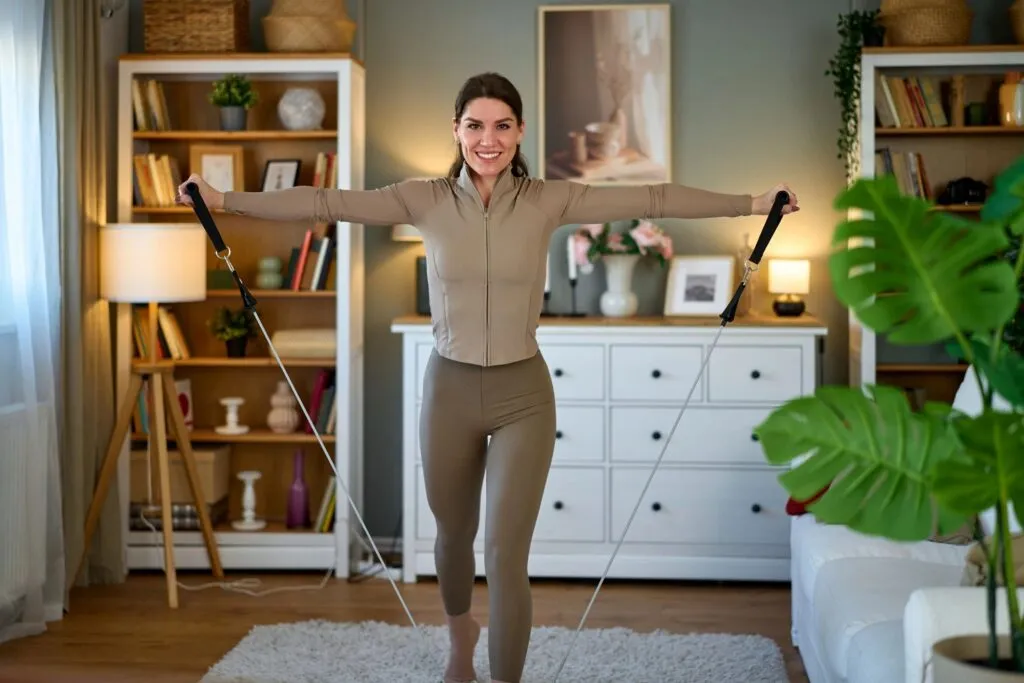
Because scoliosis creates inherently uneven muscle tension—where muscles on the cave side of a curve are chronically compressed and muscles on the convex side are chronically overstretched—a standard, symmetrical gym routine can inadvertently worsen these imbalances. Working with a specialist to design a customized, asymmetric exercise program ensures you are lengthening what is tight and strengthening what is weak.
3. Maintain Joint Mobility and Microcirculation
Adult degenerative scoliosis often accelerates due to routine wear and tear on the spinal discs. Integrating gentle, low-impact decompression movements—like swimming or guided myofascial release—helps preserve local microcirculation and reduces joint stiffness, keeping the surrounding soft tissues as pliable and adaptable as possible.
Taking Control of Your Spinal Journey
Living well with scoliosis means moving past the outdated idea that your spine is a rigid, unchangeable structure. Your body is a highly dynamic, responsive system that constantly adapts to the neurological inputs it receives. By shifting the focus away from sheer mechanical force and toward mindful, sensory-rich neuromuscular retraining, you can take an active, empowered role in your long-term comfort, structural stability, and overall quality of life.
If you are looking to move past generic advice and want an individualized approach to your spinal health, the dedicated team at Camelback Spine Care can help. Specializing in advanced diagnostics and patient-centered, comprehensive care, they work closely with you to understand your unique spinal biomechanics and build a personalized path toward a stronger, more resilient back. Reach out today to schedule an expert consultation and take the first step toward reclaiming your spinal wellness.


























Sign in to leave a comment.