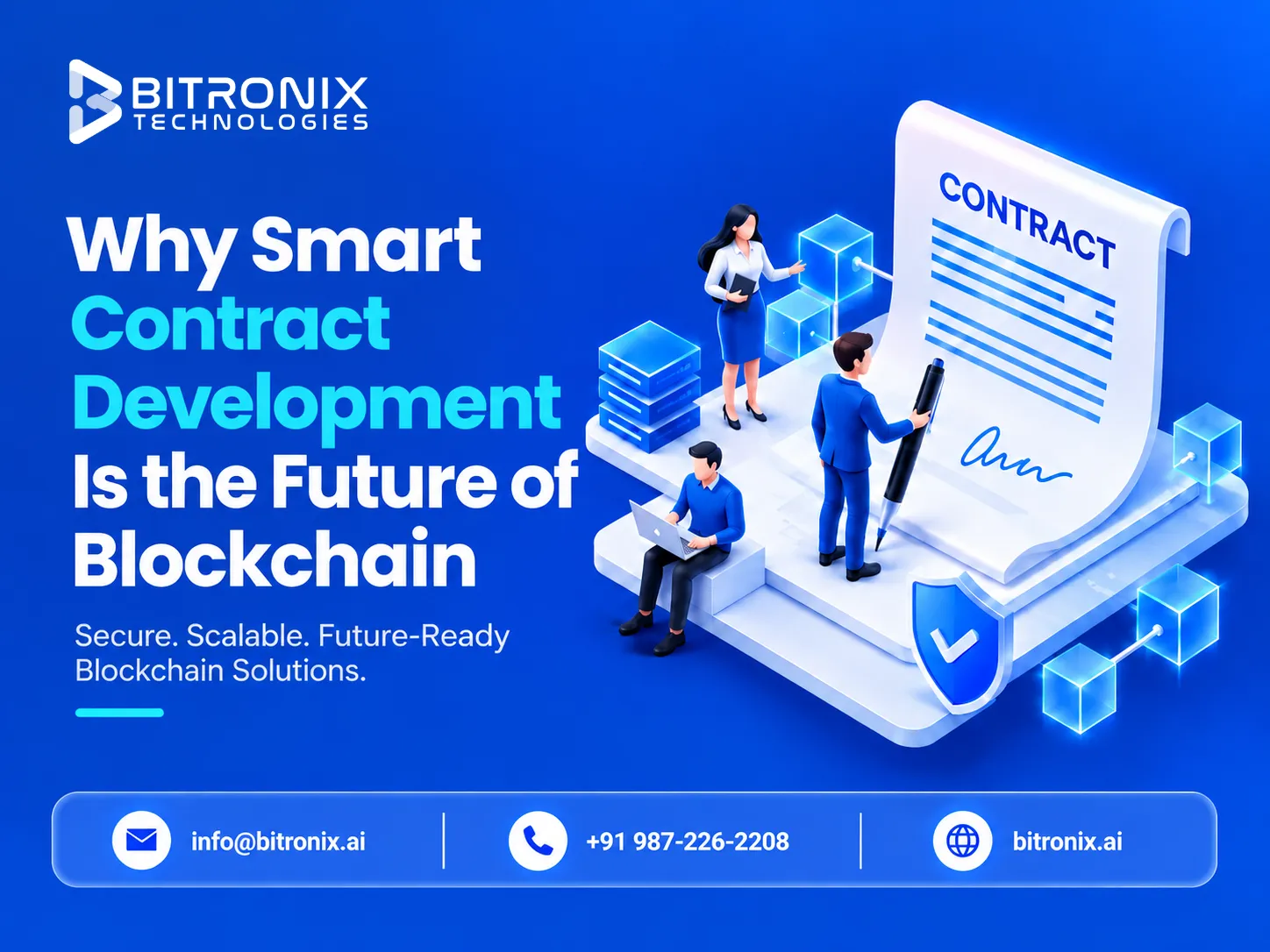


Blockchain technology is evolving from a concept associated primarily with cryptocurrencies into a powerful infrastructure for decentralized applications, digital assets, financial services, and automated business processes. At the heart of this transformation is Smart Contract Development, enabling blockchain networks to execute predefined rules automatically without relying on traditional intermediaries.
For businesses exploring Web3, smart contracts offer more than automated transactions. They can create transparent, programmable, and efficient digital ecosystems where agreements and business logic are executed directly through blockchain networks. As adoption continues to grow, smart contract development is becoming an essential building block for the next generation of blockchain applications.
What Is Smart Contract Development?
Smart contract development is the process of designing, coding, testing, deploying, and maintaining programs that operate on blockchain networks. These contracts contain predefined rules and conditions that automatically trigger actions when specific requirements are met.
For example, a smart contract can release a payment after a particular condition is fulfilled, transfer ownership of a digital asset, manage voting rights, or execute transactions within a decentralized finance protocol.
Unlike traditional software that typically relies on centralized servers, blockchain-based smart contracts operate within a decentralized network. Once deployed, their transactions and execution can be verified through the underlying blockchain.
Why Are Smart Contracts Changing Blockchain?
Traditional business processes often involve intermediaries, manual verification, paperwork, and multiple stages of approval. Smart contracts can automate many of these processes through programmable blockchain logic.
This creates several advantages:
- Automation: Predefined conditions can trigger actions automatically.
- Transparency: Blockchain transactions can be publicly verifiable where the network and application design allow it.
- Efficiency: Automated workflows can reduce manual processing.
- Programmability: Developers can create complex financial and business logic.
- Trust minimization: Participants can rely on predefined blockchain rules instead of depending entirely on intermediaries.
- Traceability: Transactions can be recorded on an immutable blockchain ledger.
These capabilities are helping smart contracts become an important component of modern Web3 infrastructure.
Key Applications of Smart Contract Development
Smart contracts are already powering a wide range of blockchain-based solutions.
1. Decentralized Finance
DeFi is one of the most prominent applications of smart contracts. Lending platforms, decentralized exchanges, staking protocols, liquidity systems, and automated financial mechanisms can use smart contracts to manage transactions and enforce protocol rules.
2. Token Development
Businesses and Web3 projects can use smart contracts to create and manage blockchain-based tokens. Depending on the project's requirements, tokens can support payments, governance, rewards, memberships, utility, or digital asset ecosystems.
3. NFTs and Digital Ownership
Smart contracts provide the underlying logic for many NFT ecosystems. They can define ownership, transfers, minting rules, royalties where supported, and interactions with decentralized applications.
4. DAOs and Governance
Decentralized autonomous organizations can use smart contracts to implement voting mechanisms, proposal systems, treasury operations, and community governance.
5. Automated Payments
Smart contracts can facilitate conditional payments and settlement mechanisms. Businesses can potentially use them to automate transactions based on predefined events or requirements.
6. Gaming and Metaverse
Blockchain games can use smart contracts to manage digital assets, marketplace transactions, rewards, and ownership. This enables players to interact with programmable digital economies.
Why Security Matters in Smart Contract Development
While smart contracts offer significant advantages, they also introduce unique security challenges. A vulnerability in deployed contract code can potentially result in financial losses, unauthorized transactions, or unexpected protocol behavior.
That makes security a fundamental part of Smart Contract Development.
Professional development practices may include:
- Secure contract architecture
- Code reviews
- Unit and integration testing
- Automated vulnerability analysis
- Fuzz testing
- Access-control validation
- Gas optimization
- Attack-surface analysis
- Independent security audits
Developers should also consider risks associated with external dependencies, oracles, upgrade mechanisms, administrative privileges, and interactions with other contracts.
The Role of Smart Contract Development in Web3
Web3 applications require infrastructure that can support decentralized ownership, programmable assets, transparent transactions, and automated processes. Smart contracts provide much of the underlying logic required to make these applications functional.
As businesses move beyond simple blockchain transactions toward complete decentralized ecosystems, the demand for specialized smart contract engineering is expected to grow.
The future of blockchain will not simply depend on storing information on decentralized networks. It will increasingly involve programmable blockchain infrastructure capable of executing complex rules and transactions.
Why Choose Bitronix Technologies?
Bitronix Technologies helps businesses and Web3 projects develop blockchain solutions tailored to their specific requirements. Its Smart Contract Development services cover the development lifecycle, from architecture and coding to testing, optimization, deployment, and blockchain integration.
The company focuses on developing smart contract solutions for use cases such as DeFi, tokenization, NFTs, DAOs, payments, and decentralized applications.
For businesses entering the Web3 ecosystem, working with an experienced development partner can help turn a blockchain concept into a structured, secure, and production-ready solution.
What Does the Future Hold?
The evolution of blockchain is moving toward greater programmability and real-world utility. As enterprises, startups, financial platforms, and Web3 organizations explore decentralized technologies, smart contracts will continue to play a central role.
Future applications may increasingly combine smart contracts with technologies such as artificial intelligence, real-world asset tokenization, decentralized identity, cross-chain infrastructure, and advanced financial protocols.
This makes Smart Contract Development more than a blockchain coding service—it is becoming a foundation for building programmable digital economies.
Conclusion
Smart Contract Development is shaping the future of blockchain by turning decentralized networks into programmable platforms. From DeFi and tokenization to NFTs, DAOs, gaming, and automated payments, smart contracts enable businesses to build systems that can execute predefined rules with greater transparency and automation.
However, successful smart contract development requires more than writing code. Security, architecture, testing, optimization, and deployment strategy are equally important.
With the right technical expertise and development approach, businesses can leverage smart contracts to transform blockchain ideas into practical Web3 solutions. Bitronix Technologies provides the expertise needed to help organizations explore and build the next generation of decentralized applications.






















Sign in to leave a comment.