

Okay, so picture this.
It's 2 AM.
The baby won't stop crying. We've tried the crib. I tried walking around. Tried that bouncer a relative passed on. Nothing's working.
And we're standing there, half-asleep, Googling "what actually calms a newborn" with one hand while bouncing the baby with the other.
Sound familiar?
At some point, most of us land on the same two options, a baby swing or an infant rocker seat. Both look like they’d do the job. Both promise to soothe. But here’s the thing — a lot of parents who started out leaning toward the swing ended up choosing an infant rocker seat instead.
So why does that happen? What does the rocker have that the swing doesn't? Let's sit with that for a bit.
Wait - What Even Is the Difference Between a Rocker and a Swing?
Good place to start, honestly.
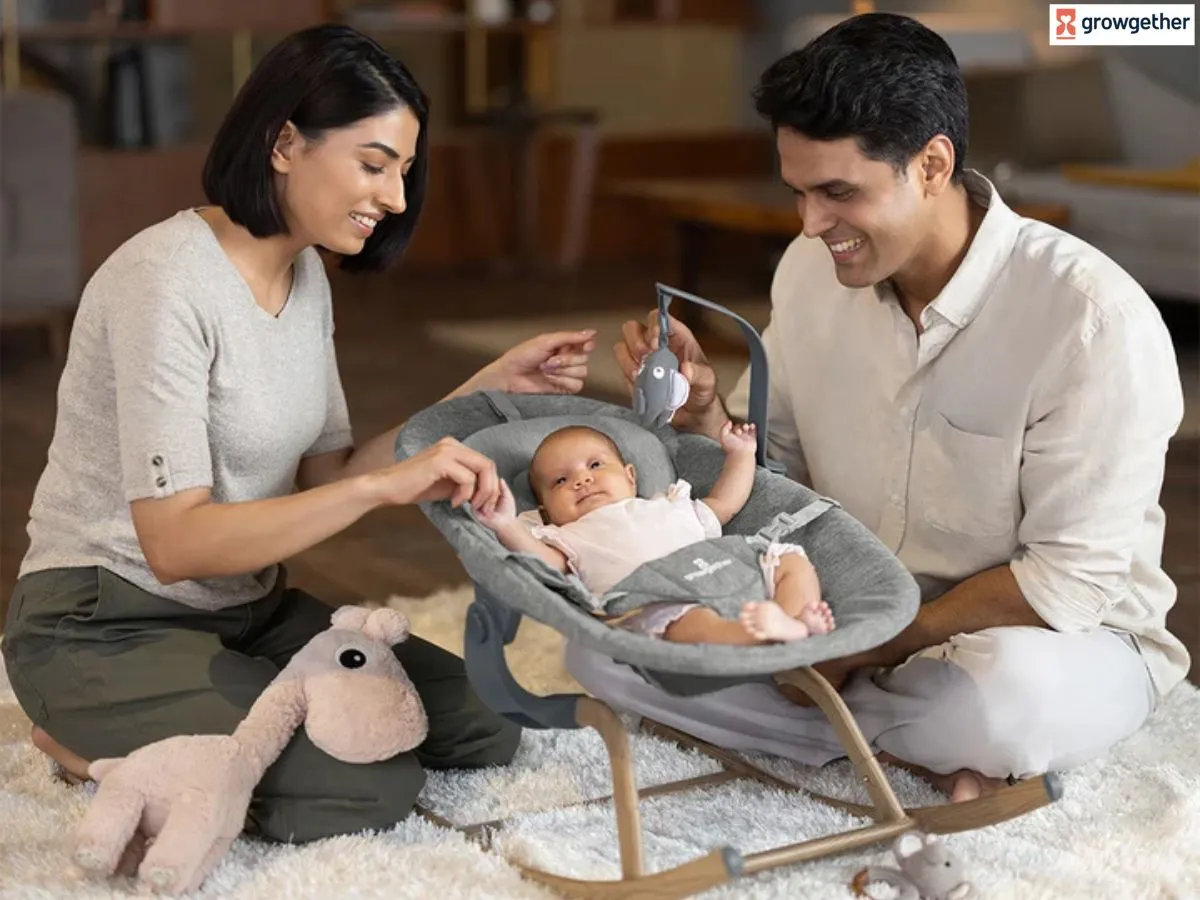
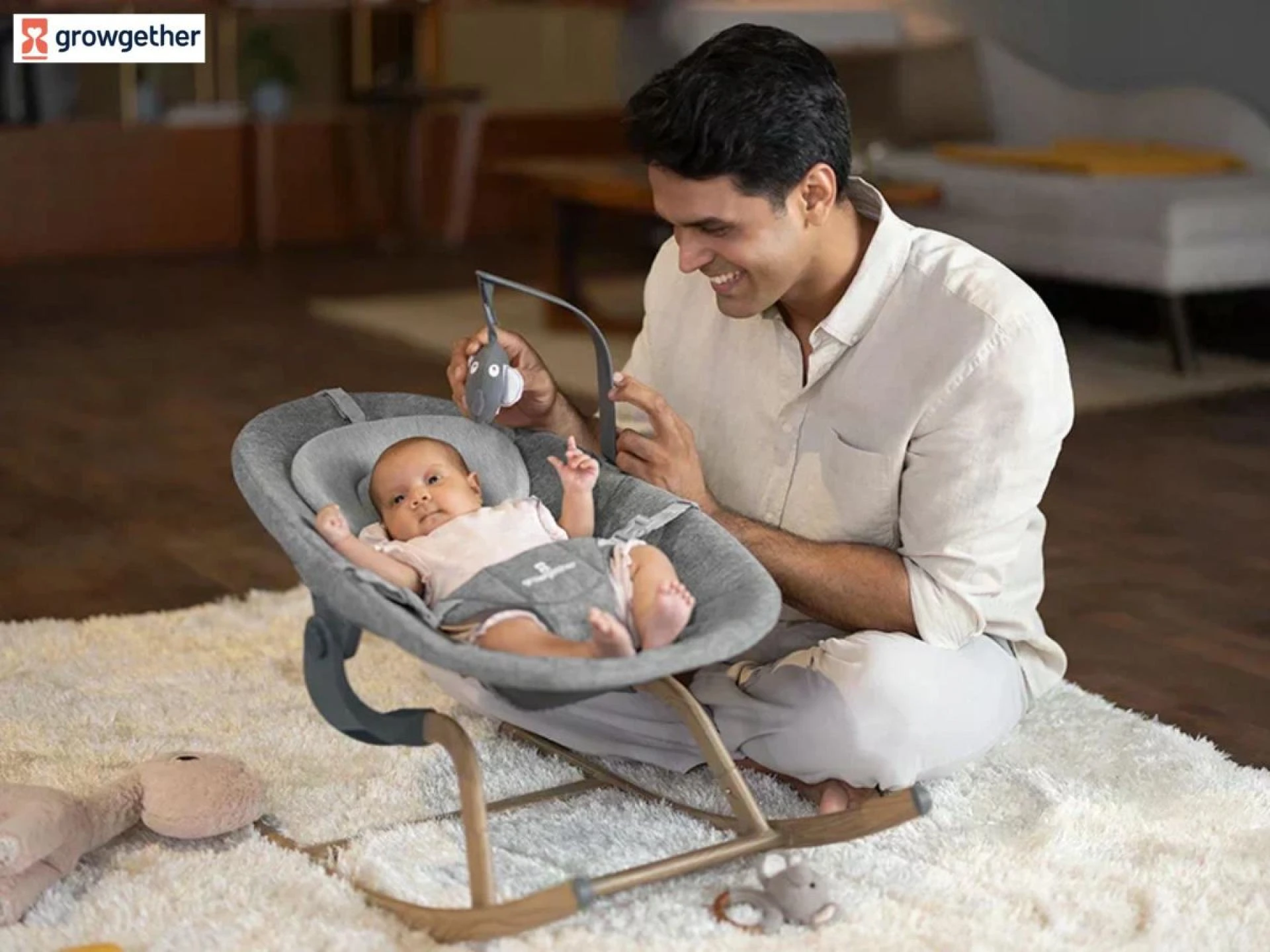
An infant rocker seat sits low to the ground. It moves in a gentle back-and-forth motion - either when the baby wiggles naturally or when we give it a small nudge. No motor. No batteries. Just smooth, calm movement.
A baby swing is bigger. It sits higher, runs on electricity or batteries, and uses a motorized pendulum motion to soothe the baby automatically.
Both do the same basic job. But the how is very different.
And for a lot of Indian families - living in 2BHK flats, managing shared spaces, moving through a busy home all day - that difference matters more than it might seem on paper.
So Why Are More Parents Picking the Rocker?
This didn't happen overnight.
Over the last few years, pediatric guidance got more specific. The American Academy of Pediatrics made it very clear - babies shouldn't sleep unsupervised in motorized or inclined products. That alone made a lot of parents stop and rethink the swing.
But honestly? The bigger reason is just... real life.
Swings are bulky. A good motorized swing takes up serious floor space. It needs to be plugged in or kept running on batteries that drain fast. And moving it from the bedroom to the living room? Not happening easily.
A rocker weighs under 2 kg. It folds flat. We carry it from room to room without thinking twice. That kind of easy, everyday portability - in a home where the living room is also the baby zone and the feeding area - is genuinely valuable.
Parents didn't choose the rocker because it looked better. They chose it because it worked better for their actual life.
Is an Infant Rocker Seat Actually Safe for a Newborn?
Yes - with the right setup, absolutely.
The two things that matter most are the recline angle and the harness fit.
The recline should be gentle - no more than around 10 degrees - so the newborn's head and neck are properly supported. The harness needs to be snug, with the crotch strap always buckled to keep the baby from sliding forward.
But here's the part worth saying clearly - a rocker is for awake, supervised time. Not for overnight sleep. Not for leaving the room.
If our baby falls asleep in the rocker, we move them to a flat sleep surface - a crib or firm mattress. That's the same rule that applies to swings, car seats, and bouncers.
The rocker is a soothing tool. A brilliant one. But not a sleeping spot.
What Do Parents Who've Used Both Actually Say?
Ask anyone who's tried both, and a few things keep coming up.
The motion in a rocker feels more natural. It responds to the baby's own movement - a gentle wiggle sets it going. That kind of give-and-take feels closer to being held and rocked in someone's arms. Babies respond to it really well.
It's also just easier to keep close. Because it's so light, parents keep it in whatever room they're working in. Baby is always visible. Always nearby. That matters a lot in those early months.
And then there's the battery thing. Motorized swings chew through batteries fast - especially with a newborn who wants constant movement. Parents in smaller cities have mentioned that keeping a swing running becomes a surprisingly real ongoing expense. A rocker has none of that.
Have we ever added up how much we spend on batteries in the first three months alone? It's more than we expect.
How Long Can Babies Actually Use a Rocker Seat?
Most infant rocker seats work from birth up to around 9 kg - which typically covers the first 6 to 9 months, depending on how quickly our baby grows.
Newborns use it fully reclined, with the head and neck supported. Around 3 to 4 months, when babies start developing better neck control, the slightly more upright positions on most rockers become useful. The baby can look around, take in the room, and stay engaged.
Once a baby can sit independently or starts trying to push themselves up and out - usually around 6 to 9 months - the rocker has done its job. Time to move on to the next stage.
What Should We Actually Look for When Buying One in India?
Not all rockers are the same. Here's what genuinely matters.
Safety certification first. A product that mentions compliance with international safety standards has been tested for structural integrity and material safety. That matters when our baby is spending time in it every single day.
Harness quality. A 3-point or 5-point harness keeps the baby secure. It should be adjustable and - this is important - easy to buckle with one hand. Because we will absolutely be doing it while half-asleep, holding the baby with the other arm.
Recline options. Multiple positions give us flexibility across the first several months. Fully reclined for newborns. More upright for older babies who want to look around.
Washable fabric. Indian summers and baby messes are a real combination. A removable, machine-washable seat cover isn't a luxury - it's a necessity.
Weight and fold. If we're moving it between rooms or travelling with it, check that it folds flat and is light enough to carry easily. A product that's awkward to move won't get moved - and then we lose the whole portability advantage.
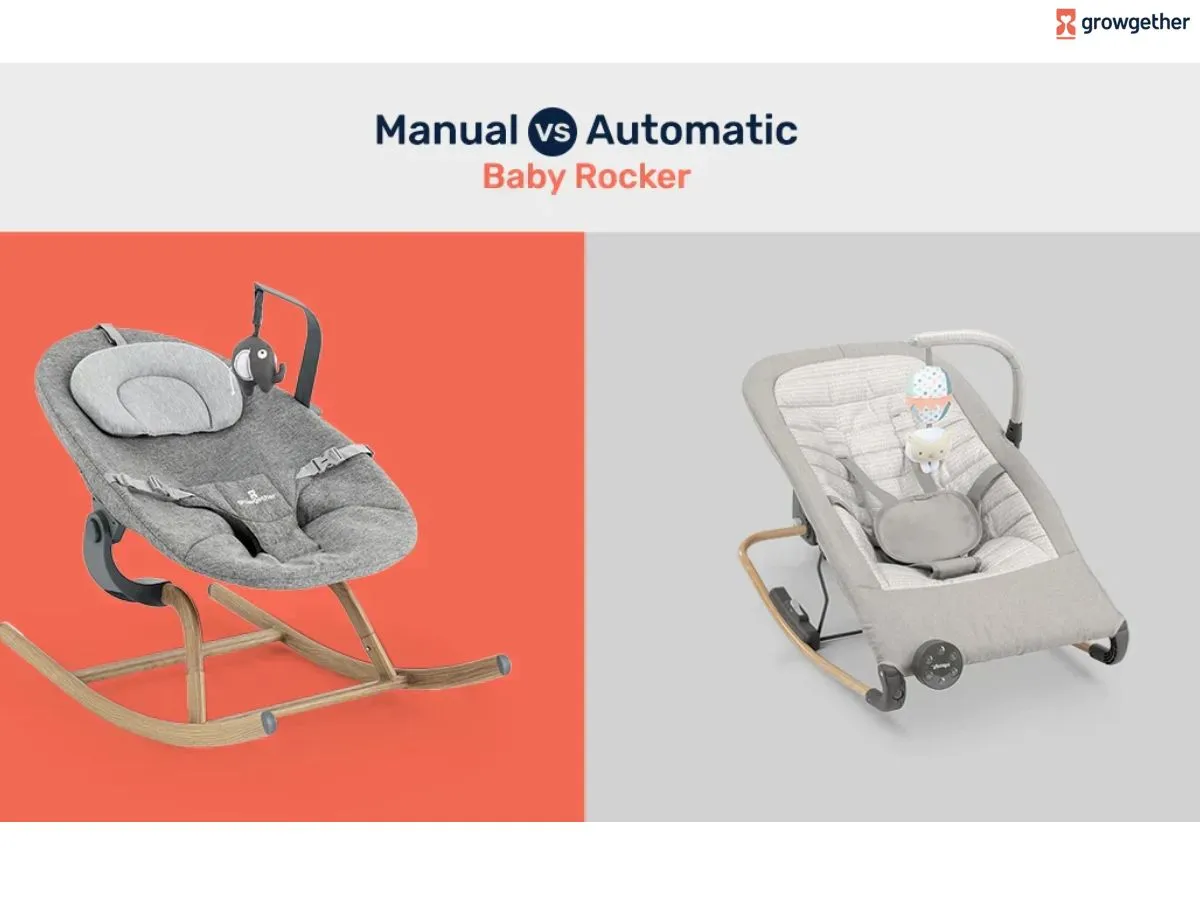
If we're trying to decide between a manual and motorized rocker specifically, this manual vs automatic rocker guide is worth a read before making the final call.
Does a Rocker Actually Help With Baby's Development?
More than most people realise.
The gentle rocking motion stimulates the vestibular system - the part of the brain that handles balance and spatial awareness. Early sensory input like this is genuinely valuable in the first months, and it's a big reason why babies calm down so quickly when rocked.
As the baby grows and starts using the more upright positions, they get better visual access to the world around them. They can track faces and movement, take in their environment, and start building early cognitive connections.
Some rockers also come with a toy bar, which encourages reaching and hand-eye coordination during awake play time. That's a nice bonus on top of the primary soothing function.
So Which One Should We Actually Go With?
Honest answer? It depends on our baby and our home.
If there's plenty of space, a bigger budget, and a baby who only settles with deep consistent motion - a swing might genuinely be the better fit. Some babies are just built for that kind of movement, and for those families, the swing earns its place.
But for most of us - urban flats, shared living spaces, real budgets, and days that involve moving through multiple rooms - the rocker just makes more sense. It's lighter, cheaper, easier to clean, safer for unsupervised moments, and practically useful for the full first 6 to 9 months.
The parents making this switch aren't following a trend. They're making a practical, considered choice based on their actual daily life.
And it's working for them.
Ready to find the right fit for our little one? Growgether's infant rocker seat is built with exactly these real-world needs in mind - compact, safe, and designed for Indian homes and Indian families.
People Also Ask
What is the difference between a baby rocker and a baby bouncer?
A rocker moves in a smooth back-and-forth arc - manually or with a gentle push. A bouncer responds to the baby's own movement, usually with a more vertical spring-like motion. Rockers feel more rhythmic and calming. Bouncers are more reactive. Both are for supervised awake time only.
Can a baby sleep overnight in an infant rocker seat?
No. A rocker is not designed for overnight or unsupervised sleep. If our baby falls asleep in it, they should be transferred to a flat, firm surface like a crib. Pediatric guidelines are clear on this - inclined products should not be used as a sleep surface.
How long can a baby stay in a rocker at one time?
Most pediatric recommendations suggest keeping it to around 30 minutes per stretch. Extended time in a semi-reclined position can affect spinal development and reduces the tummy time babies need to build strength in their neck and core.
Is a rocker or swing better for a colicky baby?
Both can help, but parents of colicky babies often find that the gentler, more controllable motion of a rocker works better than high-intensity swing movement. It's easier to adjust and respond to what the baby needs in the moment.
What is the weight limit for most infant rocker seats?
Most infant rocker seats are built for babies up to 9 kg, covering roughly the first 6 to 9 months. Always check the specific product's weight and age guidelines - they vary by model and matter for both safety and comfort.


















Sign in to leave a comment.