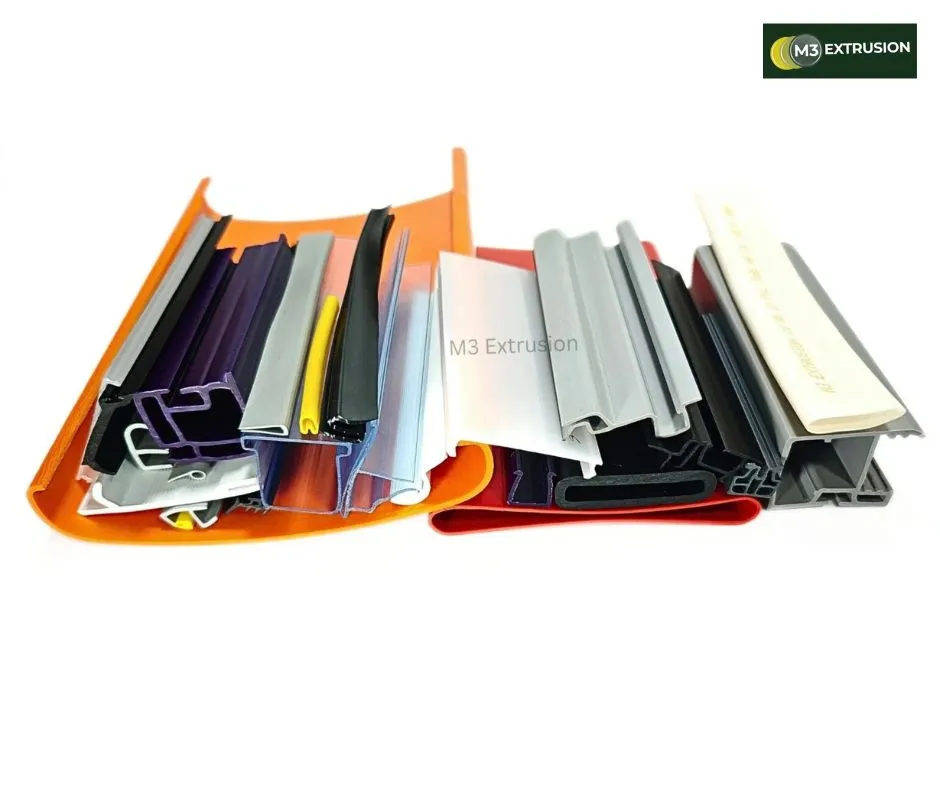

Here's the thing about plastic profiles: one material rarely does everything you need. You'll get a profile that's strong but stiff as a board or one that shrugs off weather but folds under any real load. That's the whole reason manufacturers turn to PVC co-extrusion profiles: when a job needs more than one property, you don't pick a winner; you combine materials.
Co-extrusion runs two or more compatible materials together into a single profile in one pass. What usually works well is pairing a rigid PVC base with a softer sealing material; you get structure and a good seal without bolting two parts together. What often fails is when people mix materials that aren't actually compatible and expect them to bond long-term; they don't, and you see it in a few months, not years. My honest take? It's worth the extra tooling cost almost every time you need sealing plus strength; trying to save money with a single-material profile there usually costs more later in rework.
Why a Single Material Isn't Always Enough
Industrial products rarely require just one property. Instead, they often need a combination of strength, flexibility, chemical resistance, appearance, and durability.
Consider a refrigerator door profile. It must:
- Maintain its shape over time
- Support sealing components
- Resist moisture
- Perform consistently through temperature changes
No single material excels in all these areas. That's why co-extruded plastic profiles are commonly used. They combine the strengths of different materials into one engineered solution.
Common Situations Where Co-Extrusion Is Required
1. Combining Strength and Flexibility
This is probably the number one reason people go for co-extrusion in the first place: you get rigid and flexible materials in one part. You'll see this a lot in the following:
- Window and door profiles
- Refrigerator door systems
- Cabinet edge protectors
- Construction profiles
The rigid side holds everything in shape, and the flexible side handles the sealing or edge protection. Without co-extrusion, you're stuck assembling separate pieces, and honestly, that's where things go wrong; more parts mean more places for a seal to fail. My take: if your product needs both stability and a seal, trying to do it with two separate components is usually a false economy.
2. Improving Weather Resistance
Anything outdoors takes a beating from:
- UV radiation
- Rain
- Temperature swings
- Dust and pollutants
What usually works is adding a weather-resistant layer only on the outside, where it's actually needed, instead of using premium material for the whole profile. What often fails is going cheap on that outer layer just to save a bit; it looks fine for the first year, then starts chalking or cracking, and by then it's too late to fix cheaply.
3. Reducing Manufacturing Costs
You don't need high-performance material running through the entire profile; most of the time, it only matters on the surface. Putting premium material only where it counts helps you:
- Use less material overall
- Keep production costs down
- Run manufacturing more efficiently
- Keep quality consistent
This is honestly one of the better selling points of the plastic co-extrusion process, and it's the one that gets manufacturers to actually switch over.
4. Achieving Better Sealing Performance
A lot of products need to seal out air, water, or dust. Think:
- Refrigeration equipment
- Electrical enclosures
- Windows and doors
- Industrial cabinets
A soft sealing lip that's bonded straight onto the rigid profile just seals better than anything bolted or glued together afterwards. I've seen enough separately assembled seals fail at the seam to say this plainly: if sealing matters, bond it in during extrusion; don't add it on later.
How the Plastic Co-Extrusion Process Works
The equipment is more advanced than regular extrusion, sure, but the process itself isn't complicated once you break it down.
- Each plastic material gets prepared on its own.
- Every material melts in its own separate extruder.
- All of them feed into a co-extrusion die built specifically for this job.
- Inside the die, they bond together, but each one keeps its own properties.
- The profile then gets cooled, calibrated, checked over, and cut to length.
Single Material vs Co-Extrusion
Both methods have their place; it really comes down to what the application actually needs.
Single Material Profiles
- Made from just one type of plastic, start to finish.
- Works fine for simple jobs with basic requirements.
- You're stuck with whatever that one material can do, nothing more.
- Often needs extra parts bolted on for sealing, flexibility, or protection.
- Usually simpler and cheaper for standard designs.
Co-Extruded Profiles
- Built from two or more compatible materials.
- Combines strength, flexibility, and weather resistance; whatever the job needs in one piece.
- Cuts out a lot of the separate parts you'd otherwise have to assemble.
- Gives you more room to design for tricky industrial requirements.
- Tends to hold up better long-term and run more efficiently on the production line.
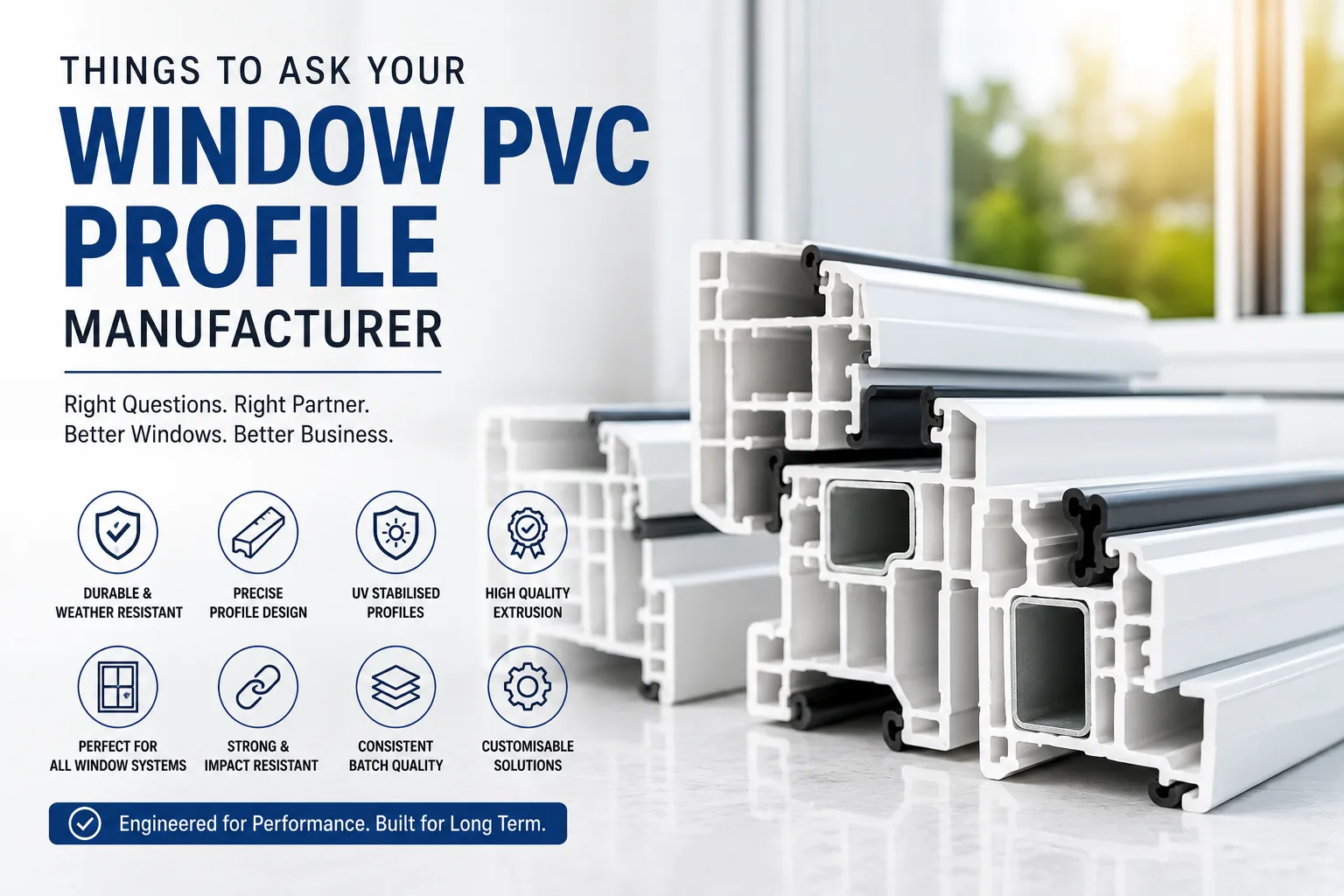
What usually works is keeping single-material profiles for genuinely simple jobs; no need to over-engineer. What often fails is choosing a single material to save cost upfront, then bolting on extra parts for sealing or flexibility, which usually costs more in the end. My take: once a profile needs to do two jobs at once, co-extrusion is the one that actually holds up—and getting the co-extruded PVC profile selection right from the start is what makes that hold up in practice.
Where Co-Extruded Plastic Profiles Are Used
Co-extruded plastic profiles show up in a lot of industries today, mainly because they solve two or three engineering problems in one product instead of forcing you to solve them separately. You'll find them in:
- Refrigeration systems
- Window and door profiles
- LED lighting systems
- Electrical enclosures
- Automotive trim
- Furniture components
- Construction products
- Industrial machinery
What usually works is going with co-extrusion once a design needs more than one property, strength plus a seal, say, or rigidity plus a soft edge. What often fails is sticking with old single-material designs out of habit, then wondering why assembly costs keep creeping up. My take: as products get more complex, co-extrusion is becoming the default, not the upgrade, which is why it's a growing part of what we build at M3 Extrusion.
Can Every Plastic Profile Be Co-Extruded?
No, not every material combo works, and that's honestly the trickiest part of this whole process. Success depends on a handful of technical factors:
- Material compatibility
- Processing temperatures
- Bond strength
- Profile geometry
- End-use environment
Some materials just bond well together, no fuss. Others need serious engineering work to make the bond hold, and some combinations honestly just aren't worth trying; they'll never bond reliably no matter how much you tweak the process. What usually works is testing compatibility early, before you commit to a die design. What often fails is picking materials based on cost alone and hoping the bond holds; it rarely does long-term.
Conclusion
Industrial products keep changing, and honestly, just holding a shape isn't enough anymore. A profile now has to handle strength, flexibility, protection, and durability, all at once, for as long as it's in use.
Co-extrusion is what makes that doable; you combine multiple materials into one engineered profile instead of putting together separate parts and hoping they stay put. What usually works is bringing co-extrusion into the design conversation early, not bolting it on as a fix later. What often fails is trying to stretch a single-material design to do a job it was never built for.
At M3 Extrusion, we make custom plastic profiles for industrial and commercial use, co-extrusion included, built around whatever the application actually needs. Need rigid and flexible materials working together? Weather-resistant surfaces? Something more specialized? Getting the manufacturing approach right makes a real difference to how the product performs and how smoothly it comes together on the line.
FAQs
1. Why is co-extrusion used instead of single-material extrusion?
Co-extrusion is used when a plastic profile needs multiple properties, such as strength, flexibility, and sealing performance. It combines compatible materials into one profile for better functionality.
2. What are co-extruded plastic profiles?
Co-extruded plastic profiles are made by combining two or more compatible plastic materials in a single extrusion process, allowing one profile to perform multiple functions.
3. What industries use co-extruded plastic profiles?
Co-extruded plastic profiles are commonly used in refrigeration, construction, automotive, electrical, furniture, LED lighting, and other industrial applications.
4. Can different plastics be co-extruded together?
Yes, compatible plastics can be co-extruded together. The material combination depends on bonding properties, processing conditions, and the application's performance requirements.
5. Are custom co-extruded plastic profiles worth the investment?
Yes. They can improve product performance, reduce assembly time, and provide better long-term value for applications with specific functional requirements.
6. What are the main benefits of the plastic co-extrusion process?
The plastic co-extrusion process improves durability, sealing, weather resistance, and manufacturing efficiency by combining multiple material properties into a single profile.
























Sign in to leave a comment.