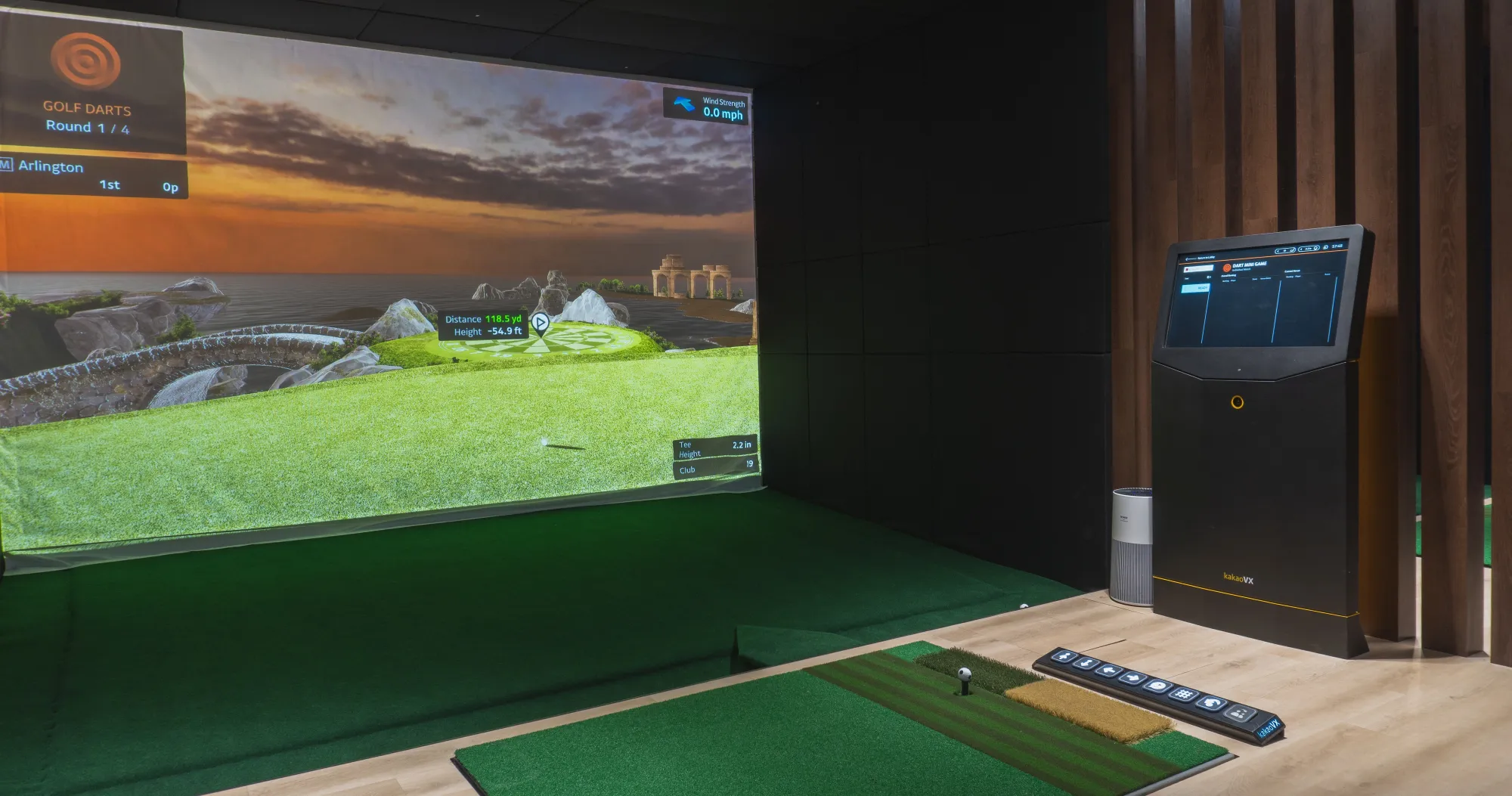

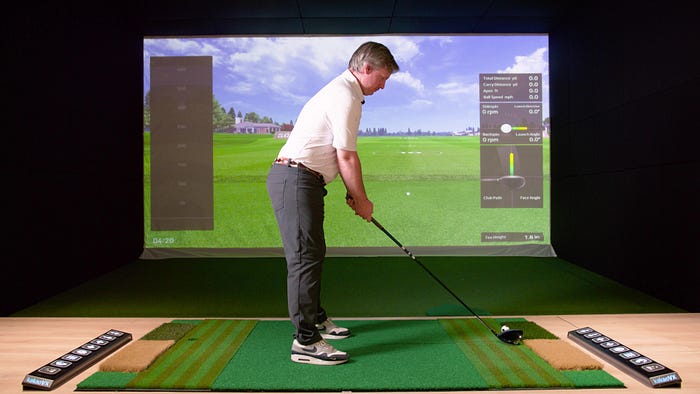
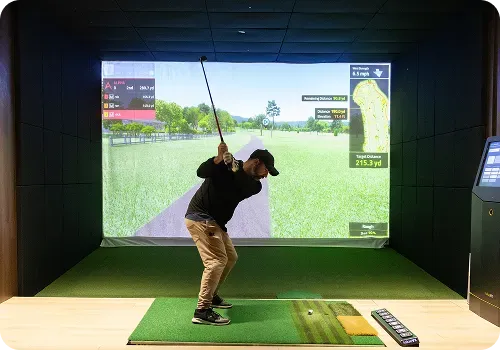
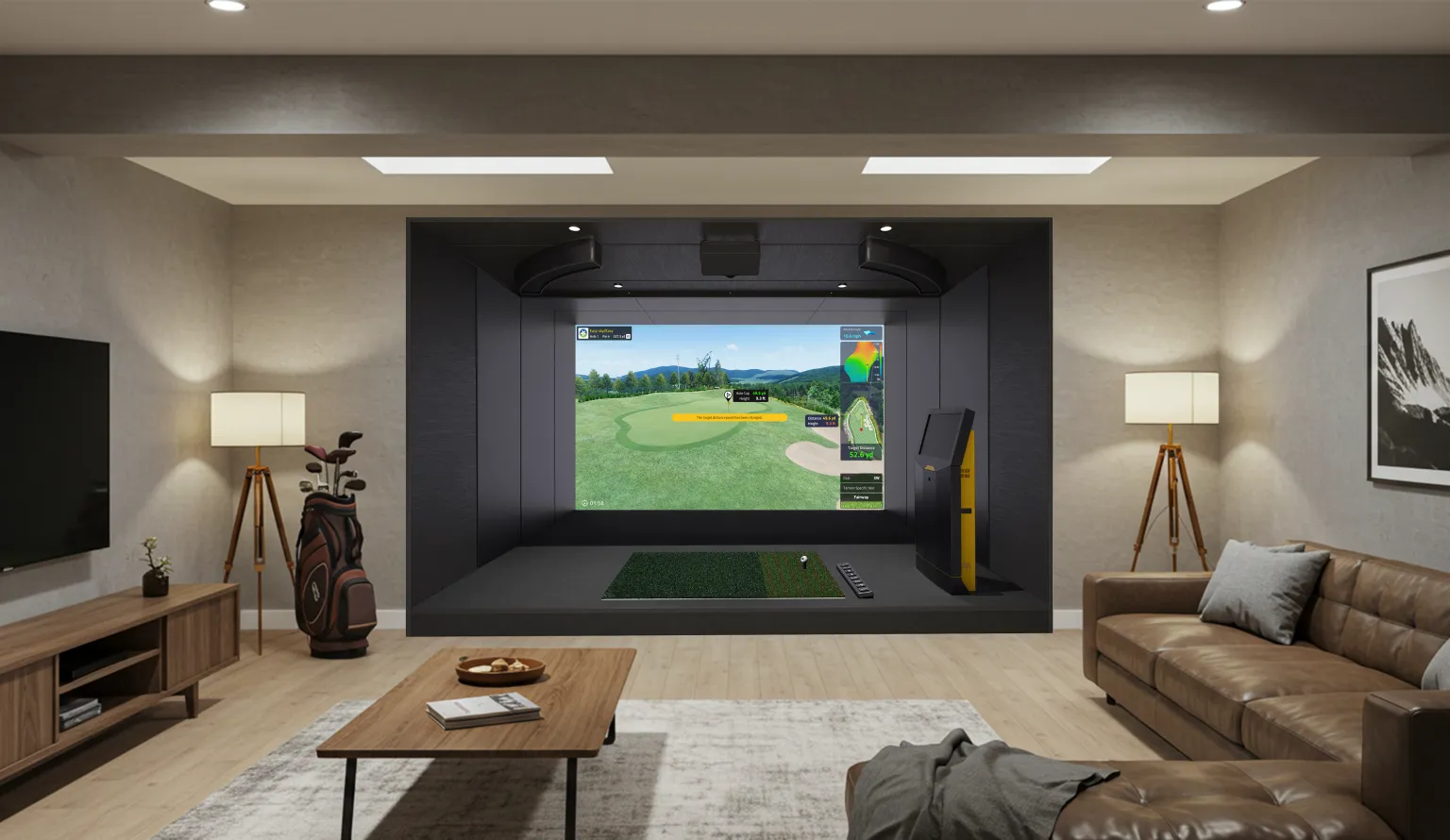
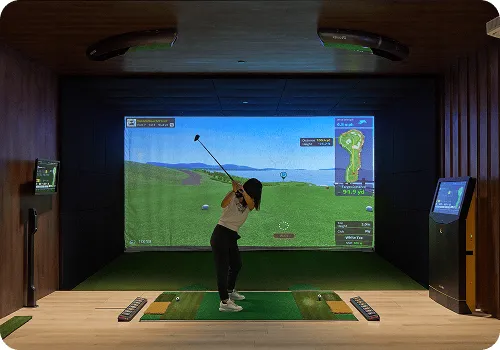
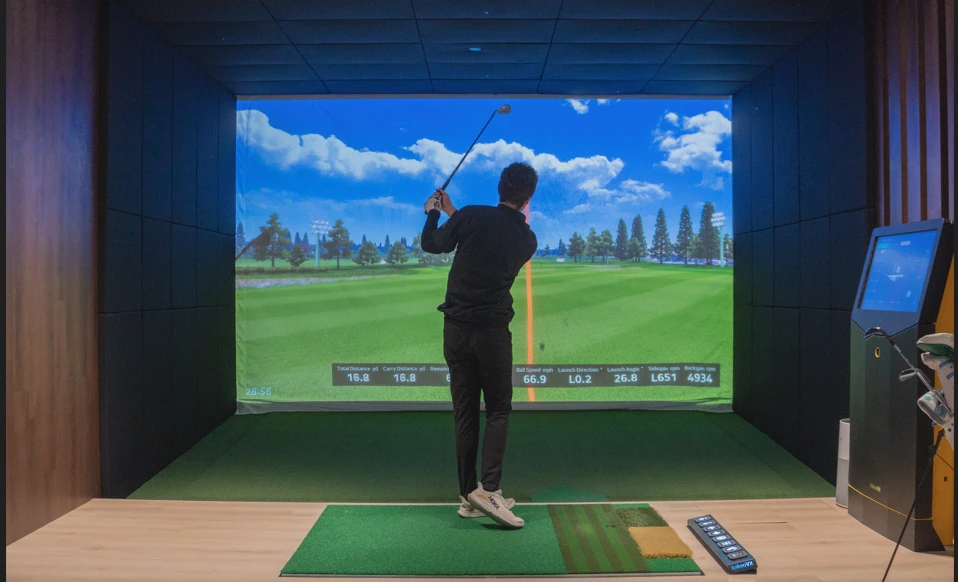
Golf simulators have revolutionized the way golfers practice, train, and enjoy the game. With advanced launch monitors, realistic course graphics, and detailed swing analytics, players can now work on their skills year-round without worrying about weather conditions or course availability. However, despite these technological advancements, one major challenge has persisted for many simulator systems: accurately replicating the uneven lies golfers encounter on real golf courses.
In traditional simulator setups, every shot is played from a perfectly flat surface. While this environment is ideal for collecting accurate swing and ball-flight data, it fails to prepare golfers for the realities of on-course play. Real golf rarely offers perfectly level lies. Players frequently face uphill approaches, downhill chips, sidehill stances, and uneven terrain that significantly influence swing mechanics and shot outcomes.
This is where swing plate technology is making a significant impact on indoor golf training.
What Is a Swing Plate?
A swing plate is a motorized platform integrated into a golf simulator system that adjusts its angle to match the terrain of the virtual course being played. Instead of standing on a fixed, level surface for every shot, golfers experience realistic slopes that mirror the lie of the ball on the simulated course.
When a golfer’s ball lands on an uphill, downhill, or sidehill lie within the simulator software, the swing plate automatically tilts to recreate that exact stance. This allows players to physically experience the same body positioning, balance adjustments, and swing adaptations they would encounter during an actual round of golf.
By combining virtual terrain data with physical movement, swing plates bridge the gap between indoor practice and real-world golf performance.
Why Traditional Flat-Surface Practice Has Limitations
Flat-surface practice certainly has its benefits. It allows golfers to focus on swing fundamentals, improve consistency, and analyze performance metrics without external variables. However, it also creates an environment that differs significantly from real-course conditions.
On an actual golf course, uneven lies affect:
- Weight distribution
- Swing plane
- Clubface alignment
- Ball flight direction
- Shot trajectory
- Distance control
Golfers who practice exclusively from flat surfaces may develop strong mechanics but often struggle when faced with challenging lies during competitive rounds. Without exposure to these situations during training, adapting on the course becomes more difficult.
Swing plate technology addresses this issue by introducing realistic terrain variations into every practice session.
How Swing Plate Technology Improves Training
1. Creates Realistic Course Conditions
One of the biggest advantages of a swing plate is its ability to recreate authentic golf course terrain. Every shot becomes unique because the platform adjusts according to the lie generated by the simulator software.
Rather than simply seeing a slope on the screen, golfers physically stand on that slope. This creates a more immersive experience and encourages players to make the same adjustments they would need outdoors.
2. Enhances Lie-Specific Practice
Many golfers spend hours practicing drives and iron shots from perfect lies but rarely dedicate time to uneven-lie situations. Unfortunately, these are often the shots that determine scoring performance during a round.
With swing plate technology, golfers can repeatedly practice:
- Uphill lies
- Downhill lies
- Ball-above-feet situations
- Ball-below-feet situations
- Sidehill lies
This targeted practice helps players become more comfortable and confident when facing challenging terrain on the course.
3. Develops Better Adaptability
Golf is a game of constant adjustment. Every lie presents a different challenge, requiring golfers to modify their setup, balance, and swing.
Training on a swing plate teaches golfers how to:
- Adjust ball position
- Maintain proper balance
- Adapt swing paths
- Control trajectory
- Manage directional tendencies
Over time, these adjustments become instinctive, leading to improved performance during actual rounds.
4. Builds Transferable Muscle Memory
Practice is most effective when it closely resembles real playing conditions. Swing plates help golfers develop muscle memory that directly translates to outdoor golf.
Instead of learning movements that only work on flat surfaces, players train their bodies to respond naturally to changing terrain. This creates a stronger connection between simulator practice and on-course execution.
5. Increases Engagement and Immersion
Beyond performance benefits, swing plates significantly enhance the overall simulator experience. The physical sensation of standing on realistic slopes adds another layer of immersion that makes virtual golf feel more authentic.
Whether used for serious training or recreational play, the technology creates a more engaging and enjoyable experience for golfers of all skill levels.
Understanding How Different Lies Affect Your Swing
To appreciate the value of swing plate technology, it’s important to understand how uneven lies influence golf shots.
Uphill Lies
When standing on an uphill slope:
- Weight naturally shifts toward the back foot.
- The ball tends to launch higher.
- Shots often travel shorter distances.
- The ball may curve left for right-handed golfers.
Proper adjustments include moving the ball slightly forward and matching the shoulders to the slope.
Downhill Lies
On a downhill lie:
- Weight shifts toward the front foot.
- Ball flight becomes lower.
- Shots often travel farther but with less control.
- Thin contact becomes more common.
Golfers must stay balanced and swing along the slope rather than trying to lift the ball into the air.
Ball Above Feet
When the ball sits above the golfer’s feet:
- The swing plane becomes flatter.
- The clubface tends to close.
- Shots often pull left for right-handed players.
Adjustments typically include gripping down on the club and aiming slightly right of the target.
Ball Below Feet
When the ball is below the golfer’s feet:
- The swing plane becomes steeper.
- The clubface tends to remain open.
- Shots frequently push right.
Golfers need to maintain posture, bend more from the hips, and aim slightly left to compensate.
Sidehill Lies
Sidehill lies combine multiple challenges at once:
- Balance becomes more difficult.
- Swing mechanics change naturally.
- Directional control becomes less predictable.
These are often the most difficult lies for golfers to manage and therefore among the most valuable situations to practice using a swing plate.
The Future of Indoor Golf Training
As simulator technology continues to evolve, golfers increasingly expect training environments that replicate real-world conditions as closely as possible. Swing plate systems represent a major step forward in achieving that goal.
Modern simulator platforms now combine:
- Advanced launch monitor technology
- High-speed ball tracking
- AI-powered swing analysis
- Realistic course graphics
- Terrain-responsive swing plates
Together, these innovations create a comprehensive training environment that helps golfers improve more effectively than ever before.
Who Benefits Most from Swing Plate Technology?
Swing plates can benefit a wide range of golfers, including:
Recreational Golfers
Casual players gain valuable experience handling uneven lies and become more confident during rounds.
Competitive Players
Tournament golfers can refine their ability to execute shots from challenging positions and improve scoring consistency.
Golf Coaches
Instructors can create realistic training scenarios that help students learn proper adjustments for various lies.
Commercial Golf Facilities
Golf simulator businesses can offer a more immersive and differentiated experience that attracts and retains customers.
Conclusion
Swing plate technology is transforming indoor golf training by bringing realistic terrain simulation into the practice environment. While traditional simulators provide excellent swing and ball-flight data, they often fail to replicate one of the most important aspects of real golf: uneven lies.
By automatically adjusting to match virtual course terrain, swing plates allow golfers to practice uphill, downhill, and sidehill shots in a realistic setting. This leads to better adaptability, improved muscle memory, enhanced shot-making skills, and a more immersive overall experience.
For golfers who want their simulator practice to translate directly to on-course performance, swing plate technology represents one of the most valuable advancements in modern golf simulation.
Originally Published on Medium.com.





















Sign in to leave a comment.