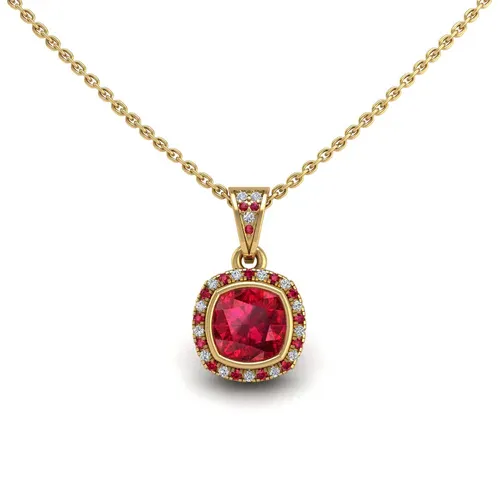

Few items in the world of luxury fashion carry the visceral impact of a gold ruby pendant. For thousands of years, this specific pairing—the blazing crimson of a high-quality ruby set against the rich, warm glow of gold—has been the choice of royalty, warriors, and trendsetters.
Whether you are looking to invest in your next heirloom piece or searching for a gift that speaks of deep passion, understanding what makes this combination so timeless is the key to making the perfect purchase. It is not merely jewelry; it is a wearable history of status and sentiment.
The Anatomy of a Masterpiece: Gold Meets the King of Gems
In Sanskrit, the ruby is called Ratnaraj, translating literally to "The King of Gemstones." When you pair this regal stone with gold, you aren't just making jewelry; you are combining two of Earth’s most resilient and visually striking materials.
The beauty of a ruby pendant lies in its versatility, primarily driven by the type of gold used for the setting:
- Yellow Gold: The traditional choice. The warm yellow tones enrich the deep red hues of the ruby, creating a classic, vintage aesthetic that feels instantly royal.
- White Gold: A modern, high-contrast pairing. The icy, mirror-like finish of white gold makes the crimson of the ruby pop, offering a sleek look suited for contemporary wardrobes.
- Rose Gold: An ultra-romantic blend. The copper undertones in rose gold complement the pinkish-red variants of rubies, offering a soft, feminine, and uniquely modern charm.
The interplay of the gold setting with the ruby is crucial. The correct metal color can enhance a ruby’s primary red hue or soften its secondary undertones (which are usually purple or orange).
Evaluating Quality: The 4 Cs of Rubies (Visualized)
To truly understand a ruby's value, we look at the standard 4 Cs. While color is paramount, the other factors must align. A high-clarity stone with weak color is less valuable than a stone with vivid color and acceptable inclusions.
The following infographic illustrates how cut and clarity vary, and how the critical "Pigeon's Blood" color relates to the common hue range:
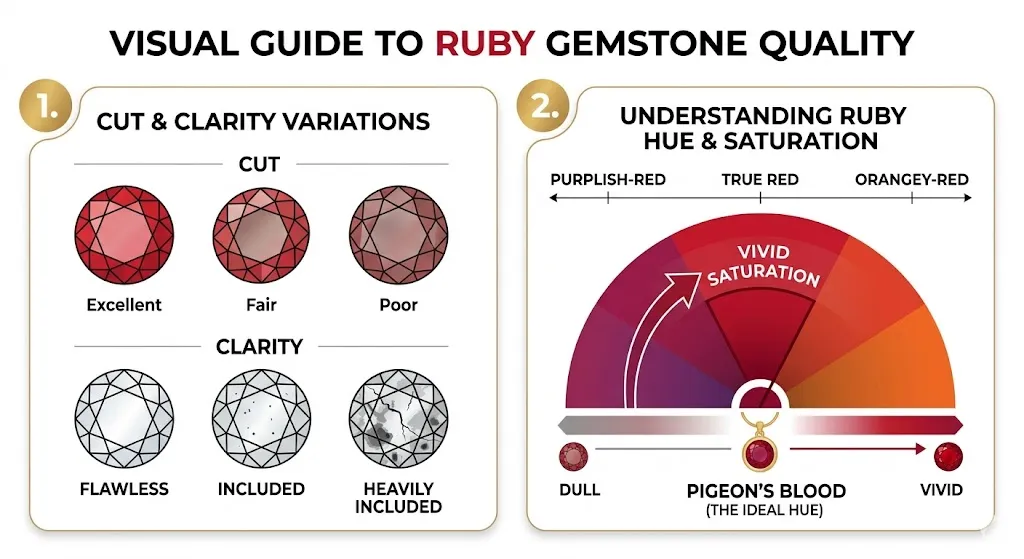
The diagram highlights two critical concepts:
- Cut & Clarity (Left): You can see how an "Excellent" cut maximizes light return compared to a "Poor" cut (which looks dull and lumpy). The Clarity scale shows "Inclusions"—natural internal features like 'silk' (fine rutile needles)—which are expected in natural rubies. A "Flawless" natural ruby is virtually non-existent.
- Hue & Saturation (Right): Color is monarch. The ideal hue is "Pigeon’s Blood" (marked by the icon). This describes a vivid, deep red with a subtle hint of blue, characterized by its intense saturation. Understanding where your ruby sits on this hue spectrum determines its value.
Comparing Options: Synthetic vs. Treated vs. Natural
When shopping for a gold ruby pendant, you will find a massive range of price points. This is heavily determined by what kind of stone is resting inside the gold prongs. A stunning visual presentation does not always equate to high investment value.
The following table breaks down the three primary categories of rubies you will encounter: Natural (untreated), Treated (heated), and Synthetic (lab-grown).
| Feature | Natural (Untreated) | Heated / Treated | Lab-Grown (Synthetic) |
|---|---|---|---|
| Rarity | Extremely Rare | Common | Manufactured |
| Price Point | Premium / Investment | Moderate / Accessible | Budget-Friendly |
| Appearance | Predominantly strong 'silk' inclusions | Enhanced clarity & color | Structurally flawless |
| Durability | Excellent | Excellent (most treatments stable) | Excellent |
| Value Retention | Exceptionally High | Steady | Low resale value |
| Best For | Serious Collectors, Legacy Heirloom | Everyday Luxury, Quality Gifts | Fashion Jewelry, Trendy Wear |
Note: Over 95% of natural rubies on the market undergo heat treatment. This is a universally accepted industry standard that gently warms the stone to permanent state, dissolving inclusions and sharpening its red hue.
The Importance of Provenance (Source)
Where a ruby is mined significantly impacts its value. Burmese (Myanmar) rubies—especially those of "Pigeon's Blood" color—command the highest premium due to their historic renown. Mozambique and Madagascar rubies offer intense color but often lack the distinctive fluorescence of Burmese stones.
When purchasing a gold ruby pendant of significant carat weight, always request a certificate from a recognized gemological laboratory (such as GIA or AGL) confirming the stone's geographical origin and treatment history.
Conclusion: Making Your Choice
A gold ruby pendant is a chameleon in your jewelry box, equally suited for daytime elegance or evening grandeur. Its power statement lies in the bold contrast of primary colors: rich red and deep yellow (gold).
By understanding the nature of the stone—evaluating its color, clarity, and treatment history—and aligning your selection with your goals (be it a long-term investment, a daily symbol of love, or an accessible fashion accessory), you ensure that your crimson eternal remains a brilliant centerpiece for generations to come.



















Sign in to leave a comment.