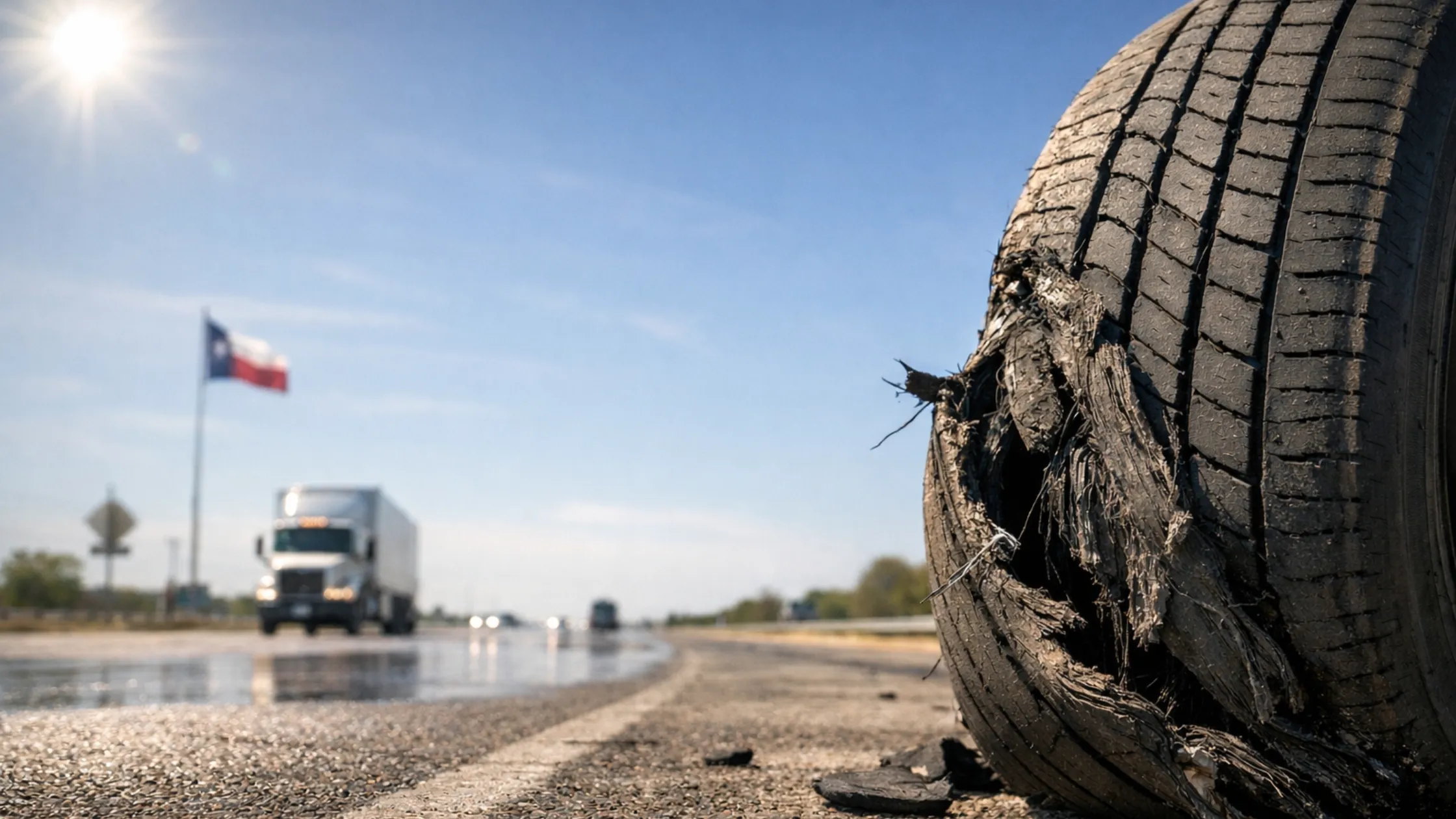

It isn’t just uncomfortable driving in summer in Texas; it is tough on your tires. Long highway drives, scorching pavement, and the heat can make small problems with your tires turn into blowouts.
There is a feature that includes automatic tire inflation systems, but tire problems are caused by basic maintenance. If you know the heat can wear your tires, it can help you avoid problems and stay safe.
Why Texas Heat Is Hard on Tires
Roads in Texas can be up to 30 F hotter than the air due to high temperatures. With the increasing heat, the tires heat up, raising pressure and softening the tire rubber.
This combination creates stress inside the tire structure. Over time, it weakens the tire's internal layers, making it more vulnerable to sudden failure.
This is one of the main reasons why tire blowouts are common in Texas heat, particularly during long-distance highway driving.
Common Causes of Tire Blowouts in Summer
Tire blowouts rarely happen for just one reason. It’s usually a mix of conditions building up over time. Here are the most common causes:
1. Underinflated Tires
When a tire is underinflated, it flexes more as it rolls. That extra flex builds internal heat quickly, one of the leading causes of blowouts on long highway drives.
2. Overinflated Tires
An overinflated tire leaves little room for air to expand as it heats up. This can lead to rapid failure and possibly a blowout.
3. Heat and Tire Pressure Effects
Tires will respond differently to changes in temperature. A tire that is properly inflated in the morning might become over-inflated by the heat of the afternoon.
4. Worn Tread
Tires with low tread depth also have low grip. More worn tread also means less ability to handle heat, increasing the likelihood of tire failure.
5. Road Hazards
Heat combined with road debris, potholes, and rough patches that weaken tires can cause even minor damage, leading to a tire blowout.
6. Long Highway Drives
When driving on the highway, the risk of a tire blowout increases. This risk is even greater during the warmer months, when heat and high speeds raise tire temperatures.
Signs Your Tire Might Fail in Hot Weather
Tires usually give small warning signs before failing. Catching these signs can help you avoid larger issues.
- Slight vibration at highway speed may indicate uneven wear or internal damage
- Uneven Tread Wear
- A bulge or crack in the sidewall shows structural weakness and high blowout risk
- Frequent pressure loss
- A thumping or humming sound while driving
These are often early indicators of summer tire failure in Texas conditions.
How to Prevent Tire Blowouts During Summer
Tire blowouts can be avoided easily. Here are some things that can help.
1. Tire Pressure
Tire pressure can change by 1 PSI with every 10-degree shift in temperature, meaning it is important to check it frequently as temperatures rise during the summer months.
2. Tire Rotation
Be sure to rotate your tires often. This helps with the balance and overall wear. It helps reduce stress on one tire. This is particularly applicable to areas with high heat, where tires wear out faster.
3. Tread and Sidewall Inspection
Check for cracks, wear, or embedded objects in the tires. These issues can worsen due to the heat on the road.
4. Weighing the vehicle
Try to avoid putting too much weight in the vehicle. This can cause significant pressure and heat to build up. It is one of the main factors affecting tire safety on long-distance trips.
5. Take Breaks on Long Drives
For long journeys, plan for the stops. This keeps the tires cool and reduces heat build-up.
6. Keep Up with Tire Maintenance
It is important to check tires regularly and understand how they relate to a vehicle’s performance. You can also read more about the best tires for Texas weather, heat, heavy rain, and occasional ice.
Texas Summer Driving Hazards to Watch
Texas summer heat takes a toll on driving conditions, such as:
- Extreme hot pavement
- Sudden temperature change affecting tire pressure
- Long stretches of the highway with continuous heat buildup
- Construction and rough roads that are hard to drive on
These are all reasons why tire checks are so important when the road temps rise.
How Tire Type and Condition Matter
Different tires have different heat tolerances. All-season tires are more versatile in different weather conditions, but they still require maintenance.
With good heat resistance, a suitable tread design, and proper tire air pressure, tires with higher temperature ratings (A or B) are better able to handle heat, making them more suitable for Texas driving conditions.
Real-World Driving Habits That Help
It may not be about the tire in some cases. Here are some driving habits to consider:
- Maintain steady speeds
- Avoid sudden braking at high speeds
- Slow down during extreme heat
- Examine tires before road trips.
A small stop at a local place like tire repair Lubbock will at least check the pressure or do a quick inspection to help prevent bigger problems from developing from smaller issues.
Stay Ahead of Tire Failure in Texas Heat
Summers in Texas can be brutal, especially when you're driving on the highway. Tires are affected by heat, pressure, and wear, which can cause blowouts. They don't blow out all of a sudden.
Checking your tire maintenance and looking for signs of damage can help keep your tires in good shape and make driving safer.




























Sign in to leave a comment.