
Most vehicle owners don't think about tire maintenance until something goes wrong. A flat tire on the morning commute. An uncomfortable vibration at highway speeds. The Tire Pressure Monitoring System (TPMS) light keeps flickering on, prompting yet another mental note to "check that later."
But let’s be brutally honest: tires are the only connection between your vehicle and the road. Not the 400-horsepower engine, not the high-tech ceramic brakes, just four contact patches of rubber, each roughly the size of a human palm.
When those patches fail, every other safety system on your car becomes a spectator. Braking performance drops. Steering response weakens. The risk of losing control doesn't just increase; it multiplies.
This isn’t just about saving money or avoiding inconvenience. Proper tire care can literally prevent accidents, rollovers, and loss of control. That’s why visiting reliable tire centers and staying on top of basic checks is not optional. It’s life protection.
Let’s talk about how something so simple can make such a big difference.
Why Tire Maintenance Is Important For Your Vehicle
The Physics of the "Contact Patch"
There's a common misconception that brakes stop a vehicle. Technically, brakes generate stopping force at the wheel, but tires provide the actual grip on the asphalt. This is called the "mu" (friction coefficient).
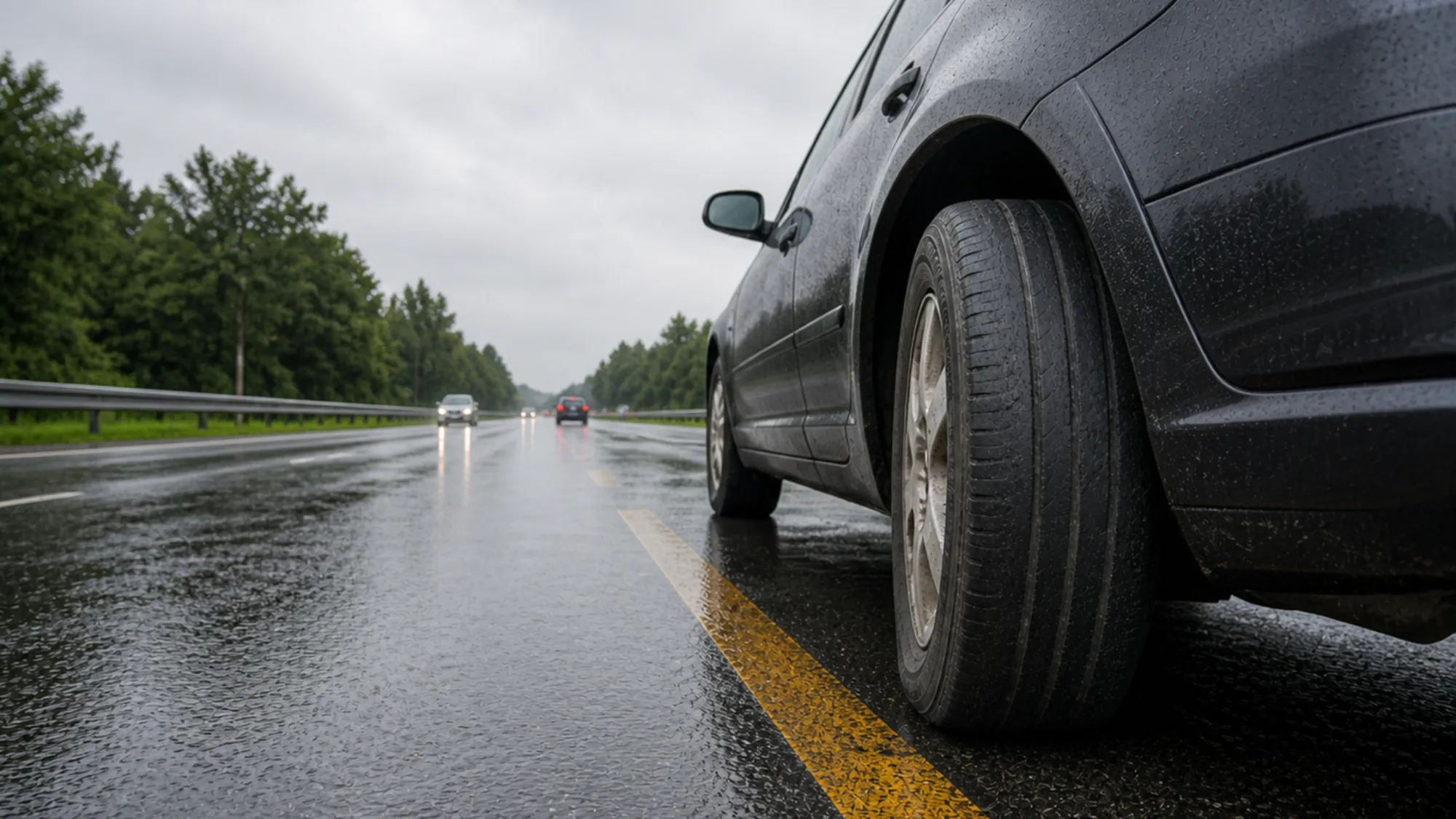
When your tread wears down, that coefficient drops. Think of it like trying to run on a gymnasium floor with bowling shoes versus sneakers. Tread grooves aren't just for show, they are high-speed water pumps. In a heavy rainstorm at 60 mph, your tires need to displace enough water to fill a bucket every second.
When they can't, you experience hydroplaning, a terrifying state where your car is literally floating on a thin film of water. In that moment, your steering wheel is effectively disconnected from the earth.
The Chemistry of "Dry Rot": Why Age Matters More Than Mileage
One of the most dangerous things I see at tire shops is a tire with "perfect" tread thatis 10 years old. Most drivers think that if the "hair" is still on the tire, it's safe. They’re wrong.
Rubber is a polymer that contains essential oils. Over time, through a process called thermo-oxidative degradation, those oils evaporate. The rubber becomes brittle; this is "dry rot." You’ll see tiny cracks in the sidewall that look like a spiderweb. This isn't just cosmetic, it indicates the tire's internal structure is failing.
- Expert Tip: Always check the DOT code on the sidewall. The last four digits (e.g., 2225) tell you the week and year of manufacture. If those tires are over six years old, they are a ticking time bomb, regardless of how "new" they look.
Underinflation and Heat
Inflation pressure isn't just about ride comfort; it’s about structural integrity. When a tire is underinflated, the sidewalls "flex" more than they were designed to. This friction creates heat.
On a long stretch of highway, especially in the scorching heat of a Texas summer, that internal heat can climb to over 200°F. At that temperature, the glue holding the steel belts to the rubber begins to melt. This is how you get a "catastrophic blowout." The tire doesn't just go flat; it disintegrates.
- The 5-PSI Rule: Being just 5 PSI low can reduce your tire's life by 25% and increase your fuel consumption by 3%. It’s the most expensive "small" mistake you can make.
Decoding the "Vibration": Balancing vs. Alignment
Drivers often confuse these two, but they are very different symptoms:
- Vibration in the Steering Wheel: This usually means your tires are out of balance. A tiny weight (the size of a nickel) has likely fallen off your rim. This causes the tire to "hop" at high speeds, wearing out your shocks and making your drive miserable.
- The "Pull" to One Side: This is an alignment issue. Your wheels are no longer "square" to the frame. This is usually caused by hitting a curb or a Lubbock pothole. If you ignore it, you’ll "scrub" the tread off your tires in a matter of weeks, a phenomenon known as "feathering."
The "Penny Test" is Obsolete: Use a Quarter
For decades, people used the "Lincoln Penny Test" (putting a penny in the tread to see if it covers Lincoln’s head). In 2026, safety experts agree that’s not enough.
By the time you see the top of Lincoln’s head (2/32"), your stopping distance in the rain has already doubled. Switch to the Washington Quarter Test. If the tread doesn't cover the top of
Washington’s head (4/32"), you are in the "danger zone." On a wet road, those extra two-thirty-seconds of an inch can be the difference between stopping at a red light and sliding into the intersection.
The Strategic Value of Rotation: Don't Skip It
Tires don't wear uniformly. Front-wheel-drive cars put immense stress on the front tires because they handle 100% of the steering and 70% of the braking. Without rotation, your front tires will die while your rears look brand new.
By rotating your tires every 5,000 to 8,000 miles, you ensure that the "wear" is shared. This keeps the handling predictable. If you have deep tread on the back and bald tread on the front, your car will "understeer" (plow straight) in a curve. If it’s the other way around, you’ll "oversteer" (spin out). Consistency is the key to stability.
Valve Stems: The $5 Component That Ruins $300 Tires
The valve stem, that little rubber nozzle where you add air, is the most ignored part of the car. Over time, the rubber in the stem cracks. It creates a "slow leak" that you might not notice for weeks.
If you find yourself adding air every Tuesday, don't just keep pumping; get the stem replaced. A $5 valve stem replacement is a lot cheaper than replacing a $300 tire that you "ran flat" because you were too busy to get it checked.
Technology vs. The Human Eye
TPMS (Tire Pressure Monitoring Systems) are great, but they are "reactive" technology. They usually only alert you when the pressure is 25% low. By that point, the damage to the tire's internal liner is already happening.
Think of TPMS like a smoke detector; it’s great to have, but you’d still rather prevent the fire in the first place. Use a manual gauge once a month. It’s the only way to be 100% sure.
Keep Your Vehicle Maintained And Regularly Inspected In Your Local Tire Shop In Lubbock, TX
Tire maintenance isn't glamorous. You’ll never pull into a party and have someone compliment your perfectly aligned front end. But tires fundamentally determine whether you live or die in an emergency maneuver.
When you’re searching for "tire service near me," you aren't just looking for a shop; you’re looking for a safety audit. Worn tread, incorrect pressure, and old rubber are a "cascade failure" waiting to happen.
Take 10 minutes this weekend. Grab a pressure gauge and a quarter. Look at your sidewalls for cracks. If something looks off, it probably is.
Contact a professional tire shopin Lubbock, TX, today to get an alignment check or a rotation. Your car, your passengers, and your wallet will thank you.
Don't wait for the blowout to realize how important those four patches of rubber really are. Schedule your safety check now.























Sign in to leave a comment.