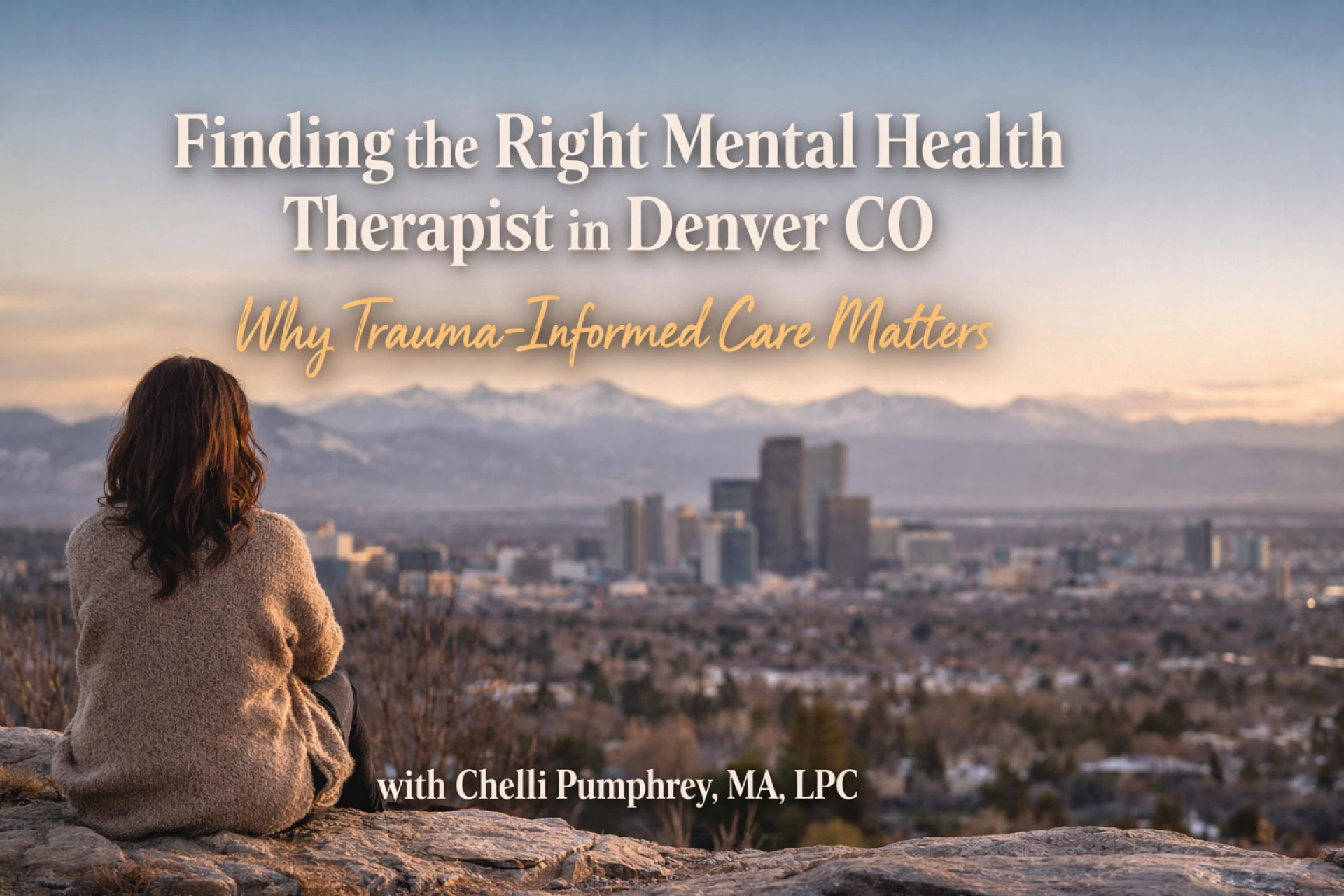

Finding the right mental health therapist in Denver CO can feel overwhelming, especially when you’re already navigating anxiety, depression, relationship distress, or the lingering effects of trauma. The options are extensive. Credentials vary. Approaches differ. And not all therapy is the same.
For individuals who have experienced chronic relational trauma — including childhood neglect, narcissistic abuse, coercive control, or long-term emotional invalidation — the type of therapy you choose matters deeply.
Trauma is not just an event. It is an experience that reshapes the nervous system, attachment patterns, and sense of self. That’s why trauma-informed care is not simply a specialty — it is a framework.
Trauma Is Often Misunderstood
Many people seeking therapy assume trauma refers only to catastrophic events: accidents, assaults, or natural disasters. While those experiences can certainly lead to PTSD, trauma is often quieter and more relational.
Repeated emotional invalidation. Chronic unpredictability in childhood. Gaslighting in adult partnerships. Living for years in environments where safety was inconsistent.
These experiences can lead to complex trauma patterns that don’t always fit neatly into traditional diagnostic categories. Symptoms may present as anxiety, depression, emotional dysregulation, attachment insecurity, or persistent shame.
Without a trauma-informed lens, these symptoms can be misinterpreted as personality flaws or poor coping.
What Trauma Therapy in Denver Should Include
When someone searches for trauma therapy in Denver, they are often looking for more than symptom relief. They are seeking understanding — and a therapeutic environment that feels safe, steady, and attuned.
Effective trauma therapy typically includes several core elements:
1. Nervous System Awareness
Trauma is stored not only in memory but in the body. A trauma-informed therapist understands how chronic stress reshapes the autonomic nervous system and integrates somatic awareness into treatment.
2. Attachment-Focused Work
For many adults, trauma is relational. Healing often involves exploring attachment patterns, boundary formation, and the restoration of self-trust.
3. Careful Pacing
Revisiting trauma too quickly can overwhelm the system. Skilled trauma therapists prioritize stabilization before processing.
4. Integration, Not Just Insight
Understanding why you react a certain way is helpful — but trauma therapy must also create change at an embodied level.
In Denver’s growing mental health landscape, it’s important to find a provider who views trauma as layered and complex, not simply a diagnosis to treat.
Why Specialization Matters
Not every therapist who treats anxiety or depression is trained to address complex trauma or narcissistic abuse recovery. Survivors of coercive control or chronic emotional manipulation often carry deep shame and confusion. They may question their own perceptions. They may feel responsible for dynamics that were harmful.
Working with a specialist in trauma therapy in Denver can make a significant difference in outcomes. When the therapist understands relational trauma patterns — such as trauma bonding, gaslighting, and attachment injuries — treatment becomes more precise.
Chelli Pumphrey, MA, LPC, CCTPII, NAST, is a licensed professional counselor based in Denver who has spent over 30 years working with individuals healing from chronic relational trauma. As a mental health therapist in Denver CO, her work centers on complex PTSD, narcissistic abuse recovery, attachment wounds, and identity restoration.
Her approach integrates traditional psychotherapy with trauma-focused modalities, EMDR, somatic awareness, and careful integration work for clients seeking deeper healing.
Complex Trauma and High-Functioning Adults
One of the most misunderstood presentations of trauma involves high-functioning adults.
Many individuals who pursue trauma therapy in Denver are successful professionals, caregivers, and community members. They may not appear “traumatized” to the outside world. Yet internally, they may struggle with:
- Chronic hypervigilance
- Emotional reactivity or shutdown
- Repeated unhealthy relationship patterns
- Persistent shame
- Difficulty trusting themselves
Trauma does not always look like collapse. Sometimes it looks like overachievement built on survival strategies.
A trauma-informed mental health therapist in Denver CO understands that resilience and dysregulation can coexist.
The Role of the Therapeutic Relationship
For individuals with attachment trauma, the therapeutic relationship itself becomes part of the healing process.
Safety is not assumed — it is built.
Consistency, transparency, and emotional attunement create corrective experiences over time. This is particularly important for those who have experienced betrayal or chronic invalidation.
In trauma therapy, the therapist’s steadiness becomes an anchor. Healing does not happen through insight alone. It unfolds through relational safety.
Emerging Modalities in Trauma Treatment
Denver has become a hub for innovative trauma therapies, including EMDR, somatic therapies, and ketamine-assisted psychotherapy.
When thoughtfully integrated, these modalities can support individuals whose symptoms have not responded to traditional talk therapy alone. However, these approaches require clinical sophistication and careful screening.
As a mental health therapist in Denver CO, Chelli Pumphrey incorporates trauma-focused modalities with intentional preparation and integration, ensuring that clients are supported before, during, and after deeper processing work.
Trauma therapy is not about quick fixes. It is about sustainable nervous system change.
Choosing the Right Mental Health Therapist in Denver CO
When searching for a therapist, consider asking:
- Does this therapist specialize in trauma or simply treat it occasionally?
- Do they understand complex PTSD and relational trauma?
- How do they approach emotional regulation and attachment repair?
- What is their experience with narcissistic abuse recovery?
- Do I feel safe and understood in their presence?
Credentials matter. But so does felt safety.
The right trauma therapy in Denver should leave you feeling clearer, not confused. Steadier, not overwhelmed.
Healing Is Possible
Chronic trauma can shape identity, relationships, and self-perception for years. But it does not have to define the future.
With skilled trauma-informed care, individuals can:
- Regulate emotional responses more effectively
- Restore self-trust
- Develop healthier relational patterns
- Reduce intrusive symptoms
- Build a more integrated sense of self
Healing is rarely linear. It requires patience, compassion, and expertise.
For those seeking a mental health therapist in Denver CO who understands the complexity of relational trauma, Chelli Pumphrey offers decades of experience working at the intersection of attachment, identity, and trauma recovery.
The work is not about erasing the past.
It is about creating enough safety in the present that the past no longer dictates every response.


























Sign in to leave a comment.