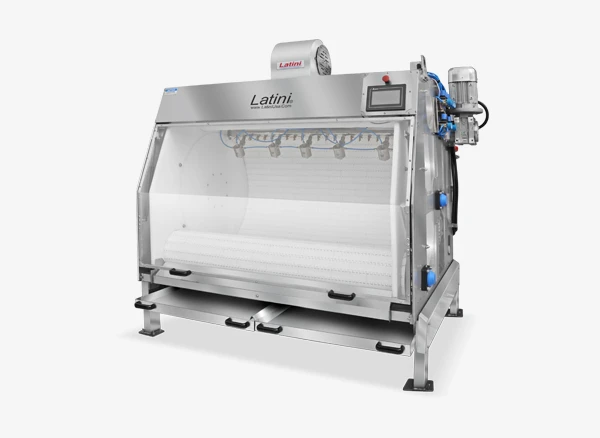

Precision in chocolate coating is not an indulgence. It is a standard. When coatings are uneven, blotched, bubbled, patchy, or too thick in parts, many operators first adjust the formulation.
That is a costly misdirection. In most cases, the fault lies not in the recipe, but in the chocolate coating machine. Engineering breakdowns, not ingredient imbalances, are the real culprits behind visual inconsistency and textural failure.
Surface Imperfections Start Inside the Chocolate Coating Machine
Chocolate coating is a mechanical outcome governed by airflow, speed, heat and viscosity control. The quality of surface adhesion depends on a balance across all four. When any of these variables fall outside acceptable range, the coating separates, pools, or crystallises unevenly.
Chocolate coating machine malfunctions often appear as product defects before alarms sound. Drips on one side, dull patches, or irregular snap sounds all point towards internal instability. The source is rarely the cocoa butter content. It is usually misaligned airflow or uneven belt velocity.
Machines that do not maintain a steady thermal envelope cannot create uniform crystallisation. Even a 1°C fluctuation across the drum chamber can separate sheen from failure.
Chocolate Coating Machine Wear Directly Affects Coating Consistency
Routine production stress alters the performance of even the best-engineered systems. Bearings loosen, nozzles misalign, and rollers wear unevenly. These changes are subtle. They do not cause shutdowns. They cause cosmetic flaws.
Several critical faults present through the product before the operator sees the machine warning:
- Gloss finish turns matte in random spots
- Edges become thicker than the centre
- One side remains exposed or translucent
- Coating shells crack or separate after cooling
These are mechanical messages. Coating errors that persist across batches, despite recipe adjustments, are not formulation problems. They are signs that the chocolate coating machine is out of specification.
Flow Rate Imbalance Leads to Overcoating and Waste
In multi-lane coating systems, synchronisation is key. If chocolate is fed unevenly across the width of the conveyor or tumbler, some lanes overcoat while others barely glaze.
This imbalance is not visible during operation. Chocolate still flows. Products still move. But downstream, you will find rejected batches, weight variance, and product recall risks.
Two machine-related issues often cause this imbalance:
- Worn or clogged dispensing valves
- Irregular drum rotation or belt speed
Left uncorrected, these lead to cumulative losses. Chocolate is wasted. Product fails quality inspection. And production time is spent on rework rather than throughput.
Cleaning Inconsistencies Compound Defects in Chocolate Coating Machines
A chocolate coating machine that is not properly cleaned between runs becomes unstable. Chocolate residue hardens in lines, disrupts flow, and blocks vents. Even small build-ups shift temperature balance and flow dynamics.
Poor sanitation does not always appear as contamination. Sometimes it shows in flavour cross-over or grainy textures. Coatings start to lose uniformity, gloss drops, and air bubbles appear more frequently.
To maintain output quality, sanitation routines must not only be scheduled, they must be verifiable. Intelligent machines now provide cleaning cycle validation logs. But older systems rely on operator discipline. In either case, poor cleaning leads to mechanical unreliability and inconsistent product finish.
The Solution Lies in Diagnostic Equipment Design
Modern coating machines are designed not just to operate, but to self-report. Temperature mapping, flow regulation, and rotational data can all be logged and compared to baseline performance. These insights allow maintenance before the product fails.
When machines offer data at the point of fault, teams stop blaming the recipe. They begin to diagnose the actual cause, be it airflow obstruction, misaligned spray paths, or rotation inconsistencies.
Upgrading to diagnostic-led equipment saves both time and materials. More importantly, it protects the brand. In an industry where surface gloss influences buyer choice, even minor defects can erode market position.
Benefits of using diagnostics-enabled chocolate coating systems include:
- Reduced operator intervention
- Faster fault isolation
- Consistent output across production cycles
- Lower material wastage
- Improved compliance with quality standards
Conclusion
Visual imperfections in coated confectionery are not random. They are mechanical. They are preventable. And they are diagnostic, if understood correctly. Adjusting recipes to fix what is essentially an engineering flaw delays the solution and increases losses.
Consistent, high-quality coatings depend not only on the ingredients selected, but on the precision of the machinery that applies them. For manufacturers who value finish as much as flavour, this understanding is crucial.
For decades, manufacturers across regions have trusted Latini Hohberger Dhimantec for coating systems built with the precision and diagnostic intelligence necessary to meet modern production demands, batch after batch, product after product.


Sign in to leave a comment.