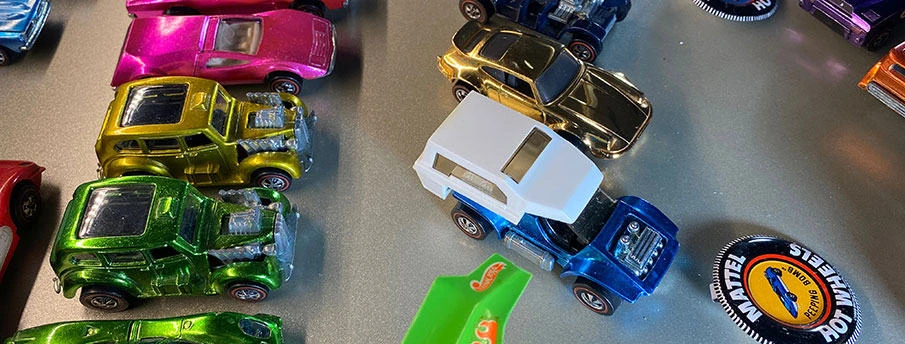

There is a clear shift happening in the diecast hobby. Modern releases still generate buzz, but experienced collectors are steadily leaning back toward earlier pieces. The gap between original Redlines and newer Red Line Club releases comes down to something simple. One is truly scarce, the other is carefully produced.
The Difference Between True Vintage and Modern Collectibles
Modern Red Line Club releases are built for collectors from the start. They feature premium finishes, detailed packaging, and controlled production numbers. Everything about them is designed to hold value.
Original Redlines from 1968 to 1977 were never treated that way. They were made as toys, played with hard, and rarely stored with care. That difference still defines how the market values them today.
Scarcity Works Differently in the Vintage Market
Modern releases are labeled as limited, but the numbers are still relatively high. Many buyers keep them sealed or stored properly, which means supply stays consistent over time.
Vintage is a different story. Even if a model was produced in large numbers, very few survive in strong original condition. When collectors look through vintage redline hot wheels for sale, the real challenge is not finding the model. It is finding one that has not been worn down, restored, or altered.
That is where true scarcity shows up.
The Bull Market for Original Condition Cars
In 2026, the strongest demand is centered on originality. Clean, untouched cars are consistently outperforming both restored pieces and most modern releases.
Collectors are paying closer attention to:
- Even, unfaded Spectraflame paint
- Straight axles and smooth-rolling wheels
- Factory rivets with no signs of tampering
- Natural wear instead of restoration work
The team at Redline Archeology often points out that originality carries more weight than perfection. A lightly played-with car that has never been altered can draw more interest than one that has been polished or rebuilt.
This is where the current bull market is most obvious. Once a clean vintage piece is gone, replacing it is not easy.
Why RLC Releases Tend to Level Off
RLC cars usually follow a predictable cycle. They launch, sell out quickly, and then settle into a stable resale range.
While both markets have their merits, a side-by-side comparison reveals why vintage models continue to lead in long-term growth:
Production Volume: While Vintage Redlines (1968–77) were manufactured as mass-market toys intended for play, Modern RLC Releases are produced in strictly limited, numbered runs designed specifically for the secondary market.
Survival Rate: The survival rate for vintage models in mint condition is extremely low due to decades of use; conversely, RLC cars have a near 100% survival rate because collectors treat them as investments and rarely remove them from their original packaging.
Primary Value Drivers: Long-term growth for original Redlines is fueled by historical scarcity and condition, whereas modern RLC value is largely driven by initial exclusivity and launch-day hype.
History and Wear Still Matter
Vintage Redlines carry something modern releases cannot replicate. Each one reflects how it was used and stored over time.
That variation adds depth to the market. Two identical models can feel completely different depending on their history. Cars from original-owner collections often stand out because they come with a consistent background.
Even small details like where the cars were stored can influence collector interest today.
What Drives the Top End of the Market
When collectors talk about the most valuable redline hot wheels, they are not just naming models. They are looking at a combination of factors that go beyond the surface.
These include:
- Color variations within a casting
- Factory differences between production runs
- Overall condition and originality
A common casting in an uncommon color with clean paint can outperform a rarer model that shows heavy wear. Condition continues to separate average pieces from standout ones.
Supply Keeps Tightening
Vintage Redlines operate in a closed system. No new supply is entering the market, and existing pieces continue to thin out over time.
Cars are lost, damaged, or absorbed into long-term collections. As new collectors enter the hobby, demand grows while availability shrinks.
That imbalance is what continues to push vintage values ahead of modern releases.
Selling in Today’s Market
If you are considering selling, understanding your collection matters more than ever. The market is active, but buyers are more selective.
Choosing the best place to sell hot wheels depends on what you are working with. Higher-quality individual pieces often benefit from careful presentation, while mixed collections may need a broader approach.
The key is not rushing the process. Knowing what stands out in your collection will always lead to better results.
Common Missteps Collectors Still Make
Even now, there are a few patterns that continue to cost sellers value:
- Treating all cars as equal when condition varies widely
- Cleaning or restoring pieces before selling
- Overvaluing modern releases based on initial hype
- Ignoring small but important variations
These mistakes are avoidable with a basic understanding of how the market works.
What Actually Holds Value Over Time
Whether you are actively collecting or thinking about selling, the same fundamentals keep showing up in strong collections.
- Original paint and parts always carry more weight than restored examples
- Small factory variations can separate an average piece from a standout one
- Any known history or ownership detail adds credibility
- Overhandling, cleaning, or “improving” a car usually works against you
These patterns are consistent across the market, but they matter most when you are dealing with vintage Redlines. That is where the gap between average and exceptional becomes more noticeable.
Why Vintage Redlines Continue to Lead the Market
Vintage Redline Hot Wheels keep outperforming modern RLC releases because their supply is not just limited, it is declining. Every year, fewer clean original examples are available, and collectors are becoming more selective about what they add.
Modern releases still serve a purpose. They are accessible, consistent, and built with collectors in mind. But that same consistency limits how much they can separate from each other over time.
Vintage pieces operate differently. No two are exactly alike, and the best examples continue to stand further apart from the rest. For anyone holding older cars, the advantage is clear. The closer they remain to factory condition, the stronger their position as the market continues to tighten.



























Sign in to leave a comment.