

In an era when remote work, cross-functional teams, and tight deadlines are the norm, relying on scattered spreadsheets, email threads, and siloed tools just doesn’t cut it anymore. That’s where project management software steps in — acting as the single source of truth for tasks, deadlines, communication, and accountability.
With the right project management software, teams gain:
· Clarity & transparency — who’s doing what, by when
· Streamlined workflows — from ideation to delivery
· Better collaboration across departments
· Reduced friction & miscommunication
· Data & insights to refine processes over time
At Nimble Work, we believe that project management software should empower teams — not burden them. Our goal is to make project planning, execution, and tracking intuitive, efficient, and adaptable to any workflow.

Key Features to Look for in Project Management Software
Choosing the right system is crucial. Here are the features every robust project management software should offer:
1. Task & Subtask Management
Allow tasks to be broken down into smaller units, assigned to owners, and tracked with statuses (To Do / In Progress / Done).
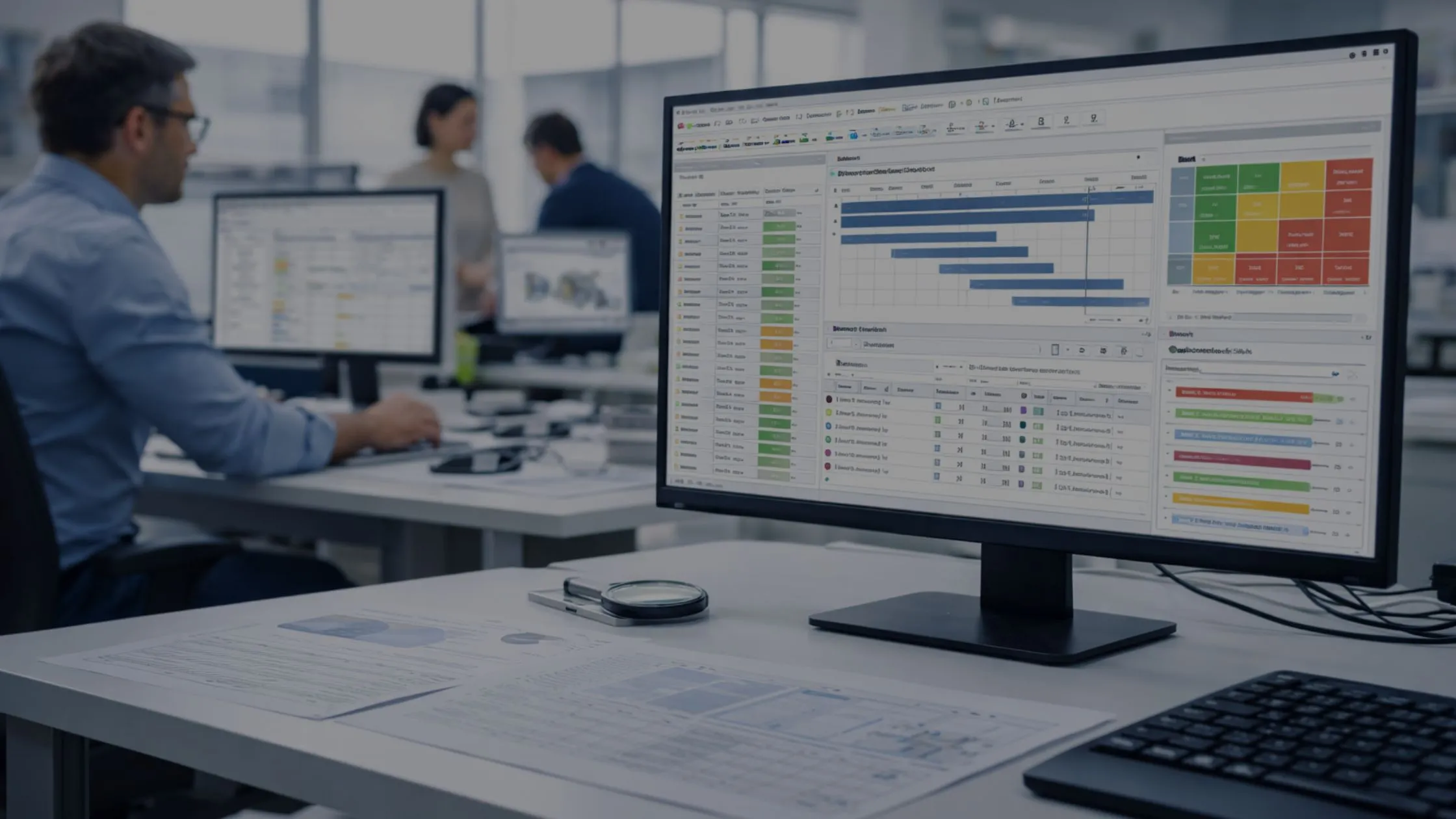
2. Timeline / Gantt / Calendar Views
Visualizing deadlines and dependencies helps prevent bottlenecks and gives a big-picture view of project progress.
3. Real-time Collaboration
Comments, file attachments, tagging, and version control ensure the conversation happens in context, not over disconnected emails.
4. Integrations & Automation
Connect your software to Slack, email, cloud drives, CRM, etc. Automate repetitive tasks (e.g. status changes, reminders) to save time.
5. Reporting & Analytics
Built-in dashboards and exportable reports allow project leads to monitor metrics like task completion rate, overdue tasks, and resource utilization.
6. Access Controls & Permissions
You don’t want every user to see everything. Granular permissions help safeguard sensitive tasks or budget information.
7. Mobile & Offline Support
Teams today are not always deskbound. A mobile app ensures that updates, approvals, or comments can happen on the go.
When you evaluate “project management software,” make sure it ticks these boxes — and that adoption is easy so your team actually uses it.
How Nimble Work Makes Project Management Effortless
At Nimble Work, our design philosophy is simple: powerful features, zero complexity.
Here’s how we stand out:
· User-first interface: Clean dashboards, drag & drop actions, one-click views
· Template library: Ready-made project blueprints (marketing campaigns, software releases, onboarding, etc.)
· Smart automation: Auto-assign tasks, set reminders, trigger dependencies
· Unified communication: Comments, @mentions, file sharing — all inside each task
· Advanced analytics: Visualize progress, spot risk zones, forecast timelines
· Flexible permissions: Role-based views so stakeholders see just what they need
· Seamless integrations: Link with Slack, Google Workspace, Trello, GitHub, and more
· Mobile-first experience: Android & iOS apps with offline mode
Because Nimble Work is built with teams in mind, onboarding is smooth — and adoption is high.
Best Practices to Succeed with Project Management Software
Switching to a new system is only half the battle. To truly harness the power of project management software, follow these best practices:
1. Start with Clear Goals
Before you even import your first task, define what success looks like. Is it reducing missed deadlines? Improving cross-team coordination? Use specific KPIs so you can measure ROI.
2. Get Leadership Buy-in
If leaders commit to using and enforcing the tool, the rest of the team follows. Executive support increases adoption and reinforces accountability.
3. Document Standard Operating Procedures (SOPs)
Have templates, rules, naming conventions, and onboarding guides. This keeps consistency across teams. As SEO project management guides suggest, clear process definitions reduce confusion.
4. Roll Out Gradually
Start with one team or one project. Let them test, provide feedback, and road-test workflows. Once stable, expand across departments.
5. Automate & Streamline
Use automation for status transitions, notifications, dependencies, and recurring tasks. This cuts manual overhead and keeps everything moving.
6. Monitor & Iterate
Use analytics and reports to spot underutilized features, bottlenecks, or friction points. Tweak workflows regularly to keep efficiency high.
7. Foster a Culture of Accountability
Projects succeed when team members own their tasks. Frequent check-ins, visual dashboards, and clear responsibilities help drive that culture.
A structured approach to project management is essential — many guides on SEO project management emphasize that no matter how complex your tasks, a transparent process ensures all parts move in sync.
Real-world Use Cases of Project Management Software
To illustrate how “project management software” can transform work, here are a few scenarios:
· Marketing campaign: plan launches, content calendars, design requests, approvals, and tracking
· Product development / software: sprints, backlog, bug tracking, release cycles
· Onboarding & HR: checklist automation, training modules, documentation
· Event planning: vendors, tasks, budgets, timelines
· Consulting / client work: assign deliverables, phase gates, client reviews
Every team — whether functional, hybrid, or remote — can use project management software to bring order to complexity.
How to Pick the Right Project Management Software for You
As you evaluate options, keep these criteria in mind:
1. Ease of use & adoption
2. Scalability as your team grows
3. Robust integrations & APIs
4. Customizable workflows / templates
5. Reliable support & uptime
6. Security & user permissions
If you let complexity or feature overload distract you, your team may never fully adopt it. Focus first on value and usability, then expand features later.
Call to Action: Try Nimble Work Today
If you’re searching for a project management software that is intuitive, powerful, and designed for real teams, Nimble Work is ready to help. Start with our free trial, import your first project template, and see how streamlined your workflow can become.
























Sign in to leave a comment.