
You publish thoughtful blogs every week.
You share them on LinkedIn, drop them into your newsletter, maybe even run the odd promo.
Then you open analytics and the line is nearly flat. A handful of visits. No real lift in leads. Nothing reflects how much effort went into that content.
If that feels familiar, you are not alone. Studies suggest that the majority of web pages get little or no organic traffic from Google at all. At the same time, most clicks still go to the first few results on the page.
Now add AI search and rich results into the mix. Search engines are no longer just ranking blue links. They are pulling in answers, FAQs, product data and helpful summaries directly into the results. To decide what to surface, they read structure, entities, schema and page experience long before they worry about your beautiful turns of phrase.
Quality writing is still essential. The hard truth is that without a solid SEO structure, your best ideas remain buried in the long tail.
A structured content SEO audit can be a useful way to uncover why good content marketing efforts are not leading to rankings. Still, the first step is understanding what structure actually means.
What Is SEO Structure And Why Does It Matter More Than Ever
SEO structure is not just a technical checklist. It is the way your content is organised so search engines can crawl it, understand it and trust it enough to recommend it.
You can think about it in two layers.
On-Page Structure
This is everything on an individual page that shapes how a crawler reads it. For example.
- Headings and subheadings.
- Paragraphs and lists.
- Internal links within the content.
- Title tags and meta descriptions.
- Schema markup like FAQ or Article.
Site-Level Structure
This is the bigger picture view.
- Navigation menus.
- Topic clusters and pillar pages.
- Logical URL paths by category or service.
- How many clicks does it take to reach key content?
AI-powered search features try to understand relationships between topics and pages, not just keywords. If you have one strong pillar page about a subject and several well-linked supporting articles, search systems can see that you have depth and breadth. Structure is what turns a pile of blogs into a connected, authoritative resource.
Why Great Writing Alone No Longer Wins Search
Many teams still follow a “content first, structure later” pattern. Someone writes a great piece, hits publish, then asks someone else to “SEO it” afterwards.
This creates problems that are easy to miss at first.
- Headings that do not reflect search intent: The article may answer “how to choose a mortgage broker,” but the headings are poetic rather than practical. That makes it harder for search engines to see how it matches real queries.
- Articles that compete with each other: If you have five blogs targeting similar phrases without a plan, they can end up fighting for the same keyword. None of them wins strongly.
- Weak internal linking: When related pieces do not link to each other, crawlers have no clear path. It is harder to see which page should be treated as the main authority on a topic.
- No snippet-friendly summaries: A post can contain a brilliant answer, but never state it clearly in one or two lines. That makes it much harder to be pulled into People Also Ask boxes or AI-style answer panels.
AI search and overviews rely heavily on well-structured, clearly labelled answers. If your content does not pose and answer recognisable questions consistently, there is nothing obvious to quote.
This is where an external SEO strategy partner can help map content to search intent, reduce cannibalisation and build a structure that supports both humans and machines.
How Do Search Engines Read Your Page Structure
Before any human sees your post, a crawler has already scanned it.
At a simple level, crawlers.
- Visit your URL and load the HTML.
- Read the title tag and meta description.
- Parse headings from H1 through to H3 and beyond.
- Follow internal and external links.
- Look for structured data such as a schema.
A logical hierarchy helps machines follow the story. One clear H1 that matches the main topic. H2 headings that break the topic into natural sections. H3S that group lists or steps under each section.
Search engines also pay close attention to entities. That means using the same product names, service names, locations and categories consistently across your site. If your content switches between different labels for the same thing, it creates confusion.
Then there is the quieter layer of structural quality. Core Web Vitals, mobile usability and clean code do not sound like content topics, yet they all influence how quickly and easily your pages load and render. Slow, clunky pages are harder to crawl and harder to love.
The structure is bigger than the words on the screen. It is the frame that lets those words be discovered and trusted.
What SEO Structure Fixes Give The Fastest Wins
The good news is that you can improve structure without touching server settings or writing a line of code.
Fix your headings
Give every page one clear H1 that reflects the main intent. For example.
- “How To Choose A Family Lawyer In London”.
- “Beginner's Guide To B2B Email Marketing”.
Use H2S to create sections. Where it makes sense, turn them into natural questions such as “How does X work” or “What is the best way to do Y”.
Under each H2, use short H3 lists or steps if you are breaking down a process. This creates a predictable pattern that is easy to scan.
Clean Up URLs and Meta Data
Short descriptive URLs help both users and crawlers. A slug like /local-seo-guide is clearer than /page-id-123.
Meta titles should combine your main keyword with a simple benefit. For instance, “Local SEO Guide For Small Businesses” rather than just “SEO Tips”.
Meta descriptions do not directly move rankings, but they strongly influence click-through rates. Use them to answer the first question a searcher has in one or two lines.
Upgrade Internal Linking
Look at your analytics and identify your high traffic pages. Add links from those to deeper guides that deserve more attention. That simple change can pass authority and visitors into parts of your site that were hidden.
Use descriptive anchor text instead of “click here” so both users and search engines know what to expect.
Create small clusters where one pillar page links out to several supporting blogs, and those blogs link back up to the pillar. This makes it clear which page is the main hub.
Add FAQ Style Answers on Key Pages
Gather real questions from customer emails, discovery calls, reviews and People Also Ask. Choose a few that matter most.
Answer each one in two or three concise sentences. Place this mini FAQ high enough on the page that it is easy to find, not buried at the bottom.
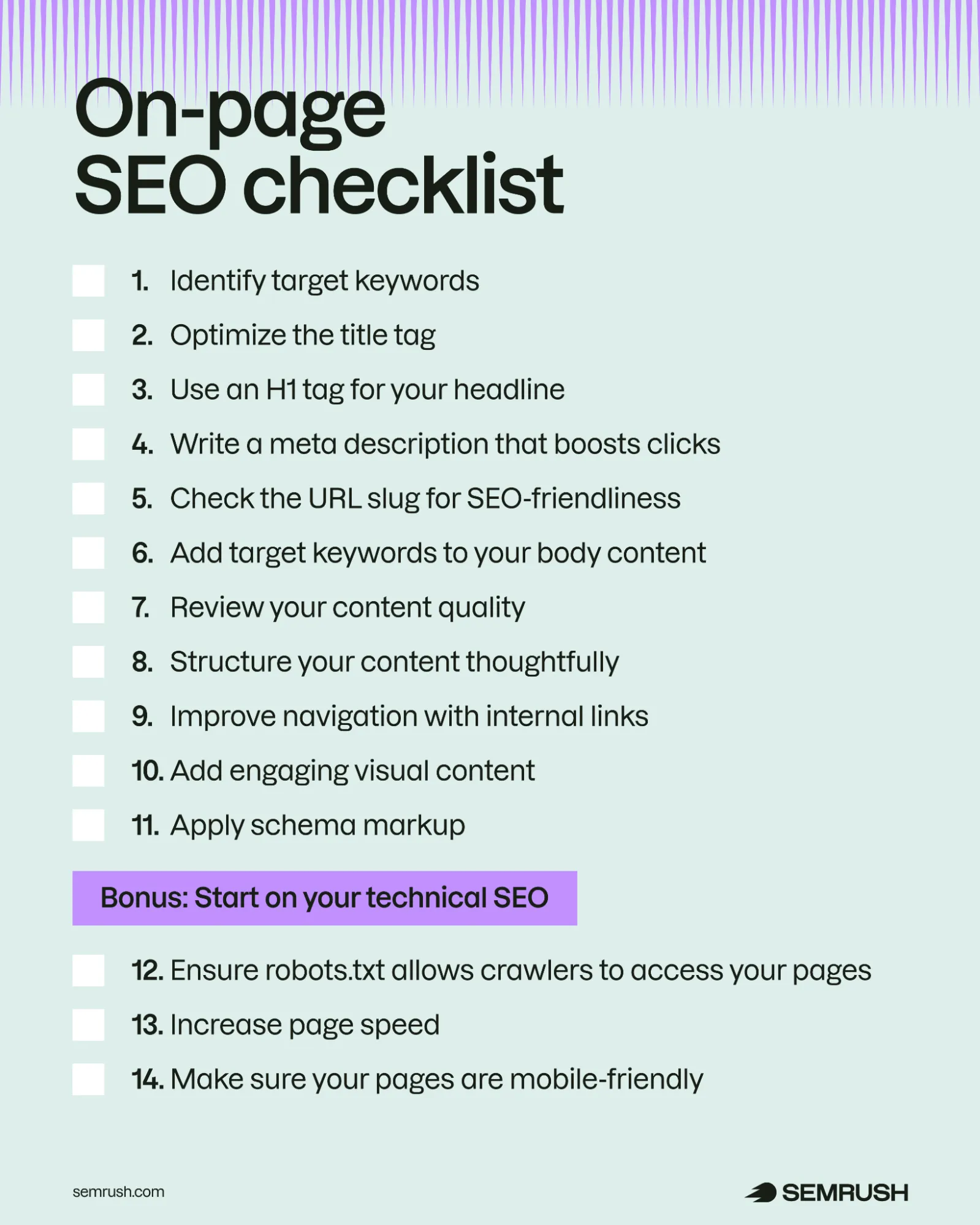
You can use a simple content SEO checklist or a structured content audit to spot missing headings, weak links and FAQ opportunities on your existing pages.
How Do Topic Clusters Turn Random Blogs Into An SEO Asset
A topic cluster is a simple but powerful idea.
You create one core pillar page that covers a subject in depth. Around it, you build multiple supporting articles that explore specific angles, questions or use cases in more detail.
For example.
- Pillar: Complete Guide To Local SEO For Small Businesses.
- Supporting pieces: How To Optimise Your Google Business Profile, What Local Citations Are And How To Build Them, How To Collect And Use Local Reviews, How To Create Effective Location Pages.
AI search models look for signs that a source has both depth and breadth on a topic. A well-linked cluster sends a strong signal that you understand a subject beyond a single blog post.
To turn scattered blogs into a cluster.
- Choose a primary pillar topic that matches your main service or product area.
- Identify existing posts that relate to that topic and update them to link up to the pillar and sideways to each other.
- Consolidate thin or overlapping posts into stronger combined articles, so you have fewer, better assets instead of many weak ones.
Over time, this structure helps search engines see your site as a go-to resource on specific themes rather than a loose collection of posts.
What Happens When You Fix SEO Structure On Existing Content
Imagine a company with around 30 blog posts on digital marketing. The content is strong, but nothing ranks in the top 20 for key searches. Traffic is modest and leads from organic search are rare.
They decide to focus on structure for a quarter.
- First, they rewrite headings around clear, search-friendly questions. “Three Ideas For Better Ads” becomes “How To Improve Your Facebook Ad Results In 30 Days”.
- Next, they consolidate five similar posts about SEO basics into one stronger guide that becomes a pillar page. The weaker posts are either redirected or repurposed as sections inside the guide.
- They then add internal links from every related blog back to that pillar, and from the pillar out to each supporting piece. On the top five pages, they introduce a short FAQ block that answers common questions in plain language.
- Within a few months, they see an uplift in impressions, more entries into featured snippets and a noticeable rise in organic enquiries. The total number of pages has gone down, but the overall performance has gone up.
A focused SEO agency can run this kind of content audit at scale and help decide which changes to prioritise first, so you are not guessing.
Quick Answers About SEO Structure And Content
Is SEO structure more important than content quality?
You need both. Structure without substance will not hold attention, yet brilliant content without structure is hard to discover. Think of structure as the map and content quality as the destination.
Can I fix SEO structure on old blogs, or do I need to start again?
You can almost always improve what you already have. Updating headings, adding internal links and consolidating weak posts into stronger ones are all changes you can make on existing content without rebuilding your site.
How many internal links should a blog post have for good SEO?
There is no perfect number, but most posts can comfortably include several internal links to relevant pages. Focus on linking where it genuinely helps the reader, and make sure your most important pages receive links from multiple places.
Do I really need FAQ sections on service or blog pages?
You do not have to force them everywhere, but FAQ sections are an efficient way to answer common questions clearly. They work well on key service pages and in-depth guides where people often have similar doubts.
How long does it take to see results after improving the SEO structure?
You might see early signs such as increased impressions and better click-through rates within a few weeks. Stronger ranking shifts, especially on competitive terms, can take a few months. Structural improvements tend to compound over time as you keep building on them.
Why Writers And SEOs Need Each Other
This is not a choice between great writing and great structure. You need both to compete in the age of AI search.
Writers bring insight, clarity and voice. SEOs bring an understanding of how search engines interpret pages and how users behave before they ever land on your site. Together, they make content that deserves to rank and is actually capable of doing so.
Instead of trying to fix everything at once, start with your most strategic pages. The ones that already bring leads, or that explain your core services. Run a mini audit of headings, internal links and FAQs on those pages. Then think about how you can turn them into pillars at the centre of topic clusters.
If you do not have the time or in-house expertise, specialist support with SEO content audits or strategy can help you move from invisible to discoverable that much faster.




























Sign in to leave a comment.