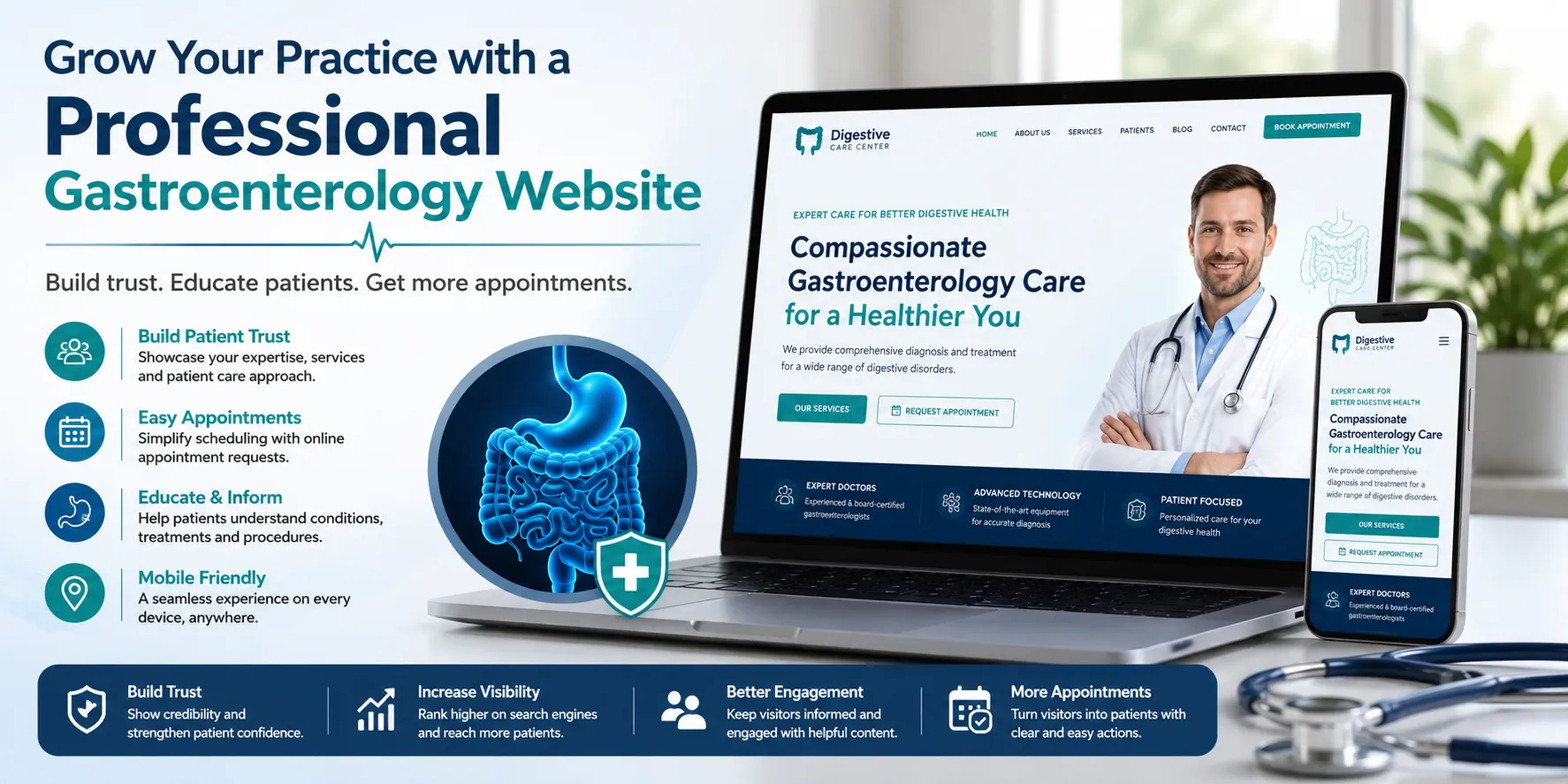

When patients need help with digestive health, one of the first things they often do is search online. They may look for a gastroenterologist, explore treatment options, compare practices, and check whether a doctor can help with their specific concern.
Because of this, your website is more than an online business card. It is an important part of how patients discover and evaluate your practice. A professional website can make it easier for visitors to understand your services, learn about your doctors, and take the next step toward scheduling an appointment.
1. Make a Strong First Impression
Your website may be the first interaction a potential patient has with your gastroenterology practice. A clean and professional website can immediately communicate that your practice is organized, trustworthy, and focused on patient care.
On the other hand, an outdated website, difficult navigation, or missing information can create unnecessary doubts. Patients should be able to quickly find essential details such as your services, physician information, office location, contact details, and appointment options.
A well-planned gastroenterology website design brings these elements together in a simple and organized way, helping visitors feel more comfortable as they explore your practice.
2. Help Patients Understand Your Services
Gastroenterology includes many conditions, treatments, and procedures. Patients may search for information about acid reflux, irritable bowel syndrome, inflammatory bowel disease, colonoscopy, liver conditions, or other digestive health concerns.
Your website gives you an opportunity to explain these services in language that patients can understand. Instead of relying heavily on medical terminology, each service page should explain what the condition or procedure is, when patients may need care, and what they can generally expect.
Clear service information can reduce confusion and help visitors determine whether your practice offers the care they are looking for.
3. Make Appointment Scheduling Easier
Patients appreciate simple and convenient ways to contact a healthcare provider. If they have to search through multiple pages to find a phone number or appointment form, they may become frustrated.
Your website should make the next step obvious. A visible "Request an Appointment" or "Contact Us" button can guide visitors toward scheduling or contacting your office.
You can also provide important information about office hours, locations, insurance, and what patients should bring to their first visit. This saves time for patients and can reduce unnecessary calls to your staff.
4. Build Trust With Potential Patients
Choosing a gastroenterologist is a personal decision. Before making an appointment, patients often want to know more about the physician and the practice.
A professional website can introduce your doctors through detailed but easy-to-read profiles. You can include information about their education, experience, specialties, certifications, and areas of interest.
Patient-friendly information about your practice, team, facilities, and approach to care can also help visitors feel more familiar with your practice before they walk through the door.
5. Provide a Better Mobile Experience
Patients do not only search for healthcare providers from desktop computers. Many use smartphones to research doctors, check directions, call an office, or request an appointment.
For this reason, your website should work smoothly on different screen sizes. Text should be easy to read, buttons should be simple to tap, and important information should not be hidden behind complicated menus.
Good mobile usability is an important part of website design for gastroenterology because it allows patients to access your practice information whenever and wherever they need it.
6. Support Your Online Visibility
A professional website can also support your practice's search engine visibility. When your website contains useful, well-organized information, search engines can better understand what your practice offers.
Creating helpful pages around relevant services and patient questions can allow your website to appear for searches related to gastroenterology care.
For example, educational content can cover topics such as:
- What does a gastroenterologist treat?
- When should you see a gastroenterologist?
- How should you prepare for a colonoscopy?
- What is acid reflux?
- What are common symptoms of IBS?
- What should you expect during a gastroenterology consultation?
The goal should not be to create content simply for search engines. The content should answer real patient questions and provide useful information.
7. Answer Questions Before Patients Call
Patients often have basic questions before scheduling an appointment or preparing for a procedure. A well-organized FAQ section can provide quick answers and make their experience easier.
For example, you can answer questions about appointments, procedures, preparation instructions, accepted insurance, office locations, and common digestive health concerns.
Providing these answers online can also reduce repetitive questions for your front-office team, allowing staff to spend more time helping patients with issues that require direct assistance.
8. Show What Makes Your Practice Different
Patients may compare several gastroenterology practices before choosing one. Your website should clearly communicate what makes your practice worth considering.
This could include:
- Experienced physicians
- Specialized gastroenterology services
- Convenient office locations
- Advanced diagnostic or treatment options
- Patient-focused care
- Easy appointment scheduling
- Comprehensive educational resources
Instead of simply claiming that your practice is "the best," explain your strengths with specific and useful information. Authentic details are more helpful to patients and can make your website more credible.
9. Strengthen Your Local Presence
Many patients search for healthcare providers in their local area. Your website can help them understand where your practice is located and whether it serves their community.
Make sure your address, phone number, office hours, directions, and location information are easy to find. If your practice has multiple locations, provide clear information for each one.
Local information should be accurate and consistent so patients can easily find and contact your practice.
10. Create a Better Patient Experience
A professional website should make the patient journey easier from the first online search to the appointment stage.
Visitors should be able to move naturally from learning about a condition to exploring relevant services, understanding the physician's expertise, and contacting the practice.
Simple navigation, readable content, fast-loading pages, accessible information, and clear calls to action all contribute to a better experience.
The website should answer an important question at every stage: What does the patient need to know or do next?
Essential Features of a Professional Gastroenterology Website
An effective gastroenterology website should combine attractive design with practical functionality. Important features may include:
- Responsive design for mobile, tablet, and desktop users
- Clear service and procedure pages
- Professional physician profiles
- Online appointment request options
- Easy-to-find contact information
- Patient education resources
- Frequently asked questions
- Location and office information
- Clear calls to action
- Fast and user-friendly navigation
- Accessible and readable content
- Appropriate security and privacy practices
These features should work together rather than appear as separate elements. The overall goal is to make the website useful, trustworthy, and easy for patients to navigate.
Why a Professional Website Is a Long-Term Investment
A website can continue supporting your gastroenterology practice long after it is launched. It can educate patients, introduce new services, answer common questions, support online visibility, and provide important information outside regular office hours.
However, building a professional website is not only about choosing attractive colors or adding medical images. It requires understanding how patients search for information and what they need before choosing a healthcare provider.
A thoughtful digital strategy can help turn your website into a useful resource rather than simply an online brochure.
Conclusion
A professional website can play an important role in how patients discover, understand, and connect with your gastroenterology practice. From explaining services and introducing physicians to simplifying appointment requests, every part of the website can contribute to a better patient experience.
Investing in effective gastroenterology website design can give your practice a strong digital foundation while making important healthcare information easier for patients to access and understand. The most successful websites focus on people first—providing clear answers, simple navigation, trustworthy information, and an easy path to getting in touch.


























Sign in to leave a comment.