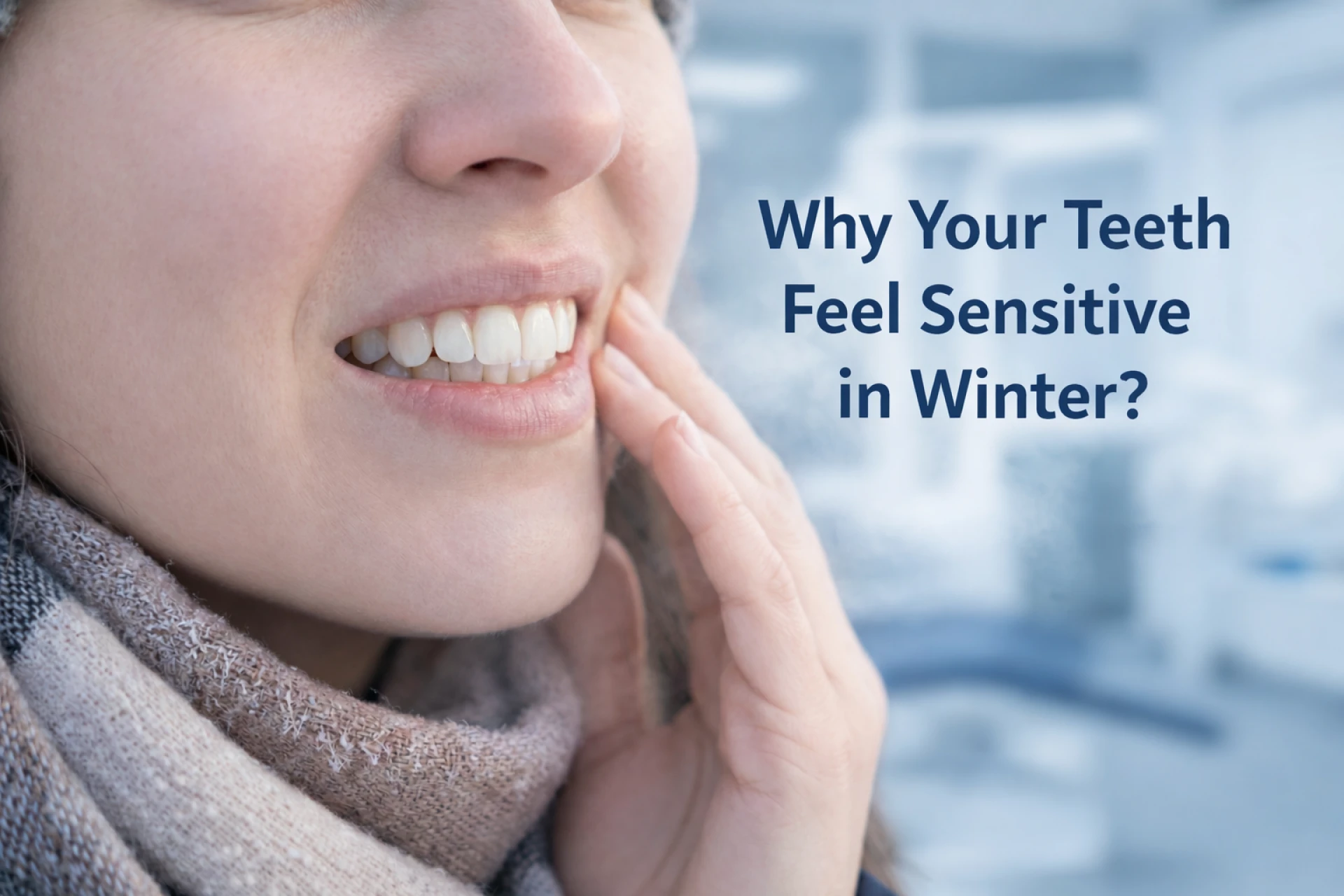

You step outside for a breath of fresh, frosty air, take a deep inhale, and—ouch. A sharp, sudden pain shoots through your teeth. If this sounds familiar, you aren't alone. "Winter tooth sensitivity" is a real issue that affects millions of people when the temperature drops.
But why does cold weather make your teeth ache, and more importantly, how can you stop it? Here is the straightforward truth about winter sensitivity and practical ways to fix it.
Why Cold Air Hurts?
Your teeth are not solid rocks; they are complex organs. The hard outer layer is called enamel. It protects the softer, sensitive layer underneath called dentin.
The dentin is full of tiny, microscopic tubes that lead directly to the tooth’s nerve center (the pulp). When your enamel is worn down or your gums recede, those tubes are exposed.
Here is what happens in winter:
- Thermal Contraction: When cold air hits your teeth, the enamel contracts (shrinks) slightly. This puts stress on the tooth structure.
- Fluid Movement: Sudden temperature changes cause the fluid inside those tiny dentin tubes to move rapidly.
- Nerve Response: This fluid movement triggers the nerve, sending a sharp pain signal to your brain.
Key Takeaway: It isn’t just the "cold" that hurts; it is the rapid change in temperature causing physical stress on the tooth structure and nerves.
Common Winter Triggers
It’s not just the wind. Your winter habits might be making things worse.
- Breathing Through Your Mouth: When your nose is stuffed up from a cold or flu, you breathe through your mouth. This pulls freezing dry air directly across your teeth, bypassing the warming effect of your nose.
- Hot Drinks vs. Cold Air: sipping scalding hot coffee while standing in freezing weather creates "thermal shock." The rapid switch from hot to cold causes micro-cracks in the enamel over time.
- Over-Whitening: Many people whiten their teeth for holiday parties. Whitening chemicals temporarily strip the protective protein layer from teeth, leaving them highly exposed to cold air.
- Clenching Your Jaw: We tend to tense up and clench our jaws when we are cold. This pressure can cause gum recession or enamel cracks, leading to more sensitivity.
How to Fix Winter Tooth Sensitivity?
You don't have to hide indoors until spring. Here are five practical fixes you can start today.
1. Switch to a Desensitising Toothpaste
Look for toothpaste containing potassium nitrate or stannous fluoride. These ingredients work by blocking the tiny tubes in your dentin, effectively shielding the nerve from cold air.
- Tip: Don't rinse your mouth out with water immediately after brushing. Spit out the excess paste and let the residue sit on your teeth to do its work.
2. Change Your Breathing Technique
Try to breathe in through your nose and out through your mouth when you are outdoors. Your nose acts as a natural heater/humidifier, warming the air before it reaches your throat and teeth. If you must breathe through your mouth, cover it with a scarf to trap warmth.
3. Use a Soft-Bristled Toothbrush
Aggressive brushing wears down enamel and pushes gums back. Switch to a soft-bristled brush and use gentle, circular motions. Hard scrubbing solves nothing and hurts everything.
4. Watch the Acid
Citrus fruits and acidic drinks erode enamel. In winter, we often drink hot lemon tea for immunity. If you do consume acidic foods, drink water afterward to neutralise the pH in your mouth.
5. Visit Your Dentist for a Varnish
If the pain is unbearable, ask your dentist about a fluoride varnish. This is a quick, painless treatment where a protective coating is painted onto your teeth to strengthen enamel and reduce sensitivity instantly.
Quick Summary
Why do my teeth hurt in the winter? Teeth hurt in winter due to thermal contraction. Cold air causes tooth enamel to contract, and if the inner layer (dentin) is exposed, it changes fluid pressure in the tooth, triggering the nerve.
Is cold weather tooth pain permanent? Usually, no. It is typically a temporary reaction to temperature changes. However, if the pain persists even when you are warm, it may indicate a cavity, cracked tooth, or gum disease.
How do I stop cold air from hurting my teeth?
- Breathe through your nose, not your mouth.
- Wear a scarf over your mouth to warm the air.
- Use desensitising toothpaste tailored for sensitive teeth.
- Avoid extremely hot drinks immediately before or after exposure to cold air.
When to See a Pro
If your sensitivity lingers for more than a few days, or if you feel a throbbing pain that keeps you up at night, it is not just the weather. You likely have a cavity or a cracked tooth that requires professional attention.
Don't let the cold dictate your smile. A few small changes to your routine can keep the pain away.

Sign in to leave a comment.