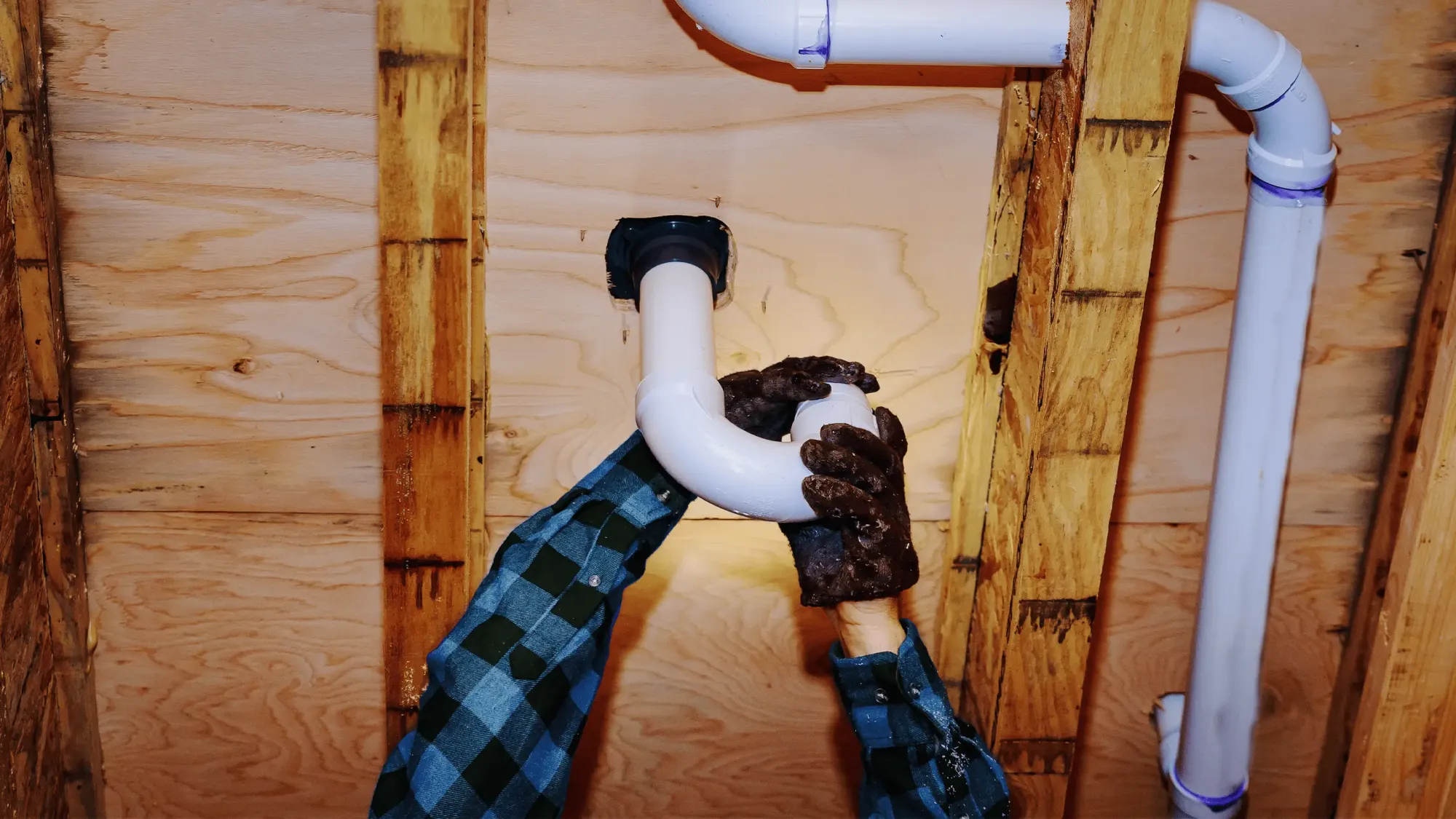

A Massachusetts winter can make an ordinary plumbing system feel unpredictable. One evening, the kitchen sink drains normally. The next morning, after a hard freeze, the faucet feels weaker, the sink empties slowly, and a strange gurgle follows the last swirl of water. Nothing has completely failed, yet the house is signaling that cold weather may be exposing a weak point.
Winter plumbing problems are not limited to dramatic burst pipes. Freezing temperatures can stress exposed water lines, worsen vulnerable joints, and make existing drainage issues harder to ignore. Holiday cooking, heavier indoor water use, grease, hair, and debris can also add pressure to drains that were already narrowing before the temperature dropped.
Dwight D. Eisenhower once observed, “Plans are worthless, but planning is everything.” That idea fits winter plumbing well. The goal is not to predict every failure. It is to prepare the system, notice changes early, and know when a minor inconvenience has become a problem that deserves professional attention.
Key Takeaways
- Frozen pipes can expose existing drain problems.
- Exposed plumbing needs extra winter protection.
- Smart drain habits help reduce seasonal trouble.
- Persistent slow drains need proper diagnosis.
Why Do Massachusetts Winters Hit Plumbing So Hard?
Cold weather changes the conditions around a plumbing system. Pipes near exterior walls, in unheated basements, garages, crawl spaces, or other exposed areas can lose heat faster than plumbing protected inside conditioned rooms. When water inside a vulnerable supply pipe freezes, expansion can place significant stress on the pipe and its connections.
The Federal Highway Administration notes that water expands in volume by approximately 9 percent when it freezes. That physical change helps explain why freezing inside a confined plumbing line can create damaging pressure.
Winter also changes household behavior. More hot meals, holiday gatherings, longer showers, and more time indoors can increase the amount of grease, food residue, hair, soap, and other material moving toward drains. Cold weather does not magically create every clog, but it can overlap with existing buildup and make a marginal drainage problem more obvious.
Winter Plumbing Problems Expose Weak Parts
A plumbing system rarely becomes vulnerable overnight. Winter tends to reveal conditions that were already waiting for stress: poor insulation, exposed piping, aging joints, partial restrictions, or drains that have been slowing for weeks.
A pipe along an exterior wall may be fine during mild weather but become vulnerable during a prolonged freeze. A kitchen line coated with grease may continue draining until another round of cooking adds enough residue to restrict flow. A bathroom drain holding hair and soap buildup may become noticeably slower when household use increases.
The important distinction is between a supply problem and a drainage problem. A frozen supply pipe may reduce or stop water reaching a faucet. A clogged drain affects how wastewater leaves the fixture. Because both can appear during the same cold spell, homeowners should pay attention to what is changing instead of assuming every winter symptom has one cause.
Can Cold Weather Make Drain Buildup Worse?
Cold weather can make existing drainage problems feel more stubborn, especially in kitchens. Fats, oils, and grease should not be poured down a sink in any season. Once inside a drain, greasy residue can cling to pipe walls and trap food particles and other debris. Winter cooking can simply create more opportunities for that buildup to grow.
Bathrooms have a different pattern. Hair, soap residue, grooming debris, and heavier household use can contribute to slow drains in sinks, tubs, and showers. If one fixture improves after simple cleaning and stays clear, the problem may have been local. If the same symptom returns or nearby fixtures begin reacting too, the issue may sit deeper in the drainage path.
Outdoor and underground plumbing also deserves context. Freezing conditions can place stress on pipes and surrounding materials, while older or already damaged lines may be less forgiving. That does not mean every winter backup is caused by frozen ground. It means seasonal conditions should be considered alongside the age, location, and history of the system.
FROST Keeps Small Problems From Exploding
A winter checklist is more useful when it helps homeowners decide what to watch, not just what to buy. The FROST framework keeps the focus practical:
F — Find exposed plumbing. Identify pipes near exterior walls, basements, crawl spaces, garages, utility rooms, and other colder areas.
R — Reduce drain-loading habits. Keep grease, food scraps, wipes, and unnecessary debris out of sinks and toilets.
O — Observe changes early. Notice reduced faucet flow, slow drains, gurgling, moisture, repeated clogs, or unusual behavior after a cold night.
S — Shield vulnerable areas. Insulate exposed pipes, seal obvious drafts, and keep appropriate indoor warmth around plumbing during cold spells.
T — Turn to diagnosis when patterns persist. Recurring drainage trouble may require drain cleaning, hydro jetting, or a video camera inspection, depending on what is actually restricting the line.
FROST separates preparation from panic. It encourages homeowners to protect obvious weak points while recognizing that recurring symptoms need evidence, not increasingly aggressive DIY experiments.
Which Winter Symptoms Need Faster Attention?
Not every winter change is an emergency. A useful response starts by comparing the symptom, its location, and whether it is getting worse.
| Winter symptom | What it may suggest | Sensible next move |
| One fixture drains slowly | Local buildup | Clear visible debris and monitor |
| Faucet flow drops after a freeze | Possible supply-line freezing or restriction | Protect the area and assess safely |
| Several drains react together | Shared drainage restriction | Reduce water use and investigate |
| Water backs up into another fixture | Significant blockage | Treat as urgent |
| Dampness appears near piping | Condensation, leakage, or pipe stress | Locate the source and inspect |
The pattern matters more than a single moment. A sink that drains slowly once after heavy use is different from a sink that repeatedly slows, gurgles, and begins affecting another fixture. The second pattern gives a homeowner much more reason to stop experimenting and look for the underlying cause.
One practical winter habit is to keep a simple symptom log. Note which fixture changed, whether the problem appeared after a freeze, whether another fixture reacted, and whether a basic fix lasted. Those details can prevent a vague “the plumbing is acting strange” description from becoming the starting point for more guesswork. They also help separate a one-time inconvenience from a pattern involving repeated clogged drains, changing water flow, or a deeper sewer line concern that deserves closer inspection.
Don’t Let a Quick Fix Make Winter Worse
Winter plumbing mistakes often begin with urgency. A homeowner sees reduced flow and reaches for the fastest possible fix. Speed can help, but only when the response matches the problem.
Do:
- Insulate exposed plumbing before the coldest nights.
- Know where the main water shutoff is located.
- Keep grease and food solids out of kitchen drains.
- Monitor whether a simple clearing actually lasts.
Don’t:
- Use an open flame to thaw a frozen pipe.
- Keep running large amounts of water during a backup.
- Force tools into a drain when the blockage will not move.
- Assume every winter slowdown requires hydro jetting.
- Treat every weak faucet as proof of a drain clog.
The safest response is the one matched to the symptom.
What Happens When a Slow Drain Meets a Cold Snap?
Consider a composite scenario, not a documented customer case. A Massachusetts homeowner notices the kitchen sink draining a little slower in early December. It still works, so the change is ignored. Through the holidays, more cooking sends greasy residue and food particles toward the sink.
Then a severe cold spell arrives. One morning, the homeowner notices weaker faucet flow and the sink is still sluggish. It would be easy to treat both symptoms as one winter problem, but they may involve different parts of the plumbing system.
The homeowner first checks whether other faucets have normal flow and whether exposed supply lines near the kitchen are unusually cold. The sink strainer is cleaned, grease disposal habits change, and water use is monitored. When the drainage problem continues after the faucet flow returns to normal, the focus shifts away from freezing and toward a persistent drain restriction.
That sequence matters. Good winter troubleshooting separates symptoms instead of forcing them into one explanation. If a restriction keeps returning, professional assessment can determine whether ordinary clearing, drain cleaning, a video camera inspection, or another method makes sense.
When Should Professional Drain Service Step In?
Professional help becomes more useful when the problem is recurring, widespread, hidden, or disruptive. Several drains slowing together may point toward a shared line. Wastewater appearing in another fixture deserves faster attention. A clog that repeatedly returns after basic clearing suggests that temporary movement is not the same as a clean drainage path.
Winter adds another reason to avoid guessing: visible symptoms may involve both water supply and wastewater drainage. A technician can help distinguish a freezing or pipe-condition concern from a blockage that requires drain-focused service.
Where buildup is stubborn, hydro jetting may be considered when appropriate for the line. Where the cause cannot be identified from outside, a video camera inspection can provide information about the obstruction or pipe condition. Preventative drain maintenance can also be useful for properties with repeated seasonal trouble, especially when the goal is to address buildup before the next heavy-use period.
Conclusion: Can Winter Prep Prevent a Drain Emergency?
Massachusetts winter does not create every plumbing problem, but it can expose the ones a household has been able to ignore. An exposed pipe becomes more vulnerable. A partially restricted drain becomes harder to dismiss. A small habit, like rinsing grease down the sink, becomes part of a larger seasonal pattern.
Good preparation is less about fearing the next freeze and more about removing avoidable risks. Protect exposed plumbing. Keep clog-forming waste out of drains. Watch whether changes are isolated or spreading. Know the difference between a faucet that is not receiving normal flow and a fixture that cannot drain wastewater normally.
When winter plumbing problems keep returning, the goal should be diagnosis rather than another guess. For homeowners who need a clearer next step, Drain Polisher can help identify the drainage issue and match the service to what the system actually needs.
FAQ
What makes a good winter plumbing routine?
A good routine protects exposed pipes, keeps grease and debris out of drains, tracks changes in flow, and makes the main water shutoff easy to locate.
How can homeowners reduce frozen pipe risk?
Insulate vulnerable plumbing, seal cold drafts, maintain indoor warmth, and follow safe cold-weather guidance for exposed pipes during severe freezes.
When should slow drains get professional attention?
Professional assessment makes sense when slow drains repeatedly return, affect several fixtures, create backups, or stop responding to basic cleaning.
What services can help with recurring winter drain problems?
Depending on the cause, options may include conventional drain cleaning, hydro jetting, video camera inspection, or preventative drain maintenance.
What is the safest response to suspected frozen plumbing?
Avoid open flames. Check the affected area, protect the property from possible leakage, use safe warming methods, and seek professional help when the pipe cannot be safely accessed or restored.






























Sign in to leave a comment.