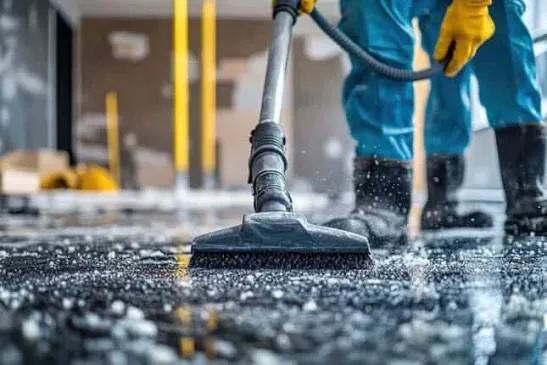

A renovation can look finished while still being far from ready for move-in day. Fresh paint, new flooring, and updated fixtures draw the eye, but fine dust often lingers inside cabinets, around vents, and across brand-new surfaces.
For homeowners, landlords, property managers, and business owners, post-construction cleaning is the critical step that transforms completed construction into a pristine, usable space. Reliable cleanup services prevent rushed move-ins, repeated wiping, damaged finishes, and last-minute tenant complaints.
Key Takeaways
- A room is not ready simply because tools and large debris are gone.
- Returning dust, adhesive marks, gritty floors, and dirty vents signal that a detailed final clean is still needed.
- A reliable provider should offer a clear scope, dependable scheduling, respectful service, and a final walkthrough.
What Is Post Construction Cleaning?
Post construction cleaning is a detailed cleanup completed after building, remodeling, or repair work. It removes fine dust, small debris, labels, smudges, residue, and jobsite dirt that routine housekeeping may miss.
Construction dust can settle high and low, travel through doorways, collect behind appliances, and reappear after the first wipe. A proper final clean works from the top down, with attention to vents, ledges, cabinetry, trim, fixtures, glass, and floors.
Why Does Final Cleanup Matter?
A finished project should not create a second project for the person moving in. When cleanup is incomplete, owners may spend days wiping the same surfaces, tenants may report poor conditions, and businesses may delay opening a refreshed area.
Dust control also requires more care than pushing particles around. OSHA advises against dry sweeping or dry brushing when those methods could add to respirable silica exposure, unless safer methods are not feasible. It identifies wet sweeping, HEPA-filtered vacuuming, and other dust-minimizing methods as better approaches in applicable work settings.
A CDC-hosted study of enclosed concrete grinding found that local exhaust ventilation with HEPA filtration reduced measured silica dust concentrations by 99.0% compared with uncontrolled grinding. This was a specific industrial study, not a promise for every cleaning job, but it shows why proper dust capture matters.
Nine Clues the Space Is Not Move-In Ready
1. Dust Returns After Every Wipe
Wipe a windowsill or countertop, then check it later. If a gray film returns, dust may still be suspended in the air, resting on upper surfaces, or circulating near vents.
The answer is not always more dry dusting. A systematic clean should begin above eye level and work downward so material is removed rather than redistributed.
2. Floors Feel Gritty Underfoot
A floor can look clean while still holding drywall dust, sawdust, grout particles, or fine debris along edges. Grit is especially noticeable on hard flooring and can be tracked into carpeted rooms.
Inspect corners, transitions, stair edges, floor registers, and spaces beneath toe kicks before furniture arrives. Newly finished floors also need methods suited to their material.
3. Cabinets Soil a Clean Cloth
Open every cabinet, drawer, closet, and built-in. Residue often settles inside storage areas because doors remain open during installation or sanding happens nearby.
If a cloth picks up powder from shelves, hinges, drawer tracks, or cabinet tops, clean again before storing dishes, linens, office supplies, or medical items.
4. Labels and Adhesive Marks Remain
Protective film, manufacturer stickers, painter’s tape, caulk smears, and adhesive shadows make new fixtures appear unfinished. Careless removal can scratch glass, pull a coating, or leave a larger mark.
Professional construction cleanup services should identify the surface first and avoid aggressive scraping on delicate finishes.
5. Windows Look Hazy in Daylight
Construction dust is easy to miss on glass until daylight exposes streaks, overspray, fingerprints, or cloudy film. Check tracks, frames, sills, locks, and panes from more than one angle.
Clean glass matters in homes, rental units, offices, stores, restaurants, and medical spaces because it shapes the first impression of the finished project.
6. Vents and Registers Look Dusty
Dust around supply vents, return grilles, bathroom fans, or mini-split units is a warning sign. Even when equipment is protected, nearby cutting and sanding can leave residue on covers and surrounding walls.
Clean accessible exterior surfaces. Suspected contamination inside a mechanical system should be assessed by the appropriate HVAC professional.
7. Bathrooms Still Feel Like a Jobsite
New bathrooms may hold grout haze, silicone residue, fingerprints, packaging pieces, and debris around fixture bases. Check behind the toilet, inside the vanity, along shower tracks, and around exhaust covers.
A bathroom is ready when fixtures, mirrors, cabinetry, drains, and floors are clean—not merely when the tools have disappeared.
8. A Dusty Smell Will Not Clear
Odor alone does not identify a hazard, but a stale or chalky smell can indicate residue on surfaces or in poorly ventilated areas. Ventilation may help, but it does not replace physical removal.
Where older paint, asbestos-containing material, mold, or another hazardous substance may have been disturbed, stop and consult a qualified specialist.
9. The Walkthrough Keeps Finding Misses
One missed corner can happen. Repeated misses across several rooms usually point to the absence of a clear cleanup scope.
| Sign | What It May Mean | Next Step |
| Dust returns quickly | High surfaces or vents were missed | Reclean from top to bottom |
| Grit remains at edges | Vacuuming was incomplete | Detail corners and transitions |
| Film stays on fixtures | Final detailing was skipped | Use surface-safe removal |
| Glass looks cloudy | Dust or residue remains | Clean frames, tracks, and panes |
| Cabinets soil a cloth | Storage interiors were missed | Vacuum and damp-wipe interiors |
The Power of the Final Detail
As Martin Luther King Jr. famously said:
“Not everybody can be famous, but everybody can be great, because greatness is determined by service.”
That principle applies directly to property management and renovation. The ultimate quality of a finished space isn't just determined by the big architectural changes. It's defined by the care, discipline, and service dedicated to the final details. Skipping the final cleanup undermines all the hard work that came before it.
What Can Happen If You Move In Too Soon?
Moving in early turns a manageable cleanup into a complicated one. Boxes block walls, furniture covers dusty floors, and people begin using cabinets before interiors are clean. During a rental or commercial turnover, this can create avoidable complaints and extra coordination.
New Hampshire and Massachusetts properties face seasonal pressure too. Winter work can bring salt, slush, and tracked-in grit. Spring projects may coincide with mud and pollen. Scheduling the final clean before occupancy leaves room to work efficiently.
What Should a Professional Cleanup Cover?
A professional scope should match the project, but it commonly includes high-to-low dust removal, HEPA-filtered vacuuming where appropriate, damp wiping, cabinet interiors, fixture detailing, glass, floor care, and approved light-debris removal.
A useful final-clean framework is:
- Confirm that active construction is complete.
- Remove approved loose debris and packaging.
- Clean high ledges, trim, doors, and wall surfaces.
- Detail cabinets, closets, fixtures, and appliances.
- Vacuum edges, tracks, vents, and floor transitions.
- Damp-clean suitable surfaces without harming finishes.
- Inspect glass, floors, bathrooms, and entries.
- Complete a room-by-room walkthrough.
Strong construction cleanup services should explain what is included, excluded, and likely to require a return visit after punch-list work.
Final Cleanup Do’s and Don’ts
| Do | Don’t |
| Wait until dusty work is finished | Clean while sanding or cutting continues |
| Confirm the scope in writing | Assume every surface is included |
| Work from high areas downward | Start with floors and dirty them again |
| Use surface-safe products | Apply one harsh product everywhere |
| Use proper dust-capture methods | Blow dust into another room |
| Inspect before furniture arrives | Hide unfinished areas with boxes |
| Flag suspected hazards | Treat unknown materials as ordinary dust |
How Do You Choose a Reliable Team?
Ask practical questions before booking a construction cleaning service:
- Will the company inspect the property or request project details?
- Is the estimate clear about rooms, surfaces, debris, and exclusions?
- Does the schedule account for contractor punch-list work?
- Who handles access, keys, alarms, and final communication?
- Is there a walkthrough or method for reporting missed items?
- Can the provider support future cleaning or seasonal property needs?
Look for clear estimates, realistic timing, respectful communication, and a plan for protecting newly installed materials.
For property owners who prefer one dependable point of contact, BHB cleaning brings residential cleaning, commercial janitorial work, post-construction cleanup, lawn and property care, and vehicle detailing together through one local company. Its veteran-owned approach emphasizes integrity, disciplined workmanship, accountability, clear communication, and attention to detail.
Why Does One Property Partner Save Time?
A company familiar with the property after renovation may also support recurring cleaning, turnover work, carpet care, exterior upkeep, yard needs, or seasonal preparation. Fewer providers can mean fewer walkthroughs, fewer access arrangements, and less time repeating standards.
That continuity is useful for busy families, elderly homeowners, landlords, and small businesses. A provider who knows the building can plan service around how the property is actually used.
When Should You Schedule the Final Clean?
Schedule after the main work and most punch-list corrections are finished, but before furniture, inventory, tenants, employees, or customers enter. On a large project, a rough cleanup may happen earlier, followed by a detailed final pass.
Leave time between cleaning and occupancy for inspection. If a contractor must return to sand, drill, patch, or cut, plan a small touch-up afterward.
A Cleaner Finish Before the First Night
The clearest warnings are simple: dust keeps returning, floors feel gritty, cabinets are dirty, windows are hazy, and each walkthrough uncovers another unfinished detail. Post construction cleaning protects the project’s final presentation and helps homes, rentals, and workplaces begin their next chapter in an orderly condition.
BHB Services LLC can help owners and managers plan a detailed final clean with clear communication, respectful service, and long-term property care in mind. Consider professional help before move-in when the property still shows construction residue or needs a coordinated room-by-room finish.
FAQs
How long does a final construction clean take?
Timing depends on square footage, project type, dust level, number of rooms, surface materials, and whether contractors are fully finished. A walkthrough or detailed project description is the best basis for an estimate.
Is post-renovation cleaning regular house cleaning?
No. Routine house cleaning addresses everyday soil. Post-renovation work often requires more detailed dust removal, adhesive cleanup, cabinet and track cleaning, and careful treatment of new surfaces.
Can I use a shop vacuum for construction dust?
A basic shop vacuum may release fine particles if it is not properly designed and filtered. Equipment designed for HEPA filtration, plus wet wiping and mopping where appropriate, is generally better suited to fine renovation dust.
Should the property be empty during cleanup?
An empty property is easier to clean because crews can reach walls, floors, cabinets, and corners without moving belongings. When full vacancy is impossible, keep work areas clear and agree on access beforehand.
Do I need another clean after moving in?
Sometimes. Unpacking, deliveries, and minor contractor returns can create new dust. A light follow-up or recurring service may help in rentals, offices, retail spaces, and busy households.






















Sign in to leave a comment.