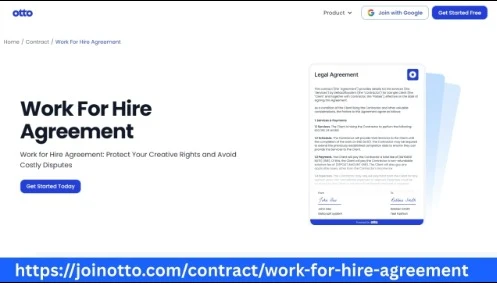
In today's evolving gig economy, more professionals are taking the leap into self-employment. Whether you are a freelance writer, graphic designer, software developer, or any other independent contractor, protecting your rights and clearly defining work terms is critical. One of the most effective tools in this process is a .
For self-employed entrepreneurs and small businesses, having a solid understanding of what this agreement entails can mean the difference between legal clarity and future disputes. In this comprehensive guide, powered by Otto AI, we will explore what a Work For Hire Agreement is, its essential components, benefits, and how to draft or use one effectively.
What is a Work For Hire Agreement?
A Work For Hire Agreement is a legal contract that transfers ownership of a piece of work from the creator (typically a freelancer or contractor) to the client or hiring party. In simpler terms, once the work is completed and payment is made, the client owns the results entirely as if they created it themselves.
This is particularly important when it comes to intellectual property. Whether it’s a logo, a song, a video, or a software code, the agreement ensures that the person paying for the work owns all rights to it—including copyright.
For freelancers and small business owners, understanding the fine print of such agreements can protect against unintentional transfer of rights or disputes over project ownership.
Why Self-Employed Professionals Need to Understand It
As a self-employed professional, your creations are your assets. In the absence of a Work For Hire Agreement, default copyright laws usually grant the creator full ownership of their work—even if they are paid for the job. This can create conflict, especially when clients expect full control over the final product.
With a Work For Hire Agreement in place, expectations are clearly outlined from the start. Using tools like Otto AI, entrepreneurs can simplify the creation of these contracts, ensuring that the terms protect both parties.
Key Elements of a Work For Hire Agreement
To ensure legal enforceability and clarity, a Work For Hire Agreement should include the following elements:
1. Parties Involved
Include the names and roles of both the hiring party (client) and the creator (contractor or freelancer).
2. Scope of Work
Detail what the work entails. This can include timelines, deliverables, and any specific requirements.
3. Transfer of Rights
State explicitly that the work will be considered "work for hire" and that all intellectual property rights will be transferred to the client upon completion.
4. Payment Terms
Describe the total amount, payment schedule, and conditions under which payment will be made.
5. Confidentiality Clause
Protect both parties by including a confidentiality or non-disclosure agreement, especially if sensitive information is being exchanged.
6. Revisions and Edits
Outline how many revisions are allowed, who is responsible for edits, and how feedback will be incorporated.
7. Termination Clause
Define the circumstances under which either party can terminate the agreement, and what happens to the work and payment if this occurs.
8. Dispute Resolution
Include a clause that explains how disagreements will be resolved—through arbitration, mediation, or legal proceedings.
9. Governing Law
Mention the jurisdiction that will govern the agreement in case of any legal disputes.
Common Mistakes to Avoid
Understanding what not to do is just as important. Here are common pitfalls freelancers and entrepreneurs should be aware of:
- Ambiguous Language: Avoid unclear phrases. Use precise, direct language to define the scope and ownership of the work.
- Not Getting It in Writing: Verbal agreements are difficult to enforce. Always document terms with a signed agreement.
- Assuming Ownership Transfers Automatically: Many professionals assume that once they are paid, the client owns the work. This is not always the case without a formal agreement.
- Overlooking Reuse Rights: If you want to include the work in a portfolio or reuse parts for future projects, make sure that’s permitted within the contract.
With Otto AI, small businesses can automate and review these clauses to ensure legal compliance and clarity—without needing advanced legal expertise.
Benefits of a Work For Hire Agreement
✅ Legal Clarity
Both parties know exactly who owns what. This prevents disputes and confusion down the road.
✅ Professionalism
Presenting a formal agreement shows that you run a professional business, which builds trust with clients.
✅ Protection Against Misuse
The agreement protects your work from being used beyond what was agreed upon—or used without compensation if not properly signed over.
✅ Control Over Branding and Product
Clients often need complete control over branding assets like logos, videos, or written content. This agreement ensures they legally possess those rights.
✅ Peace of Mind
Both parties feel secure knowing the terms of the relationship are written and enforceable.
When Should You Use a Work For Hire Agreement?
Here are some real-world scenarios when this agreement is essential:
- A small business hires a freelancer to design a company logo.
- A startup pays a developer to build a custom mobile app.
- A consultant creates training materials for a client’s employees.
- A marketing team outsources content creation for their website or social media.
In each of these cases, a Work For Hire Agreement ensures that the client owns the finished product outright and can use it as they wish without legal concerns.
How Otto AI Simplifies the Process
Drafting a legal document might seem intimidating for entrepreneurs who don’t have a legal background. That’s where Otto AI comes in. Otto AI offers intelligent contract drafting tools that guide users through the process of creating a legally sound Work For Hire Agreement.
Features include:
- Easy-to-customize templates tailored to your industry
- AI-driven suggestions to clarify terms
- Built-in checks to avoid missing critical clauses
- Secure digital signing and cloud storage
With Otto AI, self-employed professionals and small businesses can save time, reduce legal risk, and focus on delivering high-quality work rather than worrying about ownership disputes.
Final Thoughts
In the world of freelancing and small business, clarity is king. A Work For Hire Agreement is not just a formality—it’s a foundation of trust and professionalism between creator and client. It establishes clear expectations and safeguards both parties' interests.
Whether you're producing digital content, designing products, or offering consulting services, don’t leave your rights or your reputation to chance. Use the tools available—like Otto AI—to create strong, reliable agreements that protect your creative work and business relationships.
Empower your business today with Otto AI, and bring clarity to every collaboration with a well-drafted Work For Hire Agreement.

























Sign in to leave a comment.