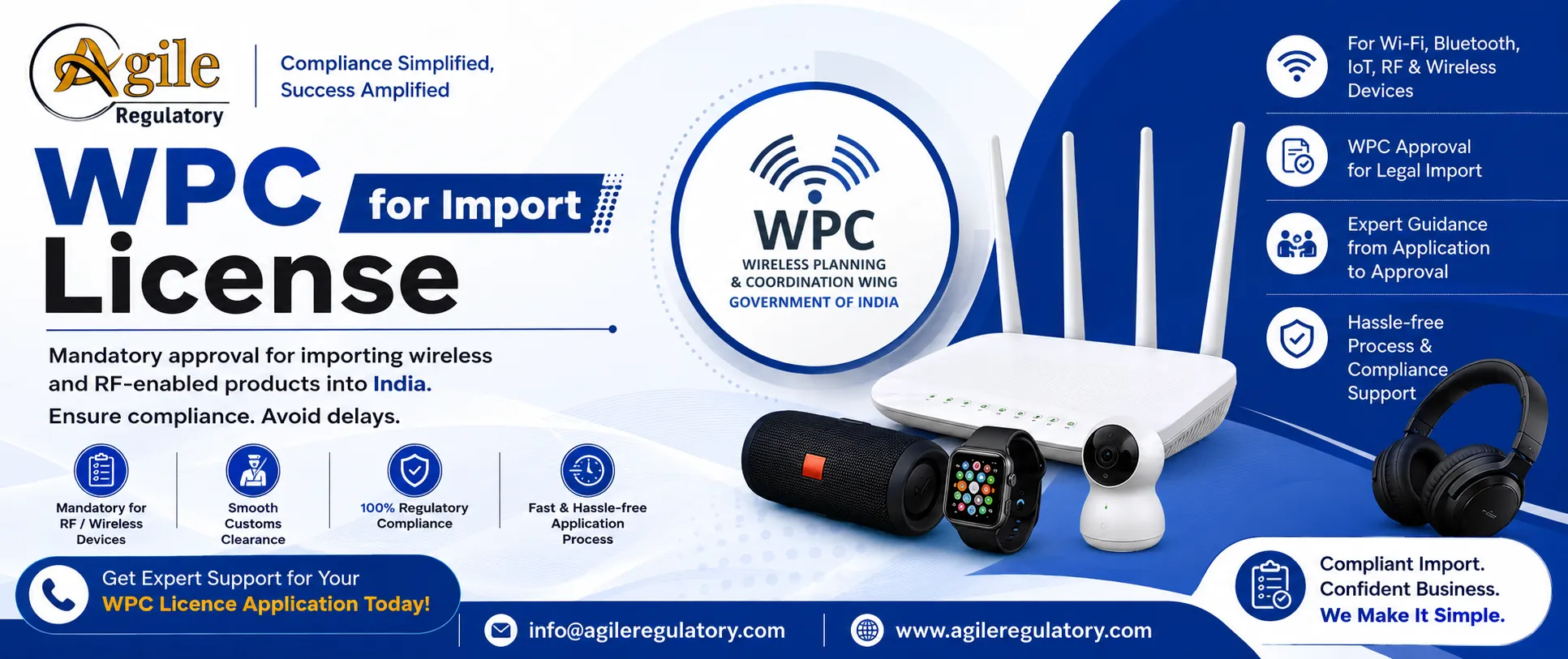

If you import, manufacture, or sell wireless and radio frequency-enabled products in India, obtaining a WPC License is often mandatory. This guide explains the WPC Registration process, WPC Certification, eligibility, required documents, benefits, and how professional WPC Agents can simplify compliance.
WPC License: Everything You Need to Know
Wireless devices such as Wi-Fi routers, Bluetooth speakers, smartwatches, wireless keyboards, IoT devices, RF modules, and many other products operate on radio frequencies. Before these products can be imported or sold in India, they may require approval from the Wireless Planning & Coordination (WPC) Wing under the Department of Telecommunications (DoT).
Obtaining a WPC License ensures that your wireless products comply with Indian radio frequency regulations and can be legally imported or marketed. Whether you are an importer, manufacturer, startup, or e-commerce seller, understanding the approval process can help avoid customs delays and regulatory issues.
What is WPC?
The Wireless Planning & Coordination (WPC) Wing is a division of the Department of Telecommunications (DoT), Government of India. It regulates the use of radio frequencies, issues wireless approvals, and manages spectrum allocation across the country. The WPC Wing ensures wireless products operate within approved frequency bands without causing interference.
What is WPC Registration?
WPC Registration is the process of obtaining approval for wireless equipment operating on de-licensed frequency bands in India. Depending on the product and frequency used, applicants may require ETA (Equipment Type Approval) or other WPC permissions before importing or selling products. This registration verifies compliance with Indian wireless communication standards.
What is WPC Certification?
WPC Certification is the official approval granted after successful evaluation of wireless equipment. It confirms that the product complies with India's radio frequency requirements and is permitted for use in approved frequency bands. Many importers obtain this approval before customs clearance to avoid shipment delays.
Products That Commonly Require WPC Approval
- Wi-Fi Routers
- Bluetooth Speakers
- Smart Watches
- Wireless Mouse
- Wireless Keyboard
- Wireless Earbuds
- IoT Devices
- RFID Equipment
- Wireless Cameras
- Drones (where applicable)
- RF Modules
- Zigbee Devices
- NFC Devices
- Smart Home Products
Who Needs a WPC License?
The following businesses generally require WPC approval:
- Importers
- Manufacturers
- Brand Owners
- Online Sellers
- Distributors
- OEM Manufacturers
- Technology Startups
- Electronics Companies
Documents Required
Generally required documents include:
- Company PAN Card
- GST Certificate
- IEC (Import Export Code)
- Product Technical Specifications
- RF Test Report
- Authorization Letter
- Product Datasheet
- Product Label Details
- Manufacturer Authorization (if applicable)
- Company Registration Documents
WPC Registration Process
Step 1: Product Evaluation
The wireless specifications are reviewed to determine the applicable approval requirement.
Step 2: Document Preparation
Technical and company documents are prepared according to WPC guidelines.
Step 3: Application Submission
The application is submitted with all supporting documents.
Step 4: Technical Review
Officials verify the frequency bands, RF reports, and product specifications.
Step 5: Approval Issuance
After successful verification, the required approval is issued.
Benefits of WPC Approval
- Smooth customs clearance
- Legal import and sale of wireless products
- Compliance with Indian regulations
- Reduced shipment delays
- Improved customer confidence
- Better market credibility
- Easier market access
Common Challenges
Businesses may face delays because of:
- Incorrect documentation
- Incomplete RF reports
- Wrong frequency declaration
- Application errors
- Product classification issues
- Missing technical information
Proper preparation can significantly reduce approval time.
Why Choose Professional WPC Agents?
Experienced WPC Agents understand the regulatory requirements and documentation process. They help verify product eligibility, prepare documents, file applications, coordinate with authorities, and reduce the chances of rejection. This support is especially valuable for first-time importers and businesses handling multiple wireless products.
Why Choose Agile Regulatory?
Agile Regulatory provides end-to-end compliance support for wireless product approvals across India. Our experts assist with documentation, technical guidance, application filing, compliance review, and regulatory coordination, helping businesses obtain approvals efficiently and without unnecessary delays.
Conclusion
Obtaining a WPC License is an essential compliance requirement for businesses dealing with wireless and RF-enabled products in India. Completing the WPC Registration process helps ensure legal import, smooth customs clearance, and regulatory compliance. If you need assistance with WPC Certification, Agile Regulatory offers professional support from documentation to final approval.
FAQs
1. What is a WPC License?
A WPC License is an approval issued by the Wireless Planning & Coordination Wing for eligible wireless and radio frequency-enabled products in India.
2. Who needs WPC Registration?
Importers, manufacturers, brand owners, distributors, and businesses dealing with eligible wireless products generally require WPC Registration.
3. What documents are required for WPC Certification?
Common documents include GST Certificate, IEC, PAN Card, RF Test Report, product specifications, authorization letter, and company registration documents.
4. How long does the WPC approval process take?
The timeline depends on the product category, document accuracy, and regulatory review process.
5. Can WPC Agents help with the approval process?
Yes. Professional WPC Agents assist with documentation, application filing, technical verification, and regulatory coordination.
6. Is WPC approval mandatory for all wireless products?
No. The requirement depends on the product's operating frequency, technology, and applicable regulatory provisions. A technical assessment helps determine the applicable approval.


























Sign in to leave a comment.