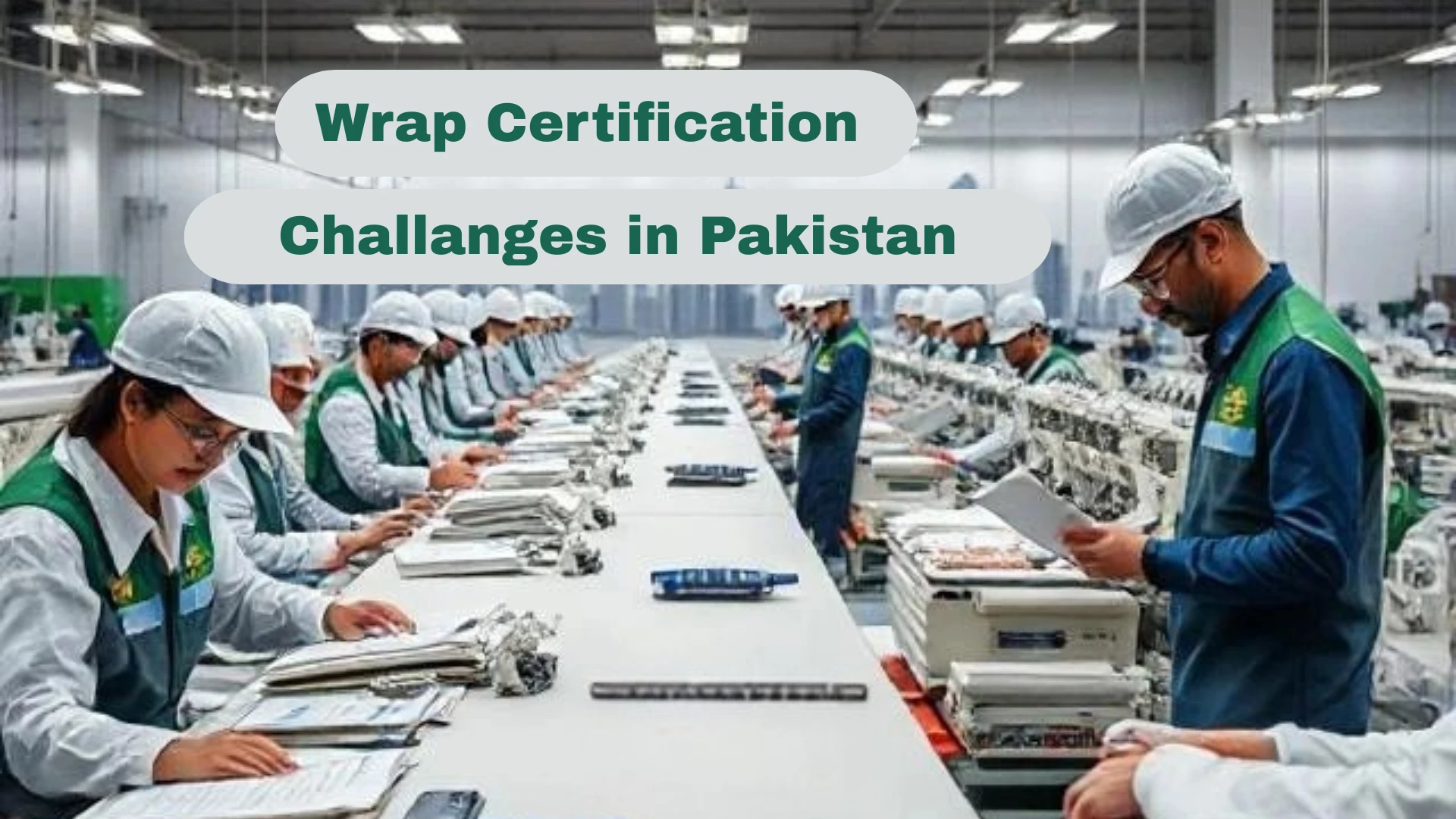

Challenges and Solutions for WRAP Certification in Pakistan’s Export Sector
Pakistan’s textile and apparel industry plays a pivotal role in the national economy, accounting for a significant portion of exports, especially from major industrial hubs like Lahore and Karachi. As global buyers increasingly demand ethical and sustainable manufacturing practices, obtaining certifications such as WRAP (Worldwide Responsible Accredited Production) has become essential. However, many businesses in Pakistan face challenges in achieving WRAP certification.
1. Lack of Awareness and Training
Challenge: Many factory owners and managers are unaware of WRAP standards and the long-term benefits of certification.
Solution: Conducting regular awareness seminars, online webinars, and targeted training sessions can bridge the knowledge gap. Partnering with local industry associations and consulting firms can facilitate widespread information dissemination.
2. Insufficient Documentation and Record-Keeping
Challenge: One of the major requirements of WRAP certification is thorough documentation, which many factories in Pakistan lack.
Solution: Businesses should invest in simple digital record-keeping tools and train administrative staff on documentation best practices. Hiring or consulting compliance professionals can ensure that documentation aligns with WRAP’s 12 principles.
3. Non-compliance with Labor Laws
Challenge: Issues such as underage labor, excessive working hours, and lack of proper contracts are common in some factories.
Solution: Ensuring compliance with Pakistan’s labor laws is crucial. Conducting internal audits, developing clear HR policies, and offering regular training on workers’ rights can help factories meet WRAP standards.
4. Poor Health and Safety Conditions
Challenge: Many facilities lack proper fire safety systems, first-aid equipment, and hygienic conditions.
Solution: Investing in basic safety infrastructure like fire alarms, extinguishers, safety signs, and clean restrooms is necessary. Regular safety drills and employee training also contribute to a safer work environment.
5. High Cost of Implementation
Challenge: Smaller factories may find the cost of certification, upgrades, and audits prohibitive.
Solution: WRAP certification can be approached in phases, allowing businesses to spread out investments. Government subsidies, donor-funded programs, or cost-sharing initiatives with buyers can also ease the financial burden.
6. Resistance to Change
Challenge: Factory owners and senior staff may resist adopting new systems or making changes to existing workflows.
Solution: Highlighting the competitive advantages of WRAP certification, such as increased buyer trust and export potential, can motivate change. Success stories from peer companies can serve as effective persuasion tools.
Conclusion
WRAP certification is not just a badge of compliance it is a gateway to international markets and long-term business sustainability. While challenges exist, they are surmountable through strategic planning, capacity building, and collaboration with consultants and industry bodies. As Pakistan continues to position itself as a global textile leader, embracing WRAP standards will be a crucial step forward for export-oriented businesses.
For more detail and get WRAP Certification in Pakistan visit Qdot.pk





















Sign in to leave a comment.