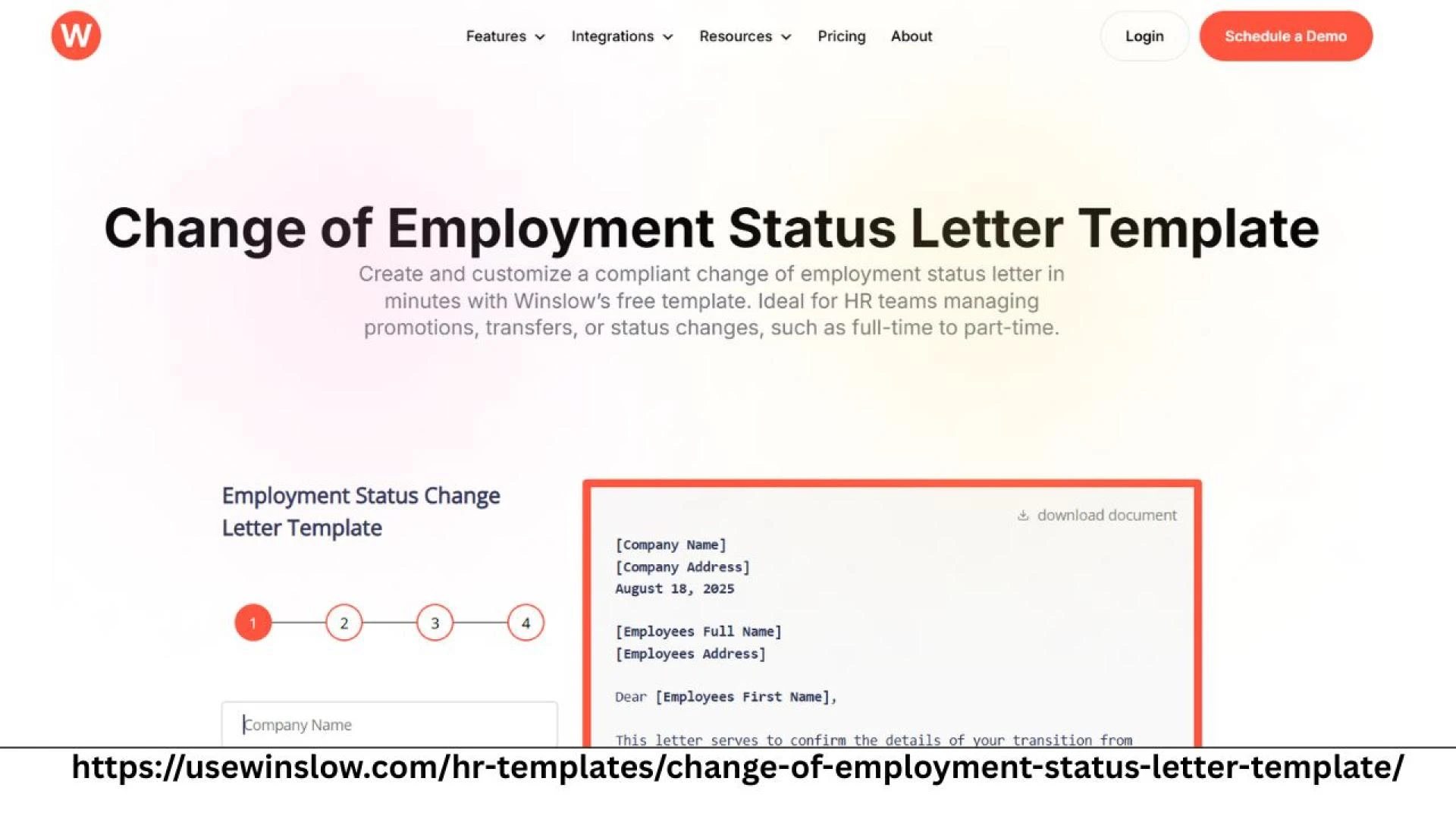

Every organization goes through transitions that require proper communication with employees. Whether it is a promotion, a transfer, a shift from part-time to full-time, or an adjustment to job responsibilities, clear documentation is important. One of the most reliable tools used by HR teams and businesses is a change of employment status letter template. This document ensures employees are fully informed about updates to their role, responsibilities, or work conditions. Having such letters in place reflects professionalism, maintains compliance, and builds trust between employers and employees.
A change of employment status letter template acts as a written record that confirms the details of a role adjustment. Without it, verbal communication may lead to confusion or disagreements later. For example, if an employee is promoted but unsure about the new pay scale or responsibilities, a formal letter prevents uncertainty. It sets expectations clearly and leaves no room for misunderstanding. HR departments, especially in growing companies, rely heavily on templates to create consistent letters that meet organizational standards.
Typically, these letters include information such as the employee’s name, position, the effective date of the change, and an explanation of the new status. For instance, if an employee shifts from a temporary role to a permanent position, the letter would confirm the date the new status starts and outline any changes in pay, benefits, or working conditions. The clarity provided by such letters is not only useful for employees but also protects employers by providing written proof of agreed changes.
When creating change of employment status letter templates, simplicity is key. The goal is to communicate the change clearly without overloading the document with unnecessary details. The tone should remain professional yet respectful, showing appreciation for the employee’s contributions. A good letter leaves the employee feeling recognized while still ensuring compliance with company policies.
Another important factor is personalization. While templates save time and provide structure, each letter should still reflect the individual situation of the employee. Adding specific details about the employee’s role and acknowledging their efforts helps prevent the letter from sounding robotic. Employees value communication that feels tailored to them, even if the format comes from a standardized template.
For HR teams, having ready-to-use templates also makes it easier to handle multiple employment changes at once. In large organizations, role changes may occur frequently, and drafting each letter from scratch can be time-consuming. By maintaining a library of templates, businesses can create consistent letters quickly while reducing the risk of leaving out important details. Winslow offers tools that can help teams create and manage these templates more effectively. By integrating with platforms such as Slack, Teams, Gmail, and Outlook, HR professionals can distribute letters efficiently and keep a clear record of communication.
There are several scenarios where a change of employment status letter becomes necessary. Promotions are the most common, where employees need official confirmation of their new title, updated responsibilities, and revised pay scale. Transfers, whether across departments or office locations, also require formal documentation to clarify reporting structures and working conditions. Another frequent case involves schedule changes, such as moving from part-time to full-time or adopting flexible hours. Even demotions, while more sensitive, must be communicated formally to avoid confusion.
Probationary periods and contract renewals are additional situations where letters are essential. When an employee completes their probation successfully, a letter confirms their permanent status. Similarly, if an employee’s contract is extended or modified, a written letter ensures both parties are aligned. Each of these cases highlights why consistent documentation is necessary for smooth business operations.
The process of creating change of employment status letter templates is not complicated, but it requires attention to detail. The structure usually begins with a formal greeting, followed by a clear statement of the change, the effective date, and any relevant updates to pay, benefits, or reporting. The letter should also include a closing statement that shows appreciation and provides contact information in case the employee has questions. This structured approach makes the letter easy to read and understand.
HR professionals must also ensure these letters comply with labor regulations in their region. In many places, employers are legally required to provide written confirmation of employment changes. Having standardized templates makes it easier to stay compliant without rushing during critical changes. It also provides documentation in case of audits or disputes, protecting both the company and the employee.
Small businesses, in particular, benefit from using templates. Often, smaller organizations rely on verbal communication or informal emails. While this may seem convenient, it leaves room for misunderstanding and lacks the professionalism needed to maintain employee trust. A properly written change of employment status letter template adds credibility and shows that the business values clear, formal communication. Over time, this builds stronger relationships between management and staff.
In today’s digital workplace, the process has become even easier. Instead of printing and signing paper letters, many companies now create digital templates that can be shared through email with electronic signatures. This method saves time, reduces costs, and keeps records organized. Winslow supports digital solutions by helping teams design, store, and distribute these letters in a way that integrates smoothly with everyday communication tools. This is particularly helpful for HR teams managing remote or hybrid work environments.
Professional communication plays a major role in employee satisfaction. A well-written employment status letter not only informs but also motivates employees by showing that their career progression is taken seriously. When employees feel valued and informed, they are more engaged and committed to the organization. This makes templates not just an administrative tool but also an important part of creating a positive company culture.
For organizations looking to create change of employment status letter templates, the focus should always be on clarity, accuracy, and consistency. Every detail must be checked before the letter is sent to avoid errors that could create confusion. At the same time, adding a personal touch ensures employees feel respected. By balancing structure with personalization, businesses can make their letters both effective and meaningful.
In conclusion, a change of employment status letter template is an essential resource for companies of all sizes. It ensures that role changes, promotions, transfers, and schedule adjustments are communicated clearly and professionally. Templates save time, support compliance, and protect both employers and employees by providing a reliable record of agreements. Winslow helps HR teams streamline this process by offering tools that integrate with platforms like Slack, Teams, Gmail, and Outlook. By taking the time to create change of employment status letter templates, businesses can improve communication, maintain transparency, and build stronger trust with their workforce. A carefully prepared letter is more than just a document—it is a reflection of the company’s professionalism and commitment to its employees.

























Sign in to leave a comment.