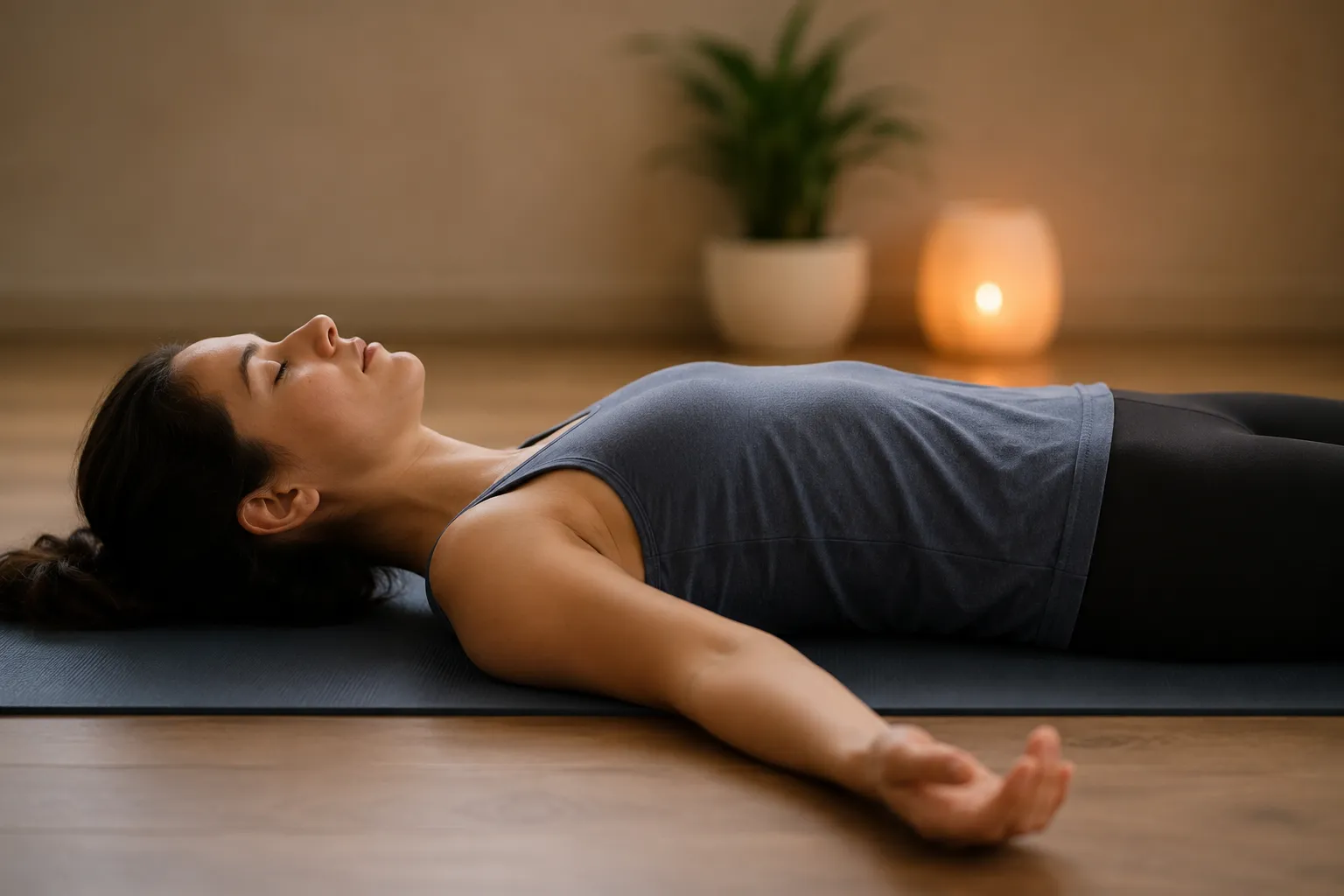

Yoga Nidra is a guided relaxation practice performed while resting comfortably, usually lying down. For beginners, it offers a simple way to slow the body, settle busy thoughts, and develop mindful awareness without demanding physical flexibility. A regular Yoga Nidra practice may support relaxation and sleep, although research on its clinical effects is still developing.
What Is Yoga Nidra?
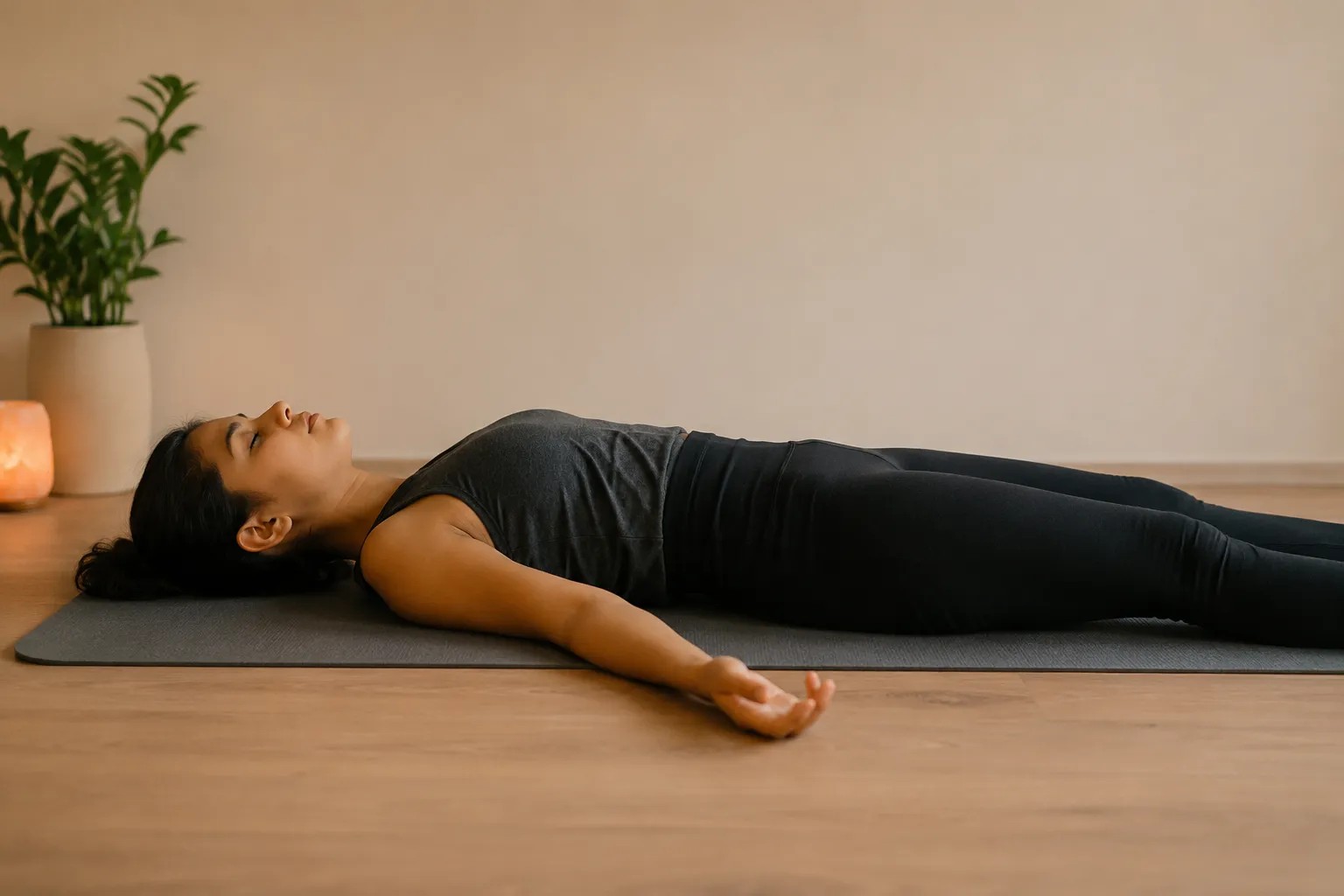
The Sanskrit term Yoga Nidra is commonly translated as “yogic sleep.” Despite the name, the practice is not simply about falling asleep. You remain physically still while following spoken instructions that guide your attention through different stages of relaxation and awareness.
A typical session may include:
- Settling into a comfortable resting position
- Bringing awareness to the breath
- Moving attention through different parts of the body
- Noticing sensations without reacting to them
- Working with a personal intention or sankalpa
- Returning gradually to ordinary waking awareness
The experience can feel different from person to person. Some beginners remain clearly awake, while others become very sleepy or briefly fall asleep.
Why Try Yoga Nidra as a Beginner?
Modern life often keeps the mind occupied even when the body is tired. Yoga Nidra creates a dedicated period in which there is nothing to accomplish physically.
Research has found promising results for sleep and relaxation. A 2021 randomized controlled trial involving people with chronic insomnia found improvements in several sleep measures following Yoga Nidra practice.
More recent research is encouraging but also calls for caution. A 2026 systematic review and meta-analysis found potential benefits for sleep disturbances and insomnia, while noting that the available evidence remains limited by small studies, methodological concerns, and variation between practices.
For everyday practitioners, this means Yoga Nidra can be viewed as a relaxation and mindfulness practice, rather than a guaranteed treatment for insomnia or other health conditions.
How to Start Yoga Nidra at Home
You do not need advanced yoga experience to begin. In fact, one of the appealing features of Yoga Nidra is that the practice requires very little physical effort.
1. Choose a Quiet Time
Start with 10–20 minutes when you are unlikely to be interrupted. Evening can work well if your intention is relaxation before bed, while daytime practice can provide a mental reset.
2. Get Comfortable
Lie on your back on a yoga mat, carpet, or firm bed. Place a cushion under your head and another beneath your knees if that helps your lower back relax.
If lying on your back is uncomfortable, choose another supported position.
3. Use Guided Instructions
Beginners generally benefit from following a recorded Yoga Nidra session or learning from an experienced teacher. Trying to remember every stage while practicing can make the mind busier.
4. Let the Body Become Still
Once comfortable, avoid unnecessary movement. If you need to adjust your position because of genuine discomfort, do so mindfully.
5. Follow the Voice
Rather than trying to “do” something perfectly, listen to the instructions. Your attention may wander. When it does, simply return to the guidance.
That return is part of the practice.
Understanding the Body Scan
One of the best-known elements of Yoga Nidra is systematic body awareness. The teacher may guide attention from one area to another—for example, from the right hand through the arm, shoulder, torso, leg, and foot before moving to the opposite side.
This is not a flexibility exercise or a test of concentration.
The purpose is to develop steady awareness while the body remains relaxed. For many beginners, this gradual movement of attention makes it easier to stop mentally replaying the day's activities.
Breath Awareness and Deep Relaxation
After body awareness, a Yoga Nidra session may bring attention to natural breathing. Beginners do not usually need to force slow or deep breaths.
Instead, notice:
- Where the breath is felt
- Whether breathing feels smooth or uneven
- The movement of the abdomen or chest
- The natural pause between breaths
- How the body responds as breathing settles
This approach can make the practice accessible even to people who have never practiced meditation.
What Is Sankalpa in Yoga Nidra?
Sankalpa is often described as a personal resolve or heartfelt intention. In traditional Yoga Nidra teaching, it is introduced at an appropriate point in the practice and repeated with attention.
For a beginner, keep the intention simple and meaningful rather than turning it into a long affirmation.
Examples might include:
- “I remain calm and steady.”
- “I care for myself with awareness.”
- “I respond with patience.”
The intention should feel personally relevant. It is not necessary to force a positive statement that does not feel believable.
Common Mistakes Beginners Make
Yoga Nidra looks simple, but beginners can sometimes turn relaxation into another task to complete.
Avoid these common habits:
- Trying too hard to stay awake: Sleepiness is common, especially when you are tired.
- Expecting immediate results: Relaxation becomes easier with familiarity.
- Changing positions constantly: Set yourself up comfortably before beginning.
- Judging wandering thoughts: Thoughts are normal; return to the instructions.
- Using the practice only when exhausted: Regular practice helps you learn the process.
- Treating it as a cure: Yoga Nidra may support well-being, but it should not replace appropriate medical or psychological care.
How Often Should Beginners Practice Yoga Nidra?
There is no universal schedule. A practical starting point is 10–20 minutes, three to five times a week.
Consistency matters more than making every session long.
After several weeks, you may prefer longer sessions of 20–40 minutes. Some people practice before sleep, while others prefer morning or afternoon sessions when they want relaxation without going directly to bed.
Research has also examined both short and longer guided practices. One 2025 randomized controlled trial investigated online Yoga Nidra sessions of 11 and 30 minutes and reported modest improvements in some well-being-related outcomes.
When to Learn Yoga Nidra More Deeply
If your interest goes beyond personal relaxation and you want to guide other people, learning the structure, sequencing, language, and teaching principles becomes important.
A structured Yoga Nidra certification for teachers can help aspiring teachers study the practice more systematically and develop the skills needed to guide sessions responsibly.
Teaching Yoga Nidra is different from simply playing a relaxation recording. Voice, pacing, silence, body awareness, intention, and the ability to create an appropriate practice environment all matter.
A Simple Beginner Routine
If you are unsure where to begin, try this basic approach:
Before practice — 2 minutes
- Choose a quiet space.
- Arrange cushions or blankets.
- Set a simple intention.
During practice — 10–20 minutes
- Lie comfortably.
- Follow a guided session.
- Keep awareness relaxed.
- Notice the breath and body.
- Return to the voice whenever attention wanders.
After practice — 2 minutes
- Move slowly.
- Notice how you feel.
- Take a few natural breaths.
- Resume your activities without rushing.
The goal is not to create a dramatic experience. A quiet, ordinary session can still be valuable.
Start With Less, Notice More
Yoga Nidra does not ask you to stretch farther, hold difficult poses, or empty your mind. For beginners, the practice is about learning how to rest while maintaining gentle awareness.
Start with a short guided session, create a comfortable environment, and give yourself time to become familiar with the experience. The strongest benefit may simply be learning that relaxation does not always require doing more; it can begin with becoming still and paying attention.
Frequently Asked Questions
1. Is Yoga Nidra suitable for complete beginners?
Yes. Yoga Nidra does not require advanced yoga poses, flexibility, or previous meditation experience. Beginners can practice while lying comfortably and following guided instructions.
2. Can Yoga Nidra help me sleep?
It may help support sleep and relaxation. Research has reported improvements in sleep-related measures, but current evidence is not strong enough to claim that Yoga Nidra treats insomnia for everyone.
3. Should I practice Yoga Nidra before bed?
You can. Many people enjoy it as part of an evening wind-down routine. If you become very sleepy, practicing before bedtime may be more appropriate than using it when you need to remain alert.
4. Do I have to stay awake during Yoga Nidra?
No. Remaining aware is an important part of the traditional practice, but beginners may fall asleep. If this happens, do not treat it as failure. You can gradually build greater awareness with regular practice.
5. How long should a beginner practice Yoga Nidra?
Start with around 10–20 minutes. Once the practice feels familiar, you can explore longer sessions. There is no need to begin with a 45- or 60-minute practice.
6. Can Yoga Nidra replace meditation?
Yoga Nidra is a distinct practice, although it shares elements with meditation and mindfulness. It can complement other meditation practices rather than needing to replace them.
7. Can Yoga Nidra replace professional treatment for insomnia?
No. Yoga Nidra should not be presented as a replacement for medical or psychological care. If sleep problems are persistent, severe, or affecting daily life, speak with an appropriate healthcare professional.



























Sign in to leave a comment.